A useful review of faded building exterior restoration starts with the actual building: its materials, exposure, defect history, height and access constraints.
Faded Building Exterior Restoration: What to Check on Site
Before work begins, record the material type, visible defects, recurring moisture areas and the access method proposed for each elevation.
A facade rarely fades evenly. One elevation may look chalky and washed out while another remains relatively intact, and the difference usually points to sun exposure, rain paths, airborne pollution, or a coating system that is reaching the end of its service life. Knowing how to restore faded building exteriors starts with treating discoloration as a maintenance diagnosis, not simply a cosmetic problem.
For building owners and facility teams, the objective is not to make a facade look temporarily cleaner. It is to identify what has changed at the surface, correct the cause where possible, and select a restoration method that preserves the building envelope, access safety, and long-term presentation.
Identify Why the Exterior Has Faded
Fading can result from several conditions that look similar from ground level but require different treatment. Ultraviolet exposure breaks down pigments and binders in paint and protective coatings, particularly on west-facing and upper-level elevations. In tropical urban environments, high heat, intense rainfall, humidity, algae growth, and traffic pollution can accelerate that process.
Chalking is another common issue. When a coating degrades, fine powder forms on its surface and can be transferred to a hand or cloth. A chalked facade may appear faded even after cleaning because the coating itself is deteriorating. Cleaning alone may improve the appearance, but it will not rebuild the lost protective layer.
Not every dull surface is a failed coating. Dirt, soot, mineral deposits, biological growth, and water staining can obscure the original color. Curtain wall glass may look gray from deposits, while stone can develop dark streaks from runoff or pale marks from efflorescence. Metal panels may fade because of coating weathering, but they can also show oxidation or uneven staining caused by incompatible cleaning agents.
A close inspection should distinguish between surface contamination, coating degradation, material damage, and moisture-related defects. This distinction determines whether the appropriate remedy is specialized cleaning, localized repair, recoating, panel replacement, or a wider facade restoration program.
Start With a Professional Facade Assessment
Before any restoration work begins, inspect the facade systematically. A proper assessment considers more than visible color change. It examines cracking, peeling, blistering, sealant condition, corroded fixings, failed joints, loose render, water entry points, and areas where staining repeatedly returns.
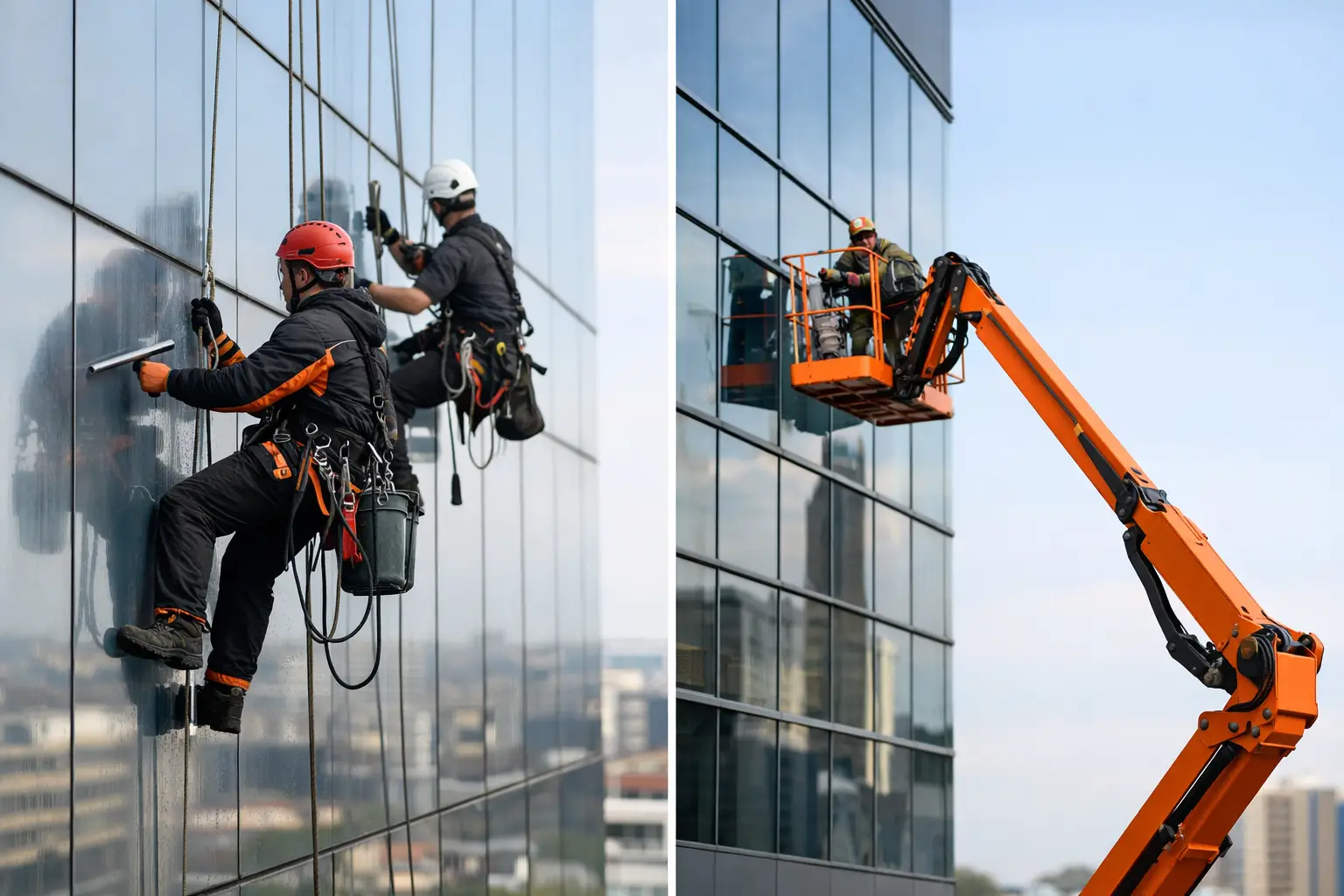
For mid-rise and high-rise properties, access planning is part of the assessment. Binocular observations and drone imagery can be useful for initial screening, but they do not replace close-range inspection where defects are suspected. Rope access, building maintenance units, or other suitable work-at-height methods allow trained personnel to assess the actual surface condition without assuming that a ground-level view tells the full story.
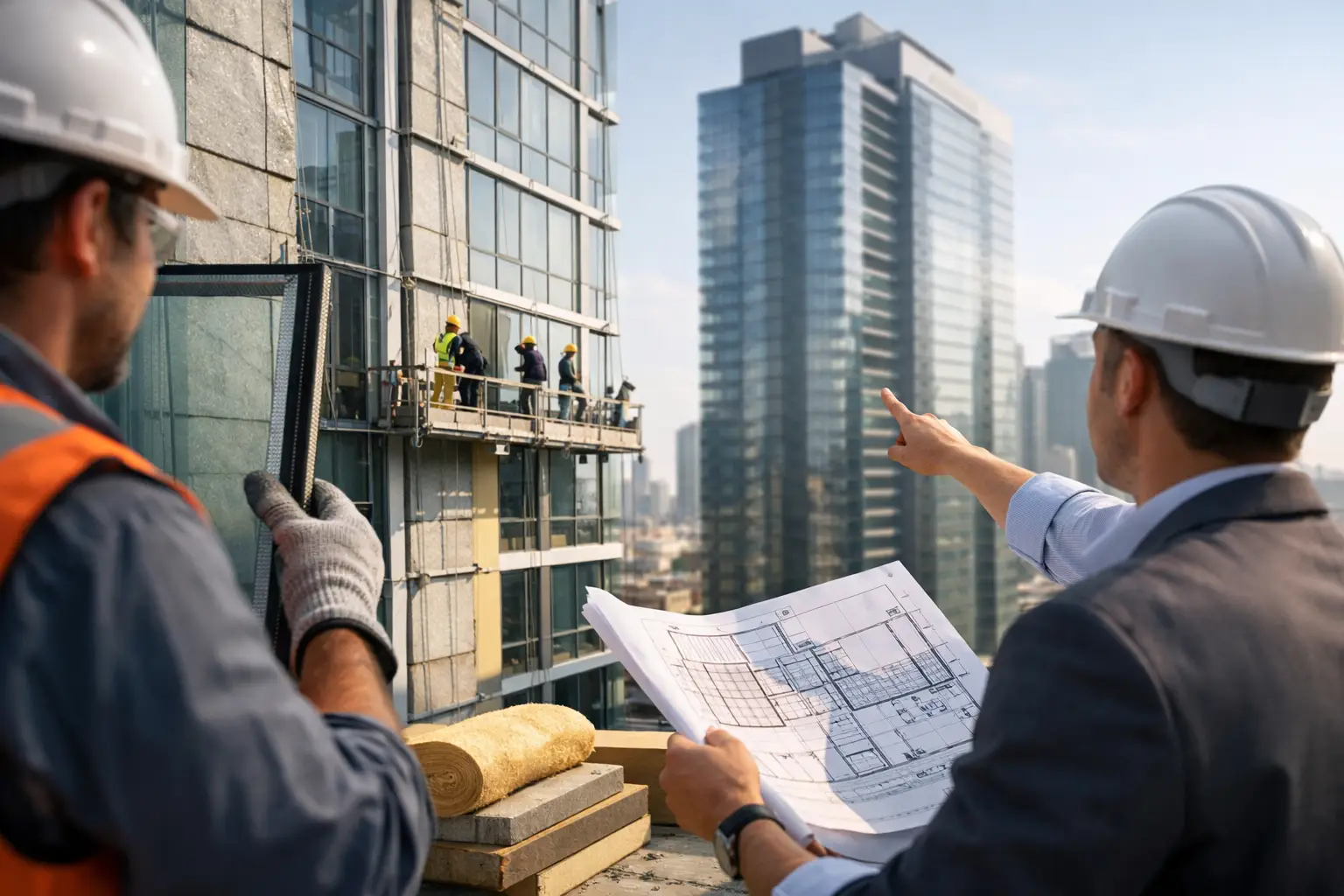
Documenting the elevation by elevation condition is valuable for asset management. It helps building teams prioritize urgent repairs, compare exposed and sheltered areas, and plan restoration in sensible phases when a full building program is not immediately required. It also creates a baseline for future maintenance decisions.
Check for Moisture Before Recoating
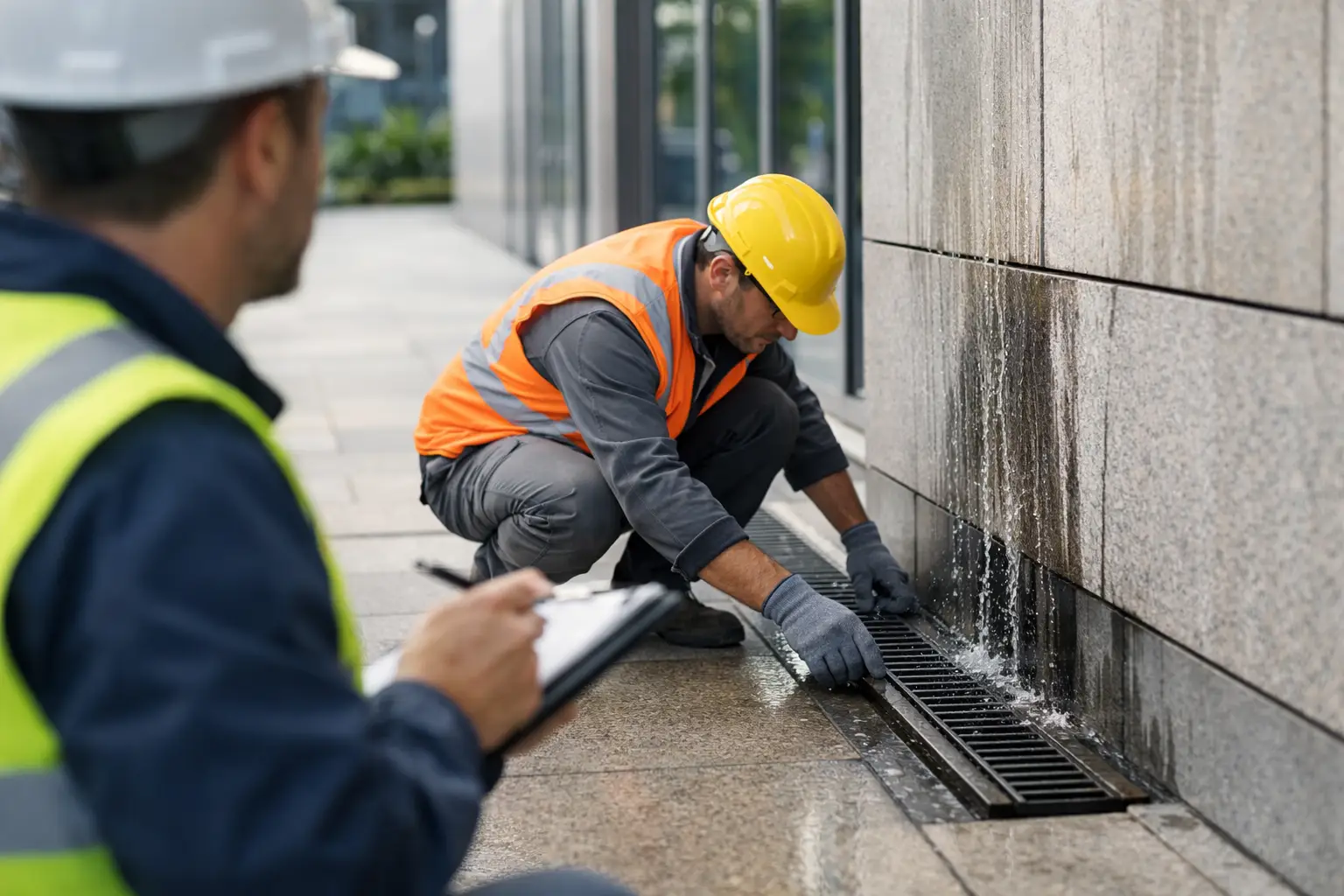
A fresh coating applied over an active moisture problem may initially look successful and then fail prematurely. Blistering, peeling, recurring algae, rust marks, and white salt deposits can all indicate water movement through or behind the facade system.
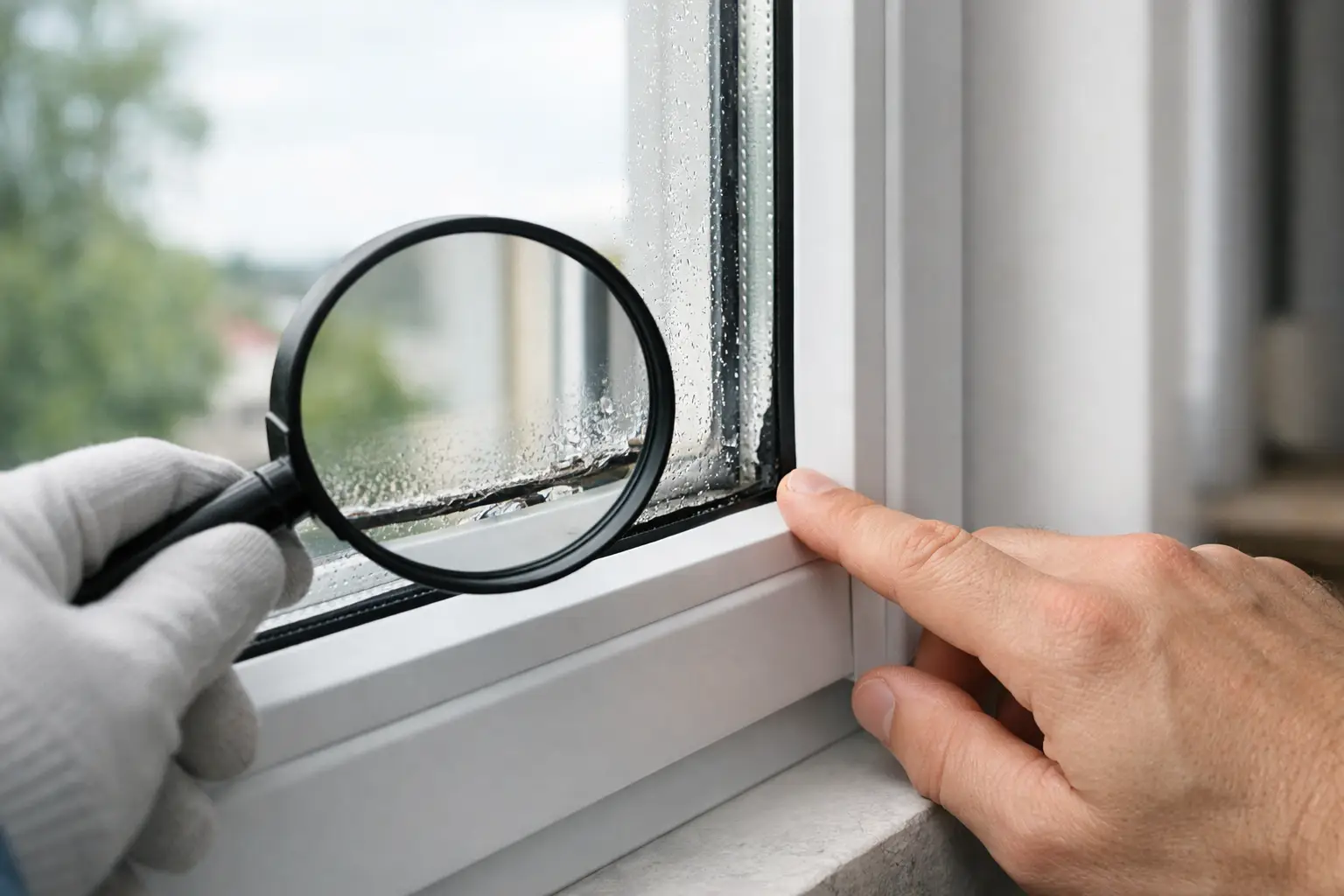
The source may be a failed sealant joint, damaged flashing, leaking roof detail, cracked render, defective window perimeter, or drainage issue. These defects should be corrected before surface preparation and coating work. Restoration is most durable when it addresses both the visible result and the pathway that caused it.
Clean the Surface Without Damaging It
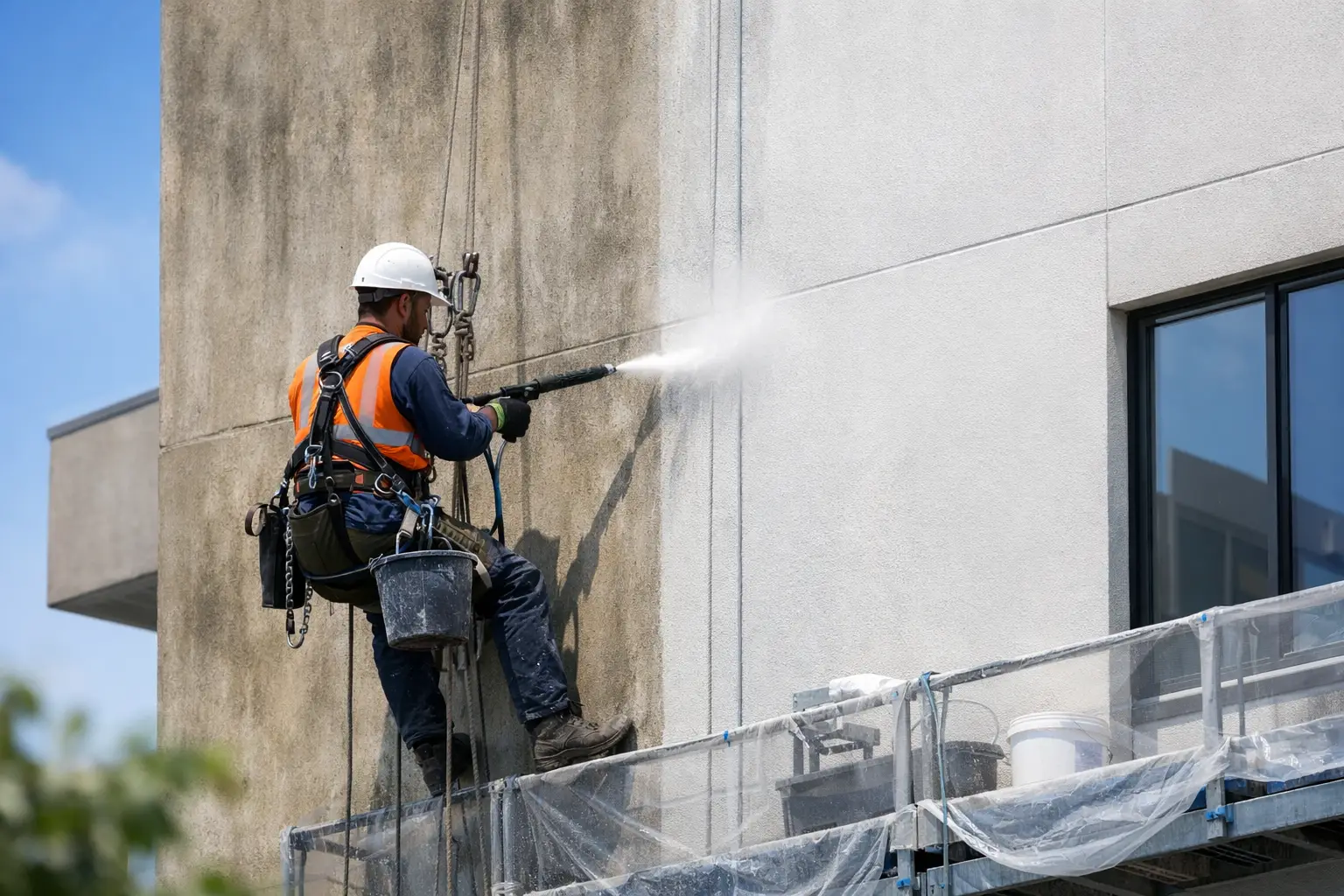
Cleaning is often the first physical step in restoring a faded exterior, but the method must match the substrate. High-pressure washing can be effective on some durable masonry surfaces, yet excessive pressure can erode mortar, drive water into joints, damage render, and lift failing paint. It is not a universal solution.
Facade cleaning should begin with test areas. These trials help confirm the safest combination of water pressure, cleaning solution, dwell time, agitation, and rinsing process. They also reveal whether the apparent fading is removable contamination or permanent coating deterioration.
Glass, aluminum composite panels, painted metal, natural stone, precast concrete, tile, and textured render each respond differently to chemicals and abrasion. Acidic cleaners may remove mineral deposits from one surface while permanently etching another. Abrasive pads can alter a coated panel finish. Strong alkaline products can leave residue or affect sealants when not properly controlled.
For biological growth, the goal is not merely to wash away visible algae or mildew. A suitable treatment should neutralize growth at the surface before thorough rinsing, with surrounding landscaping, drainage outlets, and occupied areas protected throughout the work. Recurrent growth may also indicate persistent moisture or shaded areas that need a planned cleaning cycle.
Repair Defects Before Restoring Color
Once the facade is clean enough to reveal its true condition, repairs can proceed with greater accuracy. Loose or cracked render should be stabilized and repaired with compatible materials. Failed sealant joints need removal and replacement where necessary. Corroded metal components require appropriate treatment, and deteriorated coatings must be removed or prepared according to the coating manufacturer’s requirements.
Color restoration should never hide defects that affect water resistance or public safety. A building can look renewed from a distance while cracks, failed joints, or loose finishes continue to worsen behind the visual improvement. This is why facade restoration should be coordinated as an envelope maintenance task rather than assigned solely as a painting project.
Material compatibility matters. New repair mortar, primers, sealants, and topcoats must work with the existing substrate and one another. On heritage or architecturally significant buildings, an unsuitable coating can trap moisture, change surface texture, or compromise the intended appearance. Sample panels are especially useful where color matching, sheen, or texture must be carefully controlled.
Choose the Right Method to Restore Faded Building Exteriors
The right restoration method depends on what the assessment confirms. If cleaning removes pollution and biological staining while the original coating remains sound, a carefully planned cleaning program may be enough. If the coating is chalking, thin, faded, or losing adhesion, surface preparation followed by a compatible primer and exterior-grade coating is usually the more reliable option.
A full repaint is not always necessary. Localized coating repairs can be appropriate where deterioration is isolated, provided that color variation and edge blending can be managed. However, patch repairs on a heavily weathered elevation may be more visible than expected. In those cases, treating a complete elevation often produces a more consistent finish and avoids a cycle of scattered touch-ups.
For metal cladding, curtain wall components, and factory-finished panels, restoration may involve specialized cleaning and protective treatments rather than conventional paint. Some finishes cannot be successfully recoated without careful preparation, and severely degraded panels may require replacement. The decision should consider appearance, substrate condition, warranty requirements, and the practical effect on building operations.
Select Coatings for Exposure, Not Just Color
A coating system should be chosen for the facade material and the building’s exposure conditions. High ultraviolet resistance is important on heavily sun-exposed elevations. Water shedding, vapor permeability, adhesion, flexibility, and resistance to dirt pickup may be equally important depending on the substrate.
Color selection also affects how the building ages. Very dark colors can increase surface temperature, while some bright shades show pollution streaking more readily. A practical restoration plan balances the intended architectural appearance with the maintenance demands of the site.
Plan Safe Access and Occupant Protection
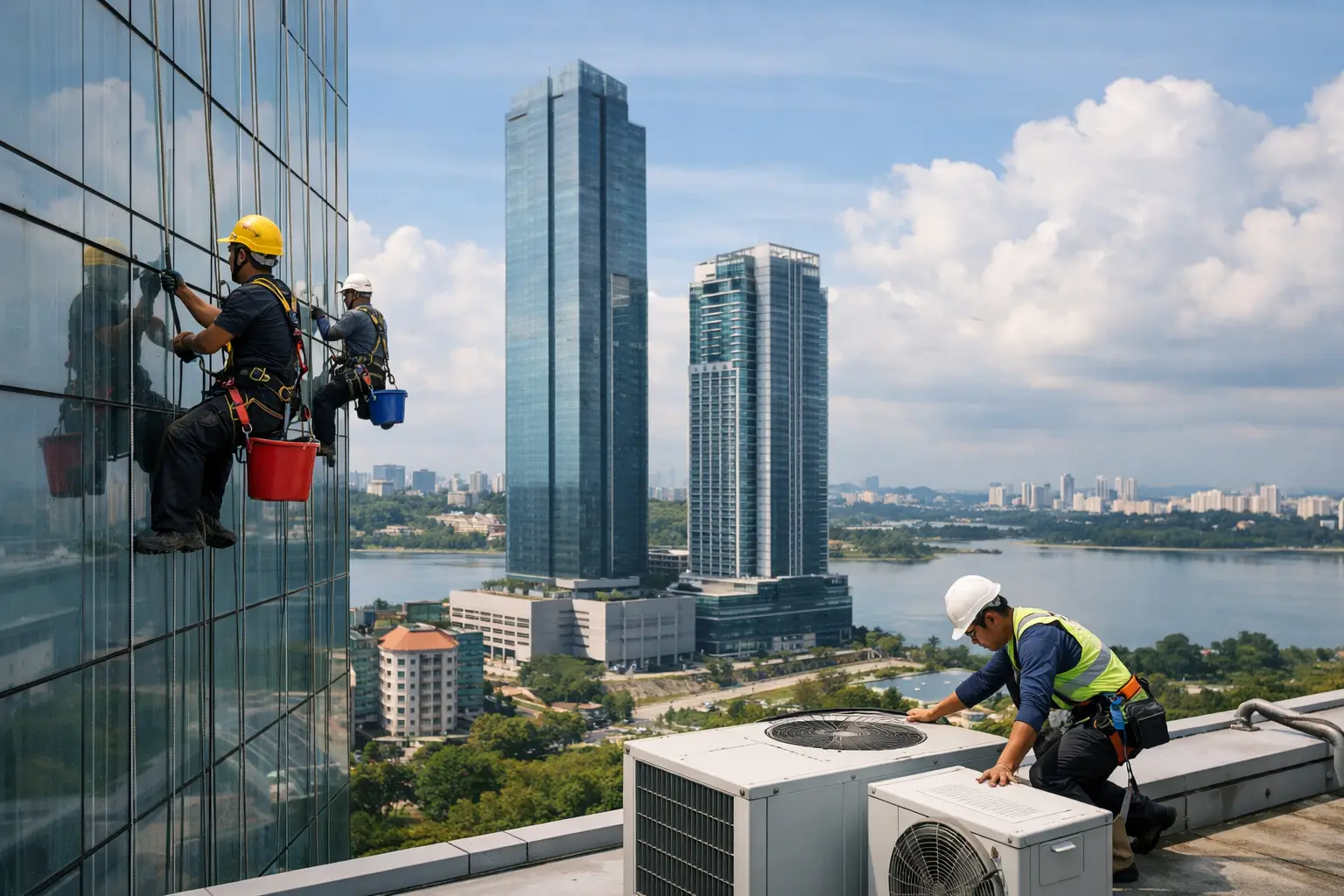
High-rise facade restoration requires more than skilled surface work. It requires an access strategy that protects workers, occupants, pedestrians, vehicles, and the building itself. Rope access can be an efficient option for many vertical surfaces because it allows targeted work with minimal ground disruption, but it must be performed by trained technicians under a documented safety system.
The access method should account for anchor suitability, rescue arrangements, exclusion zones, weather monitoring, falling-object controls, and the location of air intakes, public walkways, and occupied spaces. Work sequencing can also reduce disruption by dividing elevations into manageable zones and coordinating with building operations.
In Malaysia, sudden rainfall and high humidity can affect both safe access and coating application. Work plans should include weather contingencies and confirm that surface conditions meet the coating system’s requirements. Applying a coating to a damp substrate or during unsuitable weather can undermine an otherwise well-prepared restoration.
Protect the Result With Planned Maintenance
Restoration should establish a maintenance baseline, not mark the end of facade care. Regular visual inspections help identify new staining, failed sealants, blocked drainage paths, and localized coating damage before they become widespread. Periodic professional cleaning removes contaminants that can dull finishes and retain moisture against the surface.
The best inspection interval depends on the facade type, building height, surrounding environment, and exposure to traffic pollution, coastal conditions, or dense vegetation. A high-rise near major roads may need closer monitoring than a sheltered low-rise property, while a heritage facade may need more conservative cleaning methods and more frequent condition reviews.
A faded facade is often the building’s visible reminder that its protective surfaces are under pressure. Address it with careful assessment, compatible restoration materials, and safe specialist access, and the result can support not only a stronger first impression but a more durable exterior for the years ahead.
Discuss the next step
For advice on faded building exterior restoration, request a site assessment or quotation from Vertical Pro.
Where inspection or maintenance involves work at height, access planning should follow a documented risk-control process. DOSH Malaysia’s fall-prevention guidance is a useful reference for that planning.
Leave a Reply