

When a technician is suspended hundreds of feet above a live building, safety is not a line item on a checklist. It is the system that determines whether facade cleaning, inspection, or repair can happen without putting people, occupants, or the asset at risk. That is why a rope access safety guide matters for any property team planning exterior work at height.
For building owners and facility managers, rope access is often the most practical way to reach difficult facade areas without the footprint of large suspended platforms or full scaffolding. But efficiency only works in your favor when the method is built on disciplined planning, competent technicians, and tight site control. Rope access should never be viewed as simply “getting someone over the edge.” It is a structured work-at-height system with clear procedures, redundancies, and inspection requirements.
What a rope access safety guide should cover
A proper rope access safety guide starts with the principle that access method and safety method are inseparable. In other words, the ropes, anchors, devices, rescue planning, and technician competence are not supporting details. They are the job.
For facade work, that matters because conditions change from building to building. A glass curtain wall presents different hazards than a concrete facade. A high-rise office tower with heavy pedestrian traffic at podium level requires different controls than a residential block with limited ground access. Heritage structures can also limit where anchors, edge protection, or load distribution methods can be used. The safest rope access program accounts for those differences before work begins, not while technicians are already on line.
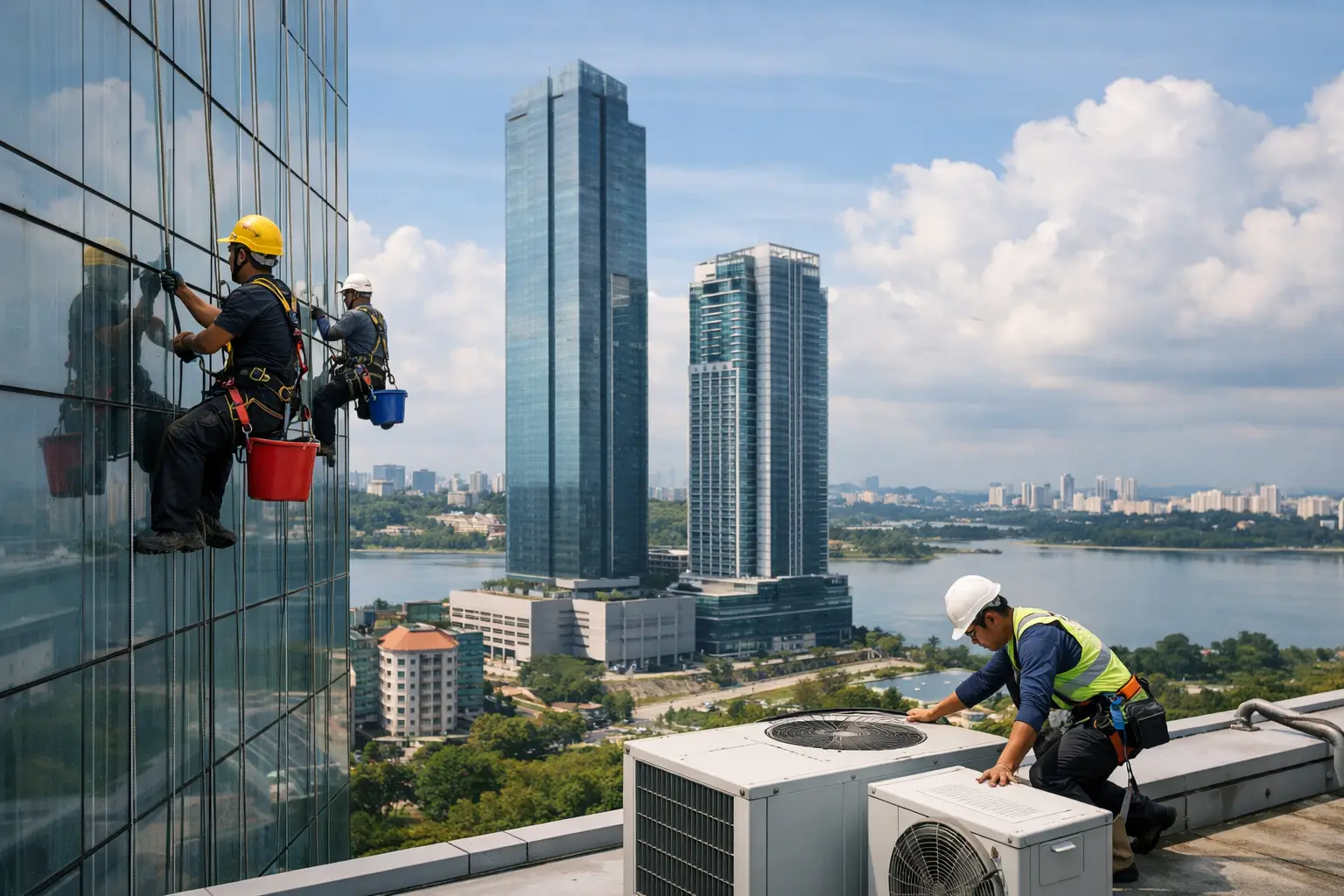
This is also where property stakeholders need to think beyond the work area itself. Rope access safety includes interface risks with tenants, visitors, vehicles, loading zones, mechanical systems, and weather exposure. The facade may be the target surface, but the full building environment affects the risk profile.
Why rope access can be a safe choice
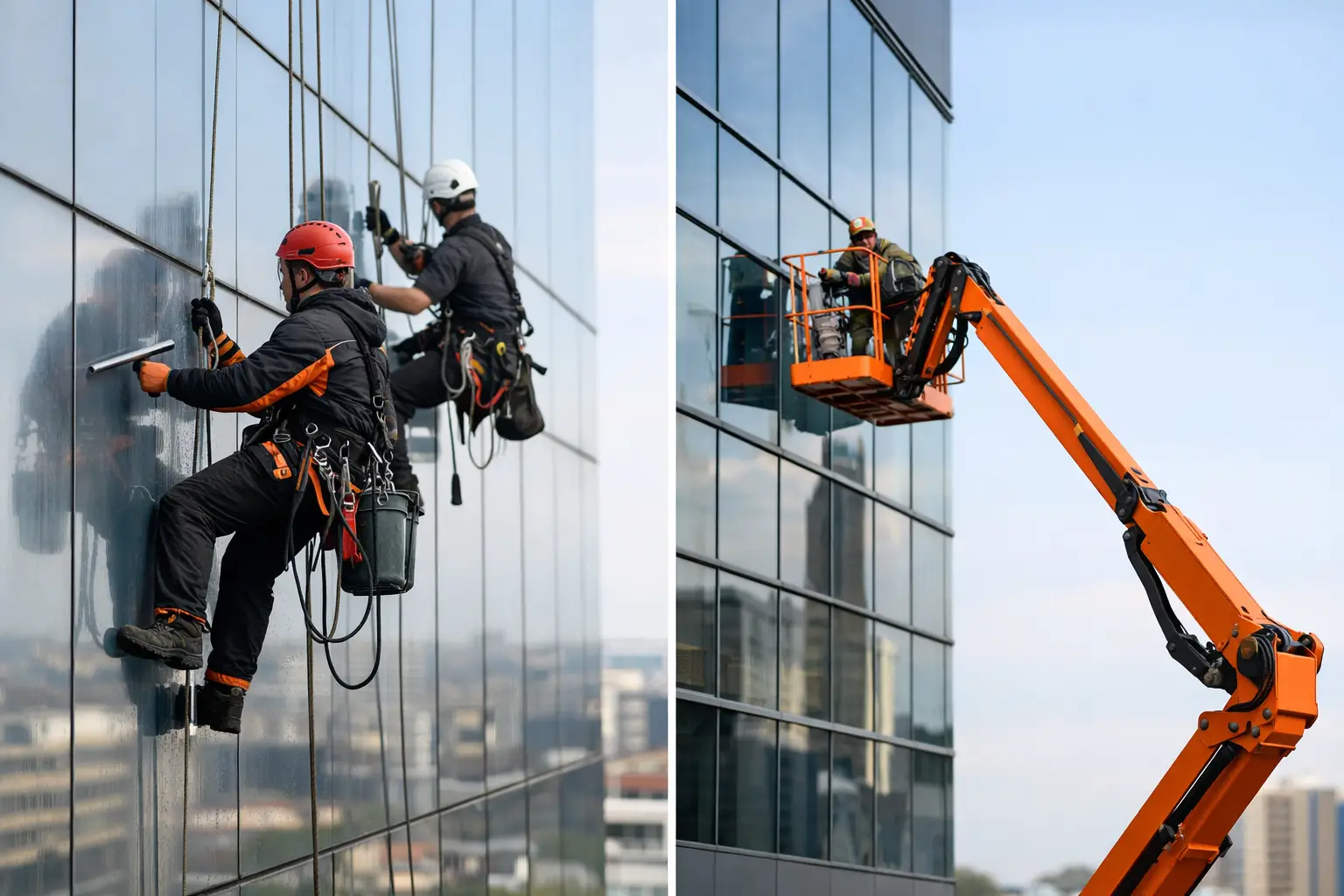
Rope access has a strong safety record when it is carried out by trained personnel under controlled procedures. One reason is that the system is intentionally built around redundancy. Technicians typically work with a main working line and an independent backup line, and their movement is controlled through specialized devices designed for ascent, descent, positioning, and fall protection.
Another advantage is reduced site congestion. Compared with heavier access systems, rope access can limit disruption at ground level and reduce the amount of temporary equipment imposed on the building. That can be especially useful for occupied properties where continuity of operations matters. Still, reduced disruption does not mean reduced oversight. It simply means the controls are different.
The trade-off is that rope access is highly dependent on technician skill, supervision, and planning discipline. If a contractor treats it as a shortcut rather than a specialized access system, the risk rises quickly. For property managers, the lesson is simple: the method itself is not the concern. The quality of the rope access system is.
The core safety controls before work starts
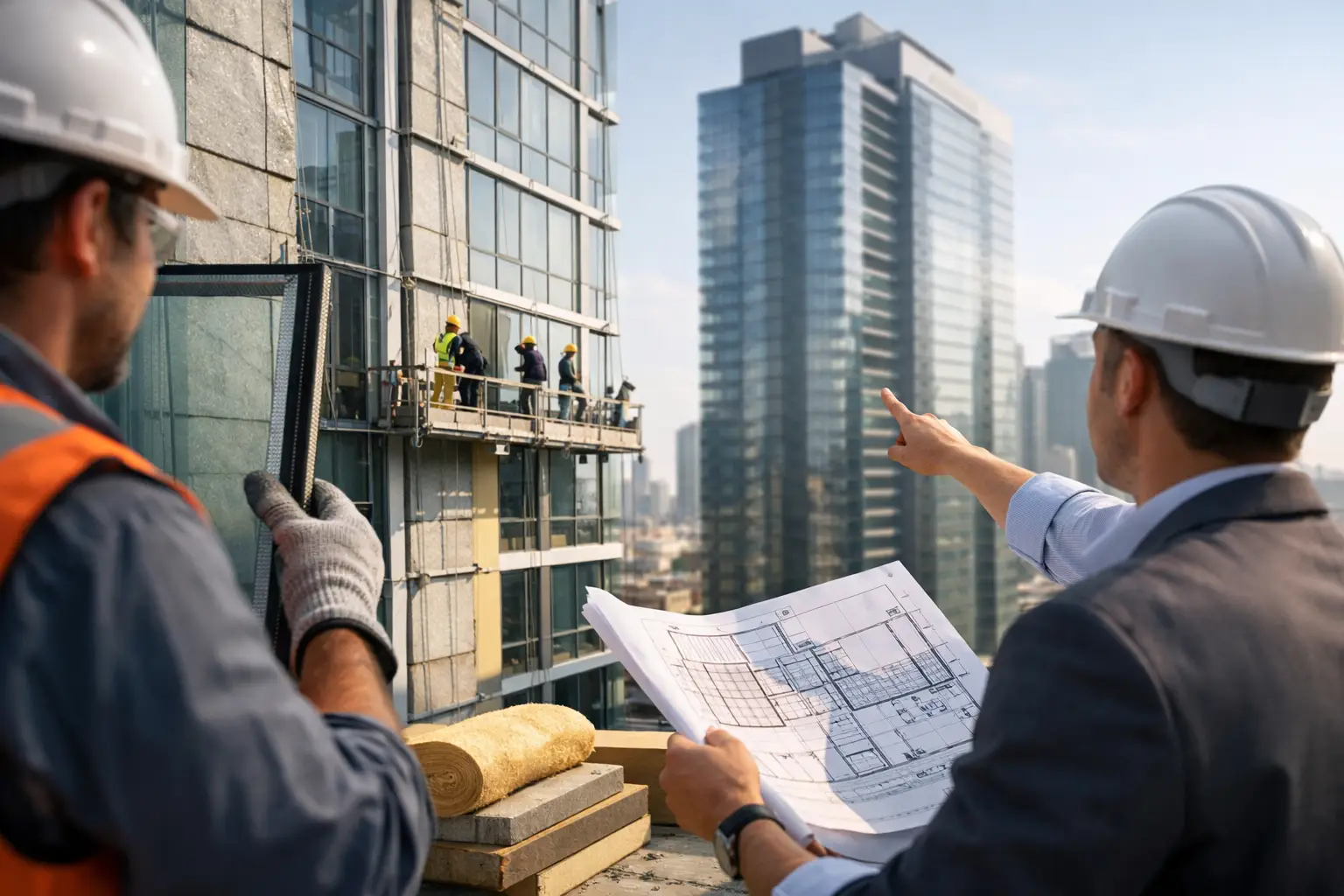
The safest rope access jobs are usually decided before anyone leaves the roof. Pre-job planning should identify the task scope, facade condition, access route, anchor suitability, rescue arrangements, exclusion zones, and environmental conditions. If any of those elements are vague, the job is not ready.
A site-specific risk assessment is essential. Generic work-at-height paperwork is not enough for a live building with unique geometry, tenant activity, and facade details. The assessment should address falling objects, rope contact with sharp edges, fragile facade elements, electrical hazards, public interface, and weather exposure. In Malaysia, sudden rain, heat, humidity, and gusting winds can rapidly alter safe working conditions, which makes real-time supervision and stop-work criteria particularly important.
Competency is the next non-negotiable control. Rope access technicians should be properly trained and medically fit for the work. Just as important, they need experience relevant to the building type and task. Facade cleaning, sealant repair, inspection, and restoration all create different body positions, tool-handling demands, and exposure durations. A technician may be qualified for rope access and still need task-specific supervision.
Rope access safety guide to equipment and anchors
Equipment condition has a direct effect on operational safety, but equipment quality alone does not make a system safe. Every component has to be compatible, inspected, and suitable for the intended load and environment.
Ropes must be protected from abrasion, contamination, and edge damage. Connectors, descenders, backup devices, harnesses, helmets, and tool lanyards should be inspected before use and managed under a documented inspection regime. For facade work, one overlooked issue is chemical exposure. Cleaning agents, sealants, dust, and surface contaminants can all affect equipment performance if storage, handling, and post-use inspection are weak.
Anchors deserve especially close attention. A strong technician on a good rope is still vulnerable if the anchor system is inadequate. Anchors must be selected and verified based on structure, load path, configuration, and intended use. Permanent systems can simplify repeat facade maintenance, but they still require inspection and verification. Temporary anchors can be effective, though they demand careful installation, placement, and oversight. On older or modified buildings, assumptions about structural capacity should never replace confirmation.
Rescue planning is part of the job, not a backup idea
One of the clearest signs of a mature rope access operation is the quality of its rescue planning. If a technician becomes injured, suspended, or unable to self-recover, the response cannot depend on improvisation.
A rescue plan should be specific to the site, the work area, and the likely failure scenarios. That includes retrieval from suspension, transfer around facade projections, response to medical events, and coordination with building management. The team should know who leads the rescue, what equipment is required, how communication will work, and when emergency services would be involved.
For occupied properties, building teams should also understand how rescue planning affects operations. Access to rooftops, plant rooms, restricted floors, and perimeter areas may need to remain available throughout the work window. This is one reason experienced facade specialists coordinate closely with property management rather than operating in isolation.
Site control at ground and roof level
A safe rope access job protects more than the technician on the ropes. It also protects the public, building occupants, and nearby operations.
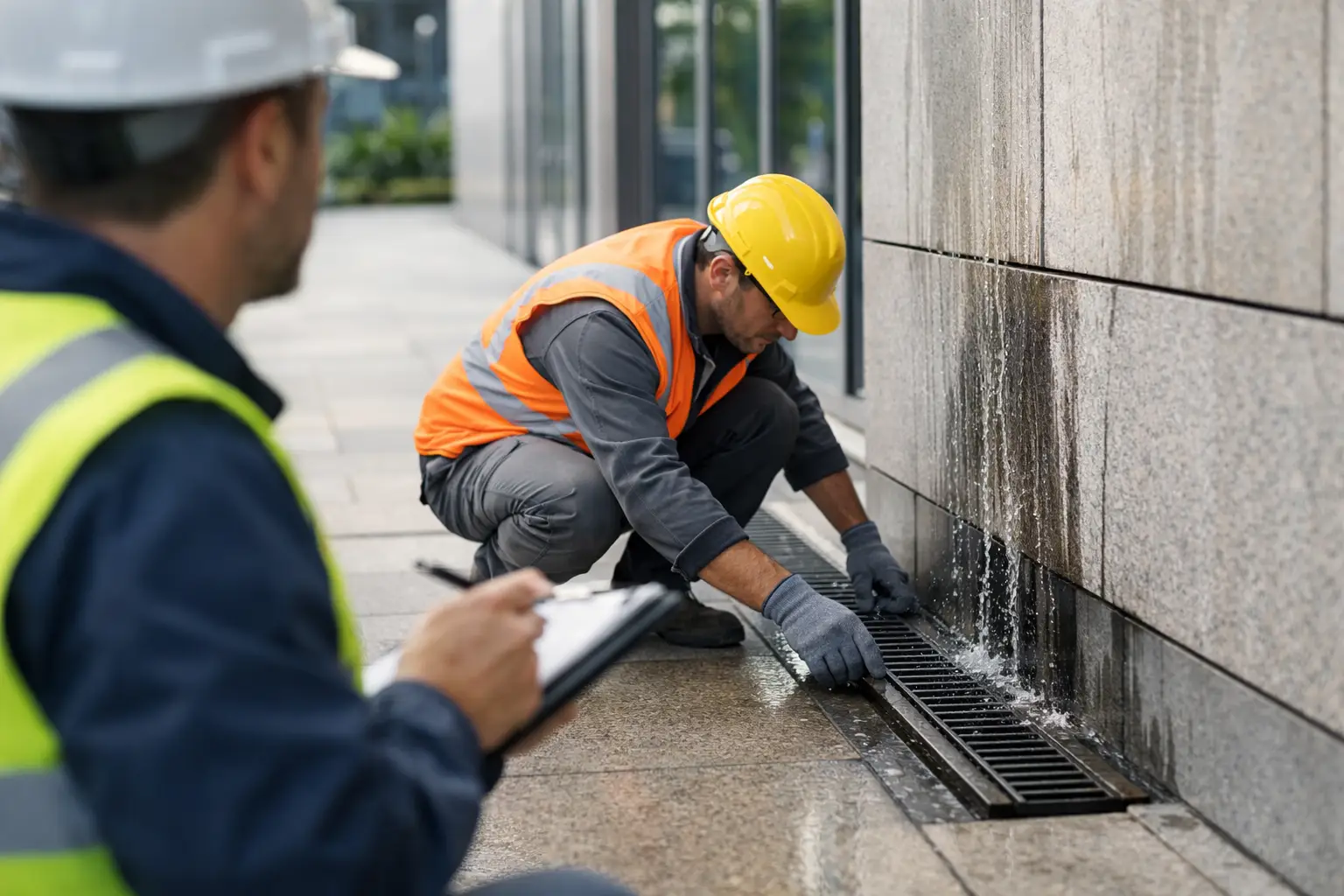
Ground-level exclusion zones should be clearly defined and actively maintained, not just marked once and forgotten. In dense urban sites, this may require phased work areas, spotters, temporary rerouting of pedestrians, or timed access restrictions. Falling tools, debris, rinse water, and dislodged facade material all need to be considered.
Roof-level control matters just as much. Access routes must be managed so unauthorized persons do not enter active work zones or interfere with anchor areas and rigging. Materials should be secured, edge areas protected where needed, and communication maintained between roof teams and technicians below. Good site control looks simple from the outside because the complexity has already been managed.
When conditions mean work should stop
Not every scheduled task should proceed. A disciplined contractor knows when conditions no longer support safe work and has the authority to stop.
Weather is a common reason. High winds can destabilize technicians and affect pendulum risk. Rain can alter surface friction, reduce visibility, and change how equipment behaves. Lightning risk is an obvious red flag, but heat stress can be just as serious on exposed elevations. Building-specific issues can also trigger a stop, including unexpected facade instability, blocked access, anchor concerns, or conflicts with tenant operations.
This is where clients should value caution, not speed. Delays can be inconvenient, but forcing rope access work in marginal conditions usually creates bigger operational and safety consequences later.
What property managers should ask before approving rope access work
A contractor does not need to overwhelm a client with technical jargon, but they should be able to explain their safety system clearly. Ask how the risk assessment is tailored to your building, how anchors are selected, how rescue is planned, how exclusion zones are managed, and who supervises the work.
It is also reasonable to ask how facade condition affects the proposed method. Loose sealants, cracked cladding elements, corroded fixtures, and contaminated surfaces can all change access planning. A contractor focused on facade performance, not just vertical access, will usually identify these concerns earlier and manage them more effectively.
For many buildings, rope access is not only a practical solution but a smart one. The key is to treat it as a specialized safety system tied directly to facade condition, building operations, and long-term asset care. That is the standard dependable providers such as Facade by Vertical Pro Sdn Bhd work to uphold.
The best time to think seriously about rope access safety is before the first rope is rigged, because well-managed exterior work protects more than the people doing it – it protects the building, the people inside it, and the reputation attached to both.
Discuss the next step
For advice on rope access safety guide, request a site assessment or quotation from Vertical Pro.
Rope access is more than a way to reach the facade; it is a complete work system. IRATA International’s overview of rope access outlines the role of planning, management, trained personnel and suitable equipment.

Leave a Reply