
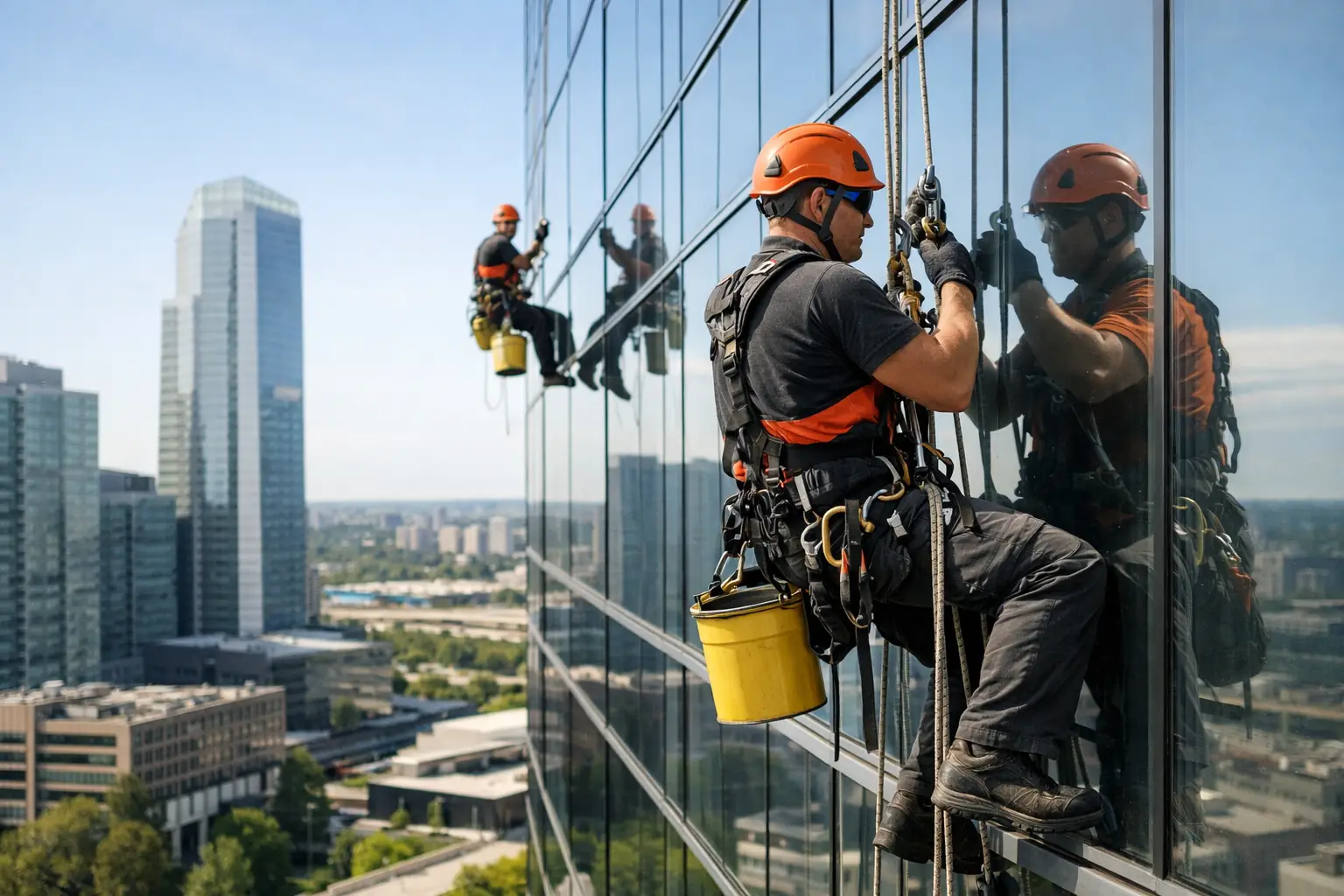
A stained facade, a loose sealant joint on the 28th floor, or early signs of concrete spalling rarely stay small for long. Rope access building maintenance gives property teams a practical way to inspect, clean, repair, and protect elevated exterior surfaces before minor defects turn into larger operational and safety issues.
For building owners and managers, the real question is not whether exterior maintenance is necessary. It is how to carry it out efficiently, safely, and with enough precision to protect the asset. On many mid-rise and high-rise buildings, rope access answers that question better than conventional methods, especially when facade conditions vary from one elevation to the next.
What rope access building maintenance actually involves
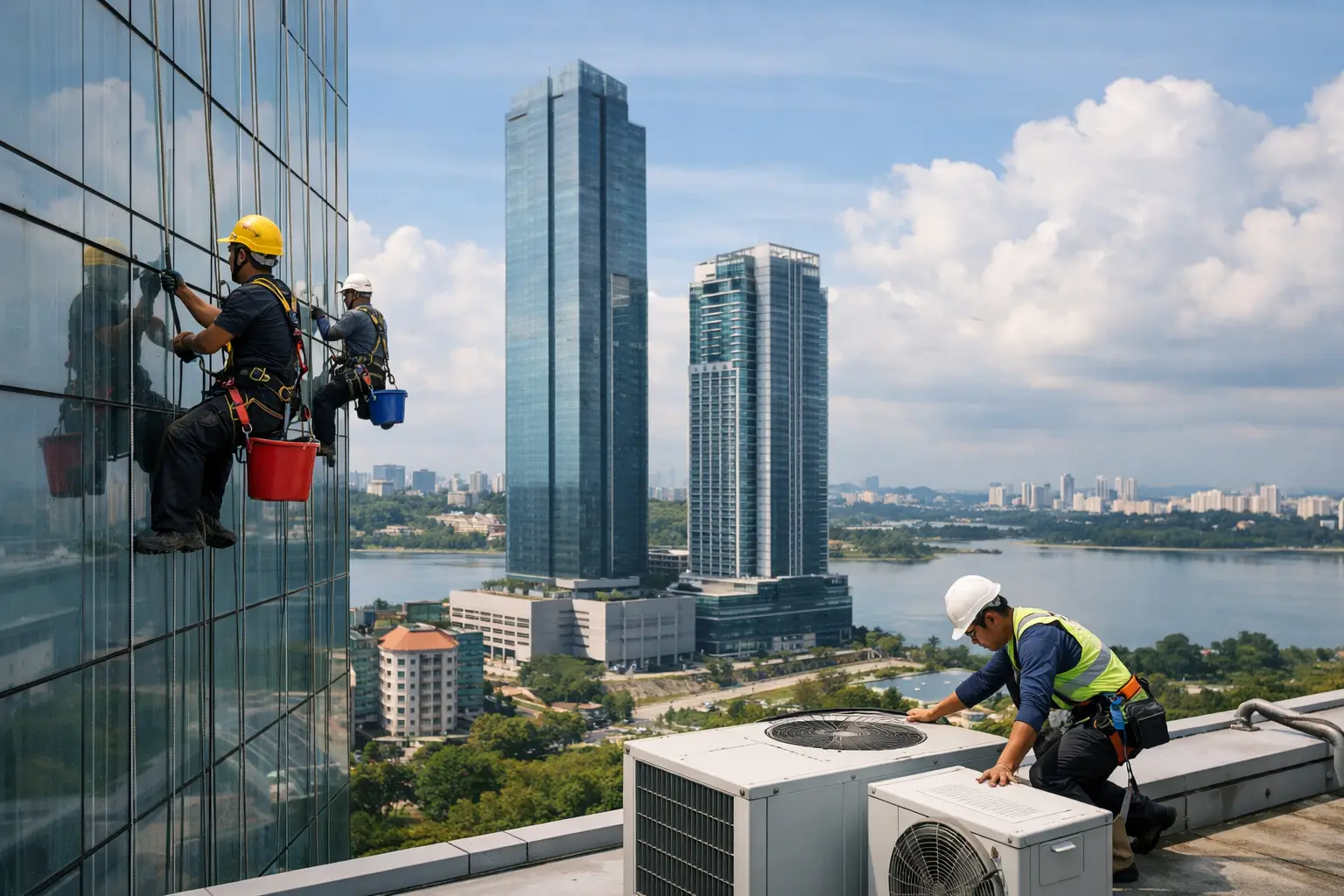
Rope access building maintenance is a work-at-height method that allows trained technicians to reach building exteriors using ropes, harnesses, anchors, and controlled descent systems. It is not limited to cleaning. In practice, it supports a wide range of facade-related work, including inspections, crack assessment, sealant replacement, localized repairs, waterproofing touch-ups, and the removal of biological growth or pollution staining.
This matters because facade maintenance is rarely a single-task exercise. A building may need glass cleaning in one area, movement-joint attention in another, and close-up inspection around parapets or recessed architectural details that are difficult to reach from the ground. Rope access allows technicians to move directly to the affected area and work with close visual control.
That direct access is one of its strongest advantages. Instead of relying on distant visual checks or broad maintenance assumptions, technicians can assess defects at the source. For building stakeholders responsible for long-term exterior performance, that level of access improves decision-making.
Why rope access is often the right fit for facade care
When facade issues are isolated, elevated, or spread across difficult-to-reach sections, rope access can be more effective than methods that require large setup areas or heavy equipment. This is especially relevant for occupied commercial towers, residential properties, and architecturally complex buildings where exterior work must be planned around daily operations.
A major benefit is reduced disruption. Rope access systems usually require less ground-level occupation than bulkier access equipment. That can help property teams maintain normal circulation at drop-off areas, parking zones, retail frontages, and shared access points. In active urban environments, that operational advantage is significant.
There is also a precision benefit. Facade maintenance is often condition-based. One elevation may be heavily exposed to sun and rain, while another accumulates dirt from nearby traffic or traps moisture around design features. Rope access makes it easier to target work where it is actually needed instead of treating the whole building as if wear is uniform.
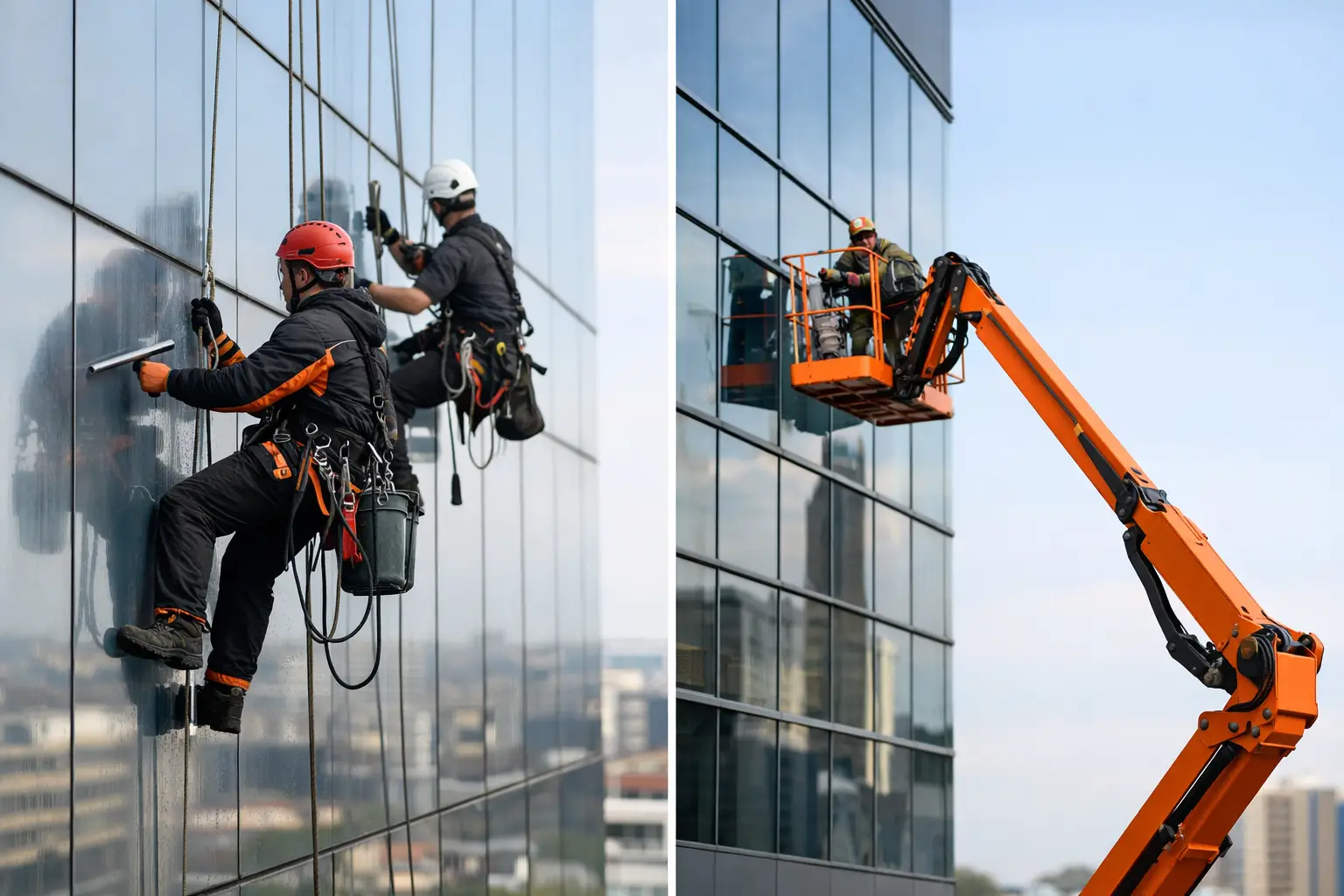
That said, it depends on the scope. Rope access is highly effective for inspection, cleaning, minor repairs, and localized restoration work. If a project involves major material replacement across broad facade zones, other access methods may still be more suitable. The right approach should follow the building condition, the task type, and the risk assessment, not a one-size-fits-all preference.
Common building issues addressed through rope access building maintenance
Exterior deterioration usually develops gradually. By the time it is clearly visible from the ground, the underlying issue may already be affecting more than appearance. Rope access helps maintenance teams respond earlier and with more accuracy.
Facade cleaning and stain removal
High-rise buildings collect airborne pollutants, dust, mineral deposits, algae, and runoff staining. In Malaysia’s humid climate, those surface conditions can develop quickly, especially on shaded elevations and moisture-prone details. Cleaning is not only about appearance. Built-up contaminants can hide cracks, failed sealants, and water-entry points that need attention.
Rope access allows technicians to clean close to the surface and adapt methods to facade materials such as glass, stone, painted concrete, metal panels, or textured finishes. That matters because aggressive cleaning on the wrong surface can create new damage.
Inspection of cracks, joints, and water-entry risks
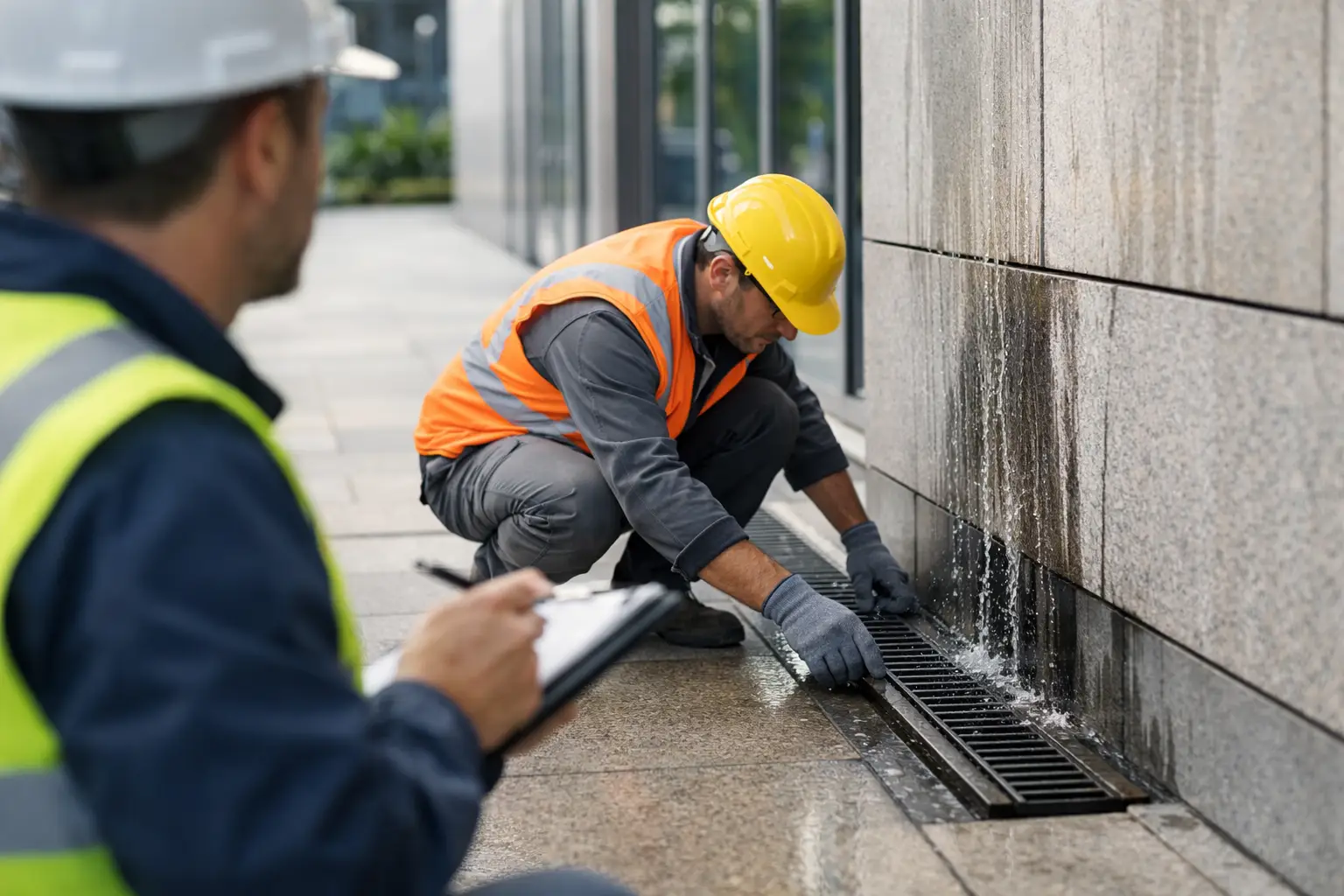
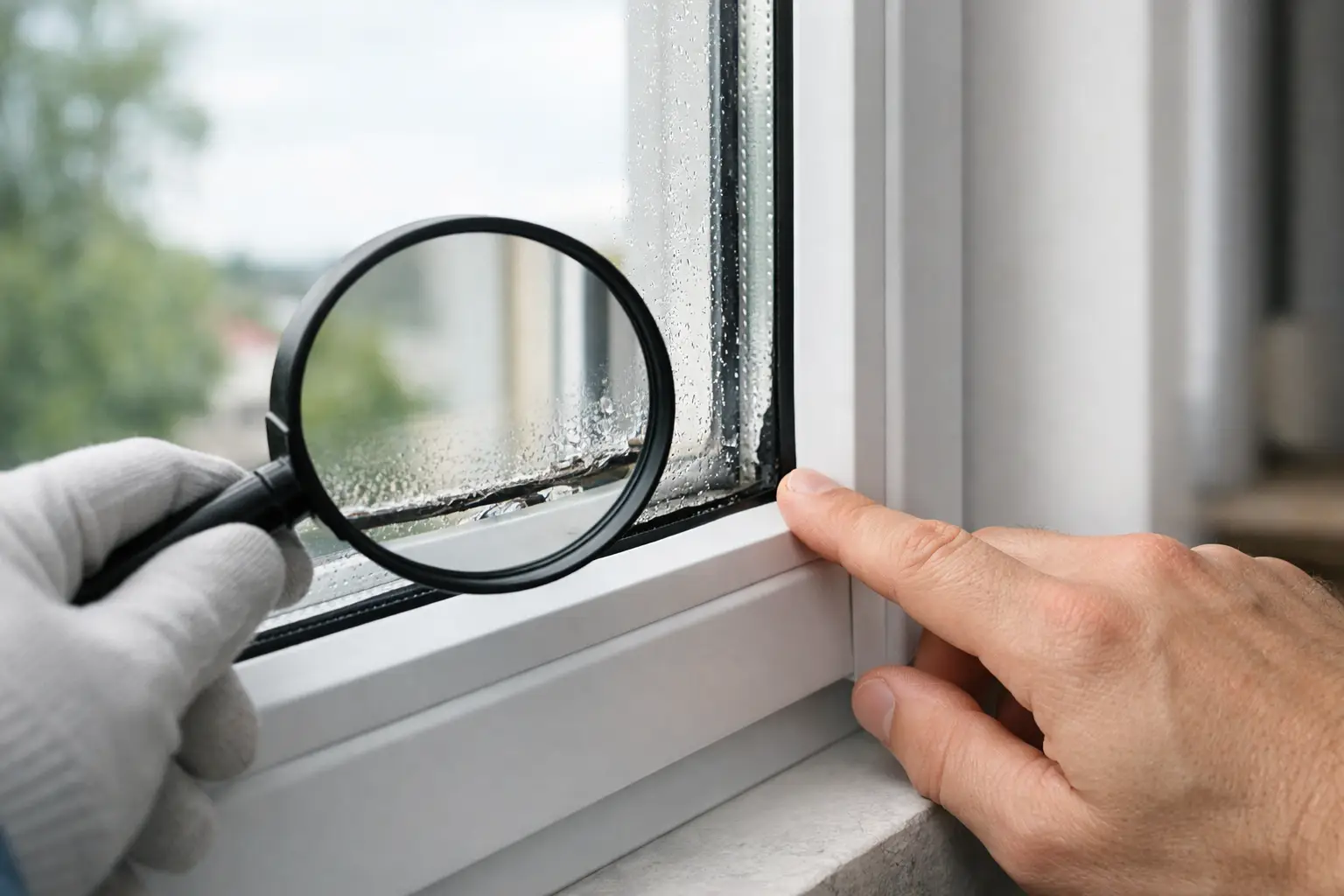
Water intrusion often starts at joints, sealant lines, transitions between materials, and small facade openings. From the ground, these areas can be difficult to assess properly. Rope access inspections allow trained personnel to examine movement joints, sealant condition, coating failure, and signs of substrate distress at close range.
This is often where maintenance planning becomes more disciplined. Instead of reacting to interior leakage complaints alone, building teams can identify vulnerable exterior points and schedule corrective work before water damage spreads inward.
Localized repairs and preventive maintenance
Not every facade problem requires large-scale restoration. Many buildings need selective intervention – patch repairs, minor concrete treatment, resealing, bolt or fixture checks, and maintenance around facade penetrations. Rope access is well suited to this type of targeted work because technicians can reach specific defect zones without creating unnecessary access infrastructure around unaffected areas.
Preventive maintenance is where this approach offers strong long-term value. Small repairs completed at the right time help slow deterioration, reduce risk to occupants and the public, and support better asset preservation.
Safety is not a feature – it is the foundation
For decision-makers, safety should never be treated as a generic promise. Rope access building maintenance depends on competent planning, trained personnel, equipment inspection, rescue readiness, and method statements aligned with the building and task.
A professional rope access operation is built around controlled systems and procedural discipline. Technicians work with redundant support principles, designated anchor strategies, and task-specific risk controls. The facade itself also influences planning. Fragile finishes, irregular geometry, rooftop constraints, and nearby public zones all affect how the work should be organized.
This is one reason specialist facade contractors are valuable. Working at height is one discipline. Understanding facade behavior is another. Buildings do not fail or deteriorate in random ways. Defects often follow material movement, water paths, UV exposure, detailing weaknesses, or deferred maintenance history. The team on the ropes should understand what they are seeing, not just how to reach it.
How rope access supports smarter maintenance planning
Many property teams fall into a reactive cycle with facades. A complaint is raised, a defect becomes visible, or a stain worsens, and only then is access arranged. That pattern usually leads to fragmented maintenance and uneven records.
Rope access is most useful when it is part of a broader facade management approach. Scheduled inspections can identify patterns by elevation, material type, and exposure level. Cleaning can be paired with condition reporting. Minor defects can be addressed before they become more disruptive. Over time, this creates a clearer picture of how the facade is aging and where future work should be prioritized.
For office towers and residential developments, this also supports presentation standards. Exterior condition affects tenant perception, public image, and confidence in building management. On heritage or architecturally significant properties, careful access planning becomes even more important because exterior work must protect both appearance and material integrity.
When rope access may not be the best option
A dependable contractor should be clear about limitations. Rope access is excellent for many facade tasks, but not every building condition or maintenance program should rely on it alone.
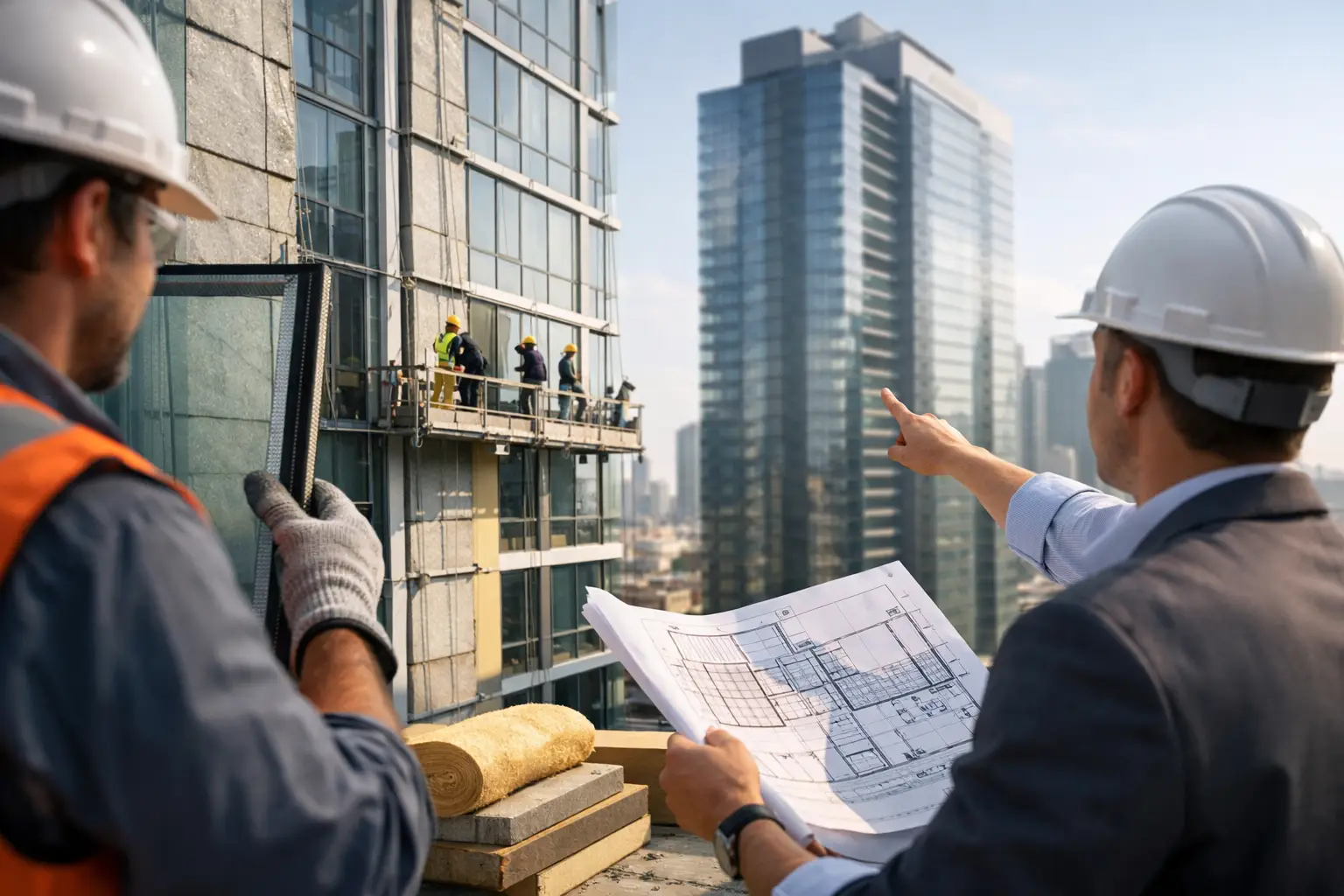
If work requires extensive replacement of facade elements across large continuous areas, suspended platforms or other systems may offer better productivity. If rooftop anchor conditions are unsuitable, access planning becomes more complex. If the facade contains fragile components that cannot tolerate certain loading or contact conditions, the method must be reassessed.
This does not reduce the value of rope access. It simply reinforces the need for proper evaluation. The best maintenance outcomes come from matching the access method to the building, not forcing the building to fit the method.
Choosing a rope access partner for building maintenance
For property owners, management corporations, developers, and facility teams, contractor selection should go beyond whether a provider offers work at height services. The more important question is whether the contractor understands facade maintenance as a building-performance issue.
Look for technical clarity. The contractor should be able to explain the defect, the likely cause, the recommended treatment, and any limits of the proposed work. They should also communicate how safety controls, site constraints, and occupant considerations will be managed during execution.
Documentation matters as well. Inspection findings, maintenance observations, and repair recommendations should help your team make future decisions, not just close the current task order. A reliable specialist brings structure to facade care, which is especially important for portfolios of high-rise assets where exterior conditions must be monitored consistently.
For many buildings, rope access is not just a way to reach the facade. It is a practical maintenance strategy that helps owners act earlier, target work more accurately, and preserve exterior performance with less disruption. When applied by a qualified facade specialist, it becomes a disciplined tool for protecting both appearance and building integrity.
The buildings that age best are rarely the ones with the fewest problems. They are the ones where problems are found early, accessed properly, and handled with the right level of technical care.
When rope access is—and is not—a good fit
| Often suitable | May require another method |
|---|---|
| Targeted inspection, cleaning or local repair | Heavy components or large material loads |
| Complex elevations with limited ground space | Work needing a stable platform for long periods |
| Occupied sites requiring a small footprint | Buildings without suitable access or anchor solutions |
| Short-duration work across difficult areas | Tasks incompatible with weather or rescue constraints |
Frequently asked questions
Is rope access always cheaper?
No. It can reduce mobilisation and ground footprint for suitable tasks, but the total scope, anchors, supervision, rescue and material handling determine cost.
Can technicians carry out repairs while on ropes?
Many targeted repairs are possible, but tool weight, materials, curing requirements, containment and the need for a stable working platform must be assessed.
Choose the access method by task
Read the rope access facade-maintenance planning guide or request an access assessment.
For rope access work, planning, supervision, competence and equipment need to operate as one system. IRATA International’s overview of rope access explains why each part matters to safe execution.
Leave a Reply