

A facade may look clean and intact from ground level while access anchors, sealant joints, glazing edges, or concealed water paths need close inspection several stories above. That is where high rise safety compliance becomes a practical building management responsibility, not simply a contractor requirement. Every decision about access, work sequencing, weather, and supervision affects the people on the facade and the occupants below.
For property owners and facility teams, the objective is clear: complete necessary exterior work without creating avoidable risk, disrupting operations, or compromising the building envelope. Compliance provides the framework, but reliable outcomes depend on how carefully that framework is applied to the building in front of you.
Why High Rise Safety Compliance Starts Before Work Begins
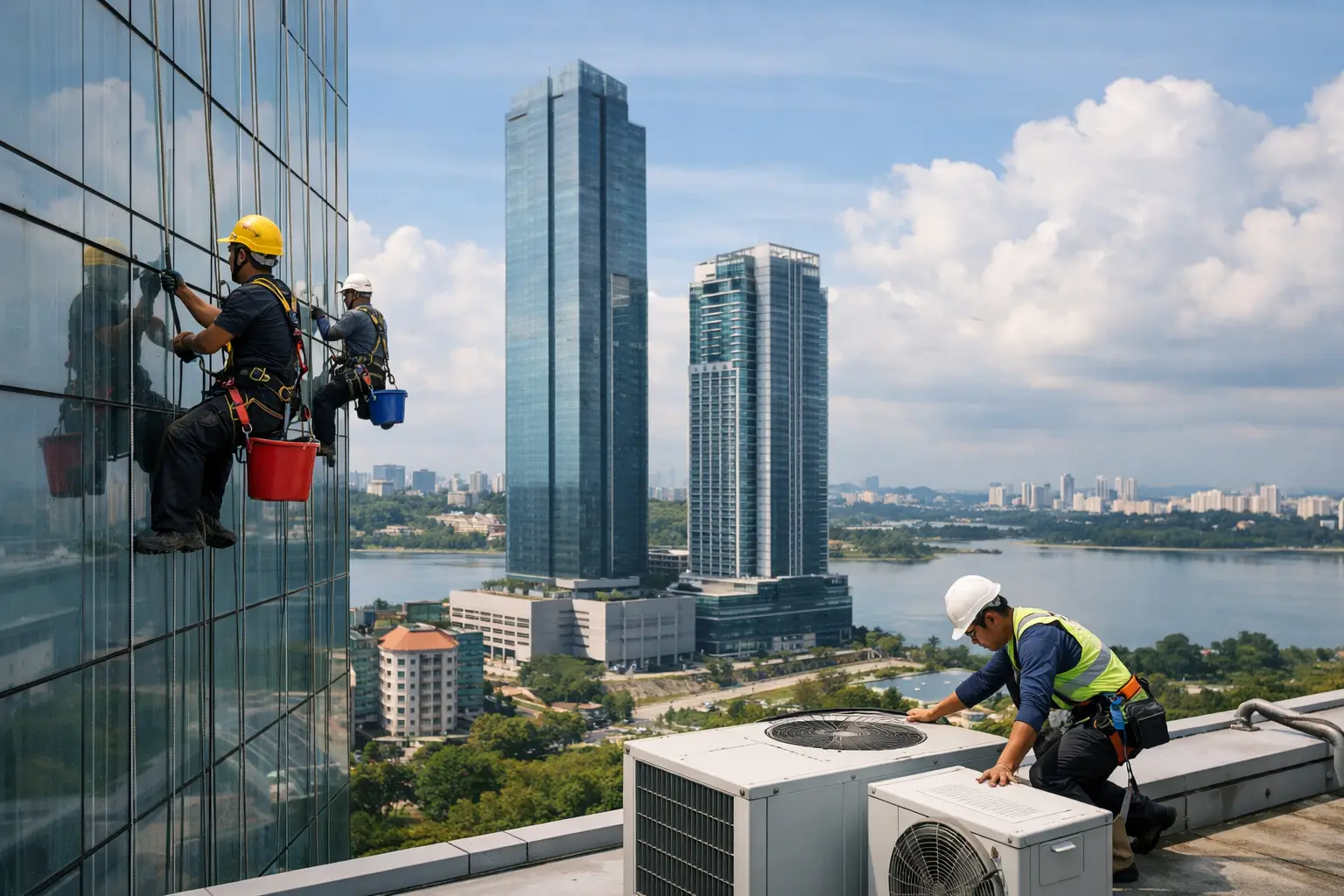
Working at height introduces hazards that cannot be managed by experience alone. A technician may need to navigate irregular facade geometry, slippery surfaces after rain, active drop zones, restricted roof access, or areas shared with occupants and the public. On occupied commercial and residential buildings, the work plan must account for more than the crew’s position on the wall.
Proper planning begins with a site-specific assessment. The contractor should understand the facade material, the access method, the rooftop layout, anchor arrangement, nearby electrical or mechanical equipment, and the activities taking place below. A rope access approach that suits a simple vertical elevation may not suit a recessed balcony, fragile cladding panel, or a location above a busy entrance.
This early review also protects the facade itself. Incorrect rope placement, uncontrolled equipment contact, or unsuitable cleaning methods can scratch glass, mark coatings, damage sealants, or place force on components not designed for it. Safety and building preservation are closely connected. A plan that protects people while overlooking the exterior system is incomplete.
The Core Elements of High Rise Safety Compliance
High rise safety compliance is best understood as a working system. Personal protective equipment matters, but it is only one layer. The strongest programs combine competent people, verified equipment, controlled access, clear communication, and ongoing supervision.
Competent planning and clear responsibility
Before work starts, building management and the service provider should agree on scope, work areas, timing, access responsibilities, and emergency contacts. The team needs a documented method for completing the task safely, including how workers will access and leave the work position, protect tools, manage exclusion zones, and respond if conditions change.
Responsibility should not become vague once a contractor arrives on site. Building representatives need to provide accurate information about roof access, known defects, tenant-sensitive areas, building rules, and operational restrictions. The contractor must then translate those conditions into a workable access and safety plan. This coordination is especially valuable on towers where facade work may affect loading bays, retail podiums, parking entrances, or resident areas.
Suitable access equipment and anchor verification
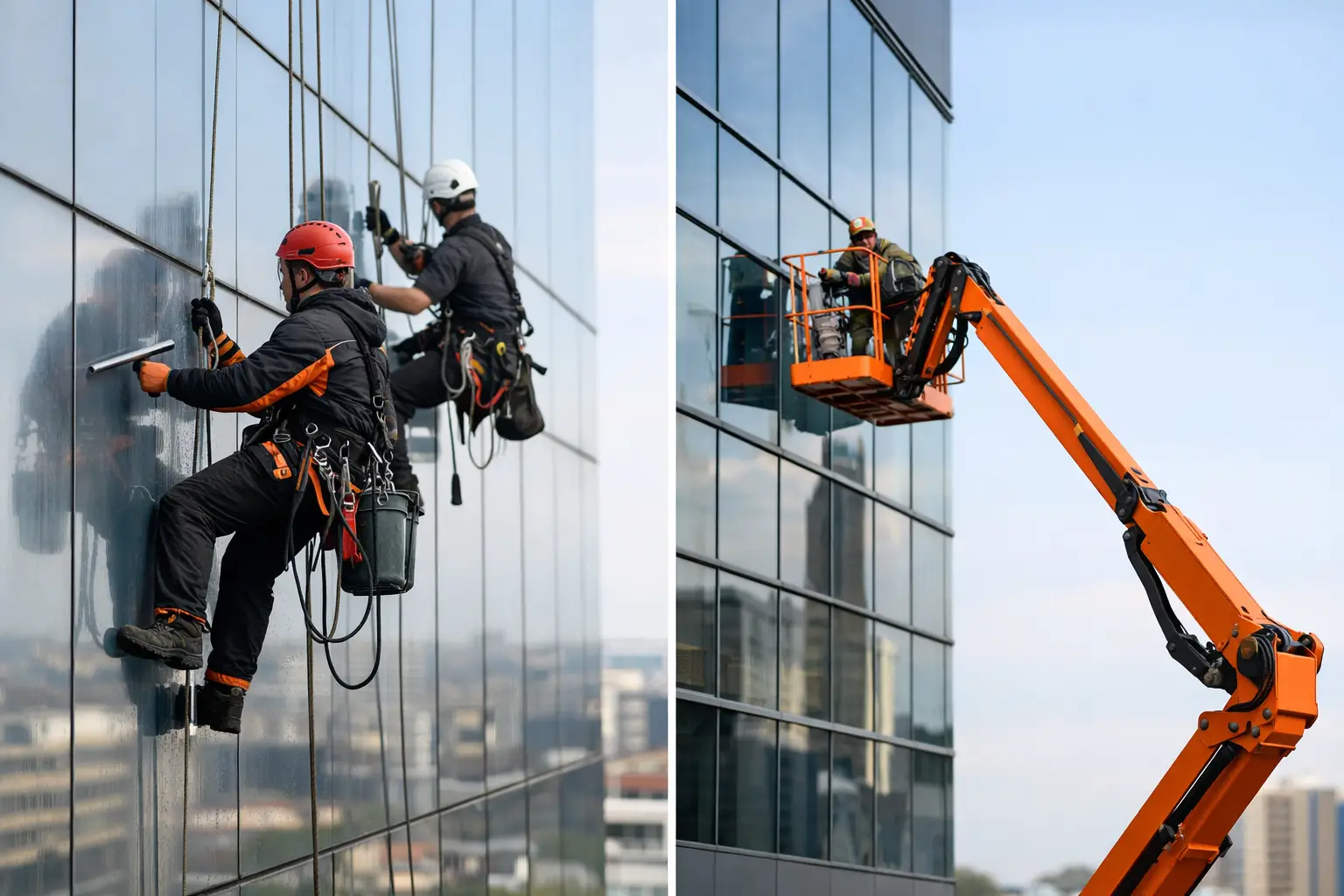
The appropriate access method depends on the building and task. Rope access can provide efficient, low-impact access to difficult exterior areas when it is properly planned and carried out by trained personnel. In other situations, suspended platforms, boom lifts, or alternative systems may be more suitable.
The key question is not which method appears fastest. It is whether the method provides controlled access without placing workers, the public, or the facade at unnecessary risk. Roof anchors, lifelines, ropes, connectors, harnesses, and rescue equipment must be selected, inspected, and used for their intended purpose. A visually acceptable anchor point is not automatically a verified point for a planned load or access configuration.
Property teams should also recognize that anchors and access provisions require their own maintenance attention. Corrosion, unauthorized modifications, water ingress, and roof renovations can affect their condition. Treating these systems as permanent and maintenance-free creates risk long before a crew descends the facade.
Exclusion zones and public protection
A controlled drop zone is essential whenever work takes place above occupied areas. Tools, debris, wash water, loose materials, and accidental falling objects can endanger people at ground level even when technicians are securely connected to their systems.
The controls may include barriers, warning signs, ground personnel, adjusted pedestrian routes, protected entrances, or scheduled work outside peak traffic periods. The right approach depends on the surrounding environment. A quiet service yard and a main office lobby require different controls, even if the facade work is similar.
For high-traffic properties in Kuala Lumpur, Selangor, Johor, or Penang, these details can determine whether facade maintenance proceeds smoothly or creates unnecessary complaints and operational disruption. Good planning protects the public while maintaining access for tenants, visitors, deliveries, and emergency routes.
Weather monitoring and stop-work authority
Malaysia’s tropical conditions demand practical judgment. Rain can make surfaces and rooftops slippery. Wind can affect rope handling, suspended equipment, and water control. Thunderstorm activity creates an immediate concern for exposed personnel working at height.
A safe work plan defines the conditions under which work will pause and who has authority to make that decision. This should not be treated as a loss of productivity. Stopping work when weather conditions are unsuitable prevents a minor schedule adjustment from becoming a serious incident. The same principle applies to unexpected facade defects, damaged anchors, changing site traffic, or equipment concerns.
How Compliance Supports Better Facade Maintenance
There is a tendency to separate safety planning from maintenance quality. In practice, the two reinforce each other. Technicians who can access a facade in a stable, controlled position are better able to inspect stains, cracks, failed sealant, corroded fittings, drainage issues, and localized surface deterioration.
That improved visibility supports more accurate maintenance decisions. A team can distinguish routine contamination from an early sign of water penetration or material failure. It can also document conditions before cleaning or restoration begins, which helps building managers prioritize follow-up work and maintain useful records over time.
Safety controls also reduce the temptation to take shortcuts. When access, equipment staging, and work zones are planned correctly, crews are less likely to stretch beyond safe reach, improvise around obstacles, or rush through complex sections of the facade. This is particularly relevant for buildings with architectural fins, curved glazing, sunshades, or mixed cladding systems.
What Building Managers Should Ask Before Approving Work
A property manager does not need to direct the technical method, but should expect clear answers from a specialist provider. Ask how the facade will be assessed before work, what access method is proposed and why, how anchors and equipment will be checked, and how the public area below will be controlled.
Also ask how the provider will manage weather changes, communicate with site representatives, secure tools and materials, and prepare for an emergency. These questions reveal whether the safety plan is specific to the property or merely a generic document reused from another project.
Documentation matters, but paperwork alone does not make a site safe. The value comes from matching the documented plan to actual conditions, briefing the crew, checking controls throughout the work, and recording any change that affects the original method. A compliant operation should be visible in the way the team sets up, communicates, and responds on site.
Avoiding the Common Gaps
The most persistent gaps are often simple: incomplete knowledge of roof access systems, poorly defined ground exclusion zones, assumptions about weather, and unclear coordination between management and contractors. These issues become more serious when facade work is treated as an isolated cleaning task rather than part of the building’s wider maintenance program.
Regular facade inspections and planned maintenance make compliance easier to manage. They allow owners to identify access constraints early, schedule work around tenant activity, address deteriorating anchors or roof features, and avoid urgent interventions under unfavorable conditions. Emergency work is sometimes unavoidable, but it should not be the default response to problems that were visible months earlier.
A qualified facade specialist brings value by considering the full working environment: the exterior material, access system, height, occupancy pattern, weather exposure, and long-term maintenance needs. For complex properties, this integrated view is more useful than selecting a provider solely on the basis of a single task.
Safe facade work is ultimately a sign of disciplined asset care. When safety requirements are planned into inspections, cleaning, restoration, and access decisions, building teams protect workers, occupants, public areas, and the exterior asset they are responsible for preserving.
Discuss the next step
For advice on high rise safety compliance, request a site assessment or quotation from Vertical Pro.
The access method must be planned with the same care as the repair or cleaning method. DOSH Malaysia’s fall-prevention guidance sets out practical controls for preventing falls at work.



Leave a Reply