

Good facade maintenance Malaysia planning is site-specific. It should reflect facade condition, recurring defects, weather exposure and safe access requirements.
Facade Maintenance Malaysia: What to Check on Site
Use a small test area where cleaning chemicals, coatings or sealants are involved. It is easier to adjust the method before the full elevation is treated.
A stained curtain wall after monsoon season is rarely just a cosmetic issue. On high-rise buildings in Malaysia, surface staining, sealant failure, biological growth, and water intrusion often show up together and if they are left untreated, repair costs usually rise faster than most maintenance budgets expect. That is why a facade maintenance guide Malaysia property teams can actually use needs to go beyond cleaning schedules and address performance, safety, and long-term asset protection.
For building owners, facility managers, and management corporations, facade maintenance is not a reactive task reserved for visible defects. It is part of preserving building value, protecting occupants, reducing liability, and keeping the property presentable in a market where first impressions matter. In Malaysia’s hot, wet, and polluted urban environment, facade systems age under constant stress, and the maintenance approach needs to reflect that reality.
Why facade maintenance matters more in Malaysia
Malaysia’s climate accelerates exterior wear in ways that are easy to underestimate. Frequent rainfall keeps surfaces wet for long periods. Strong UV exposure degrades coatings, sealants, gaskets, and some composite materials. Humidity encourages algae, mold, and staining, especially on shaded elevations. In dense urban areas, airborne pollutants and traffic residue cling to facade surfaces and dull the building appearance faster than many owners expect.
These conditions do more than affect aesthetics. Dirt buildup can mask cracks, failed joints, and water paths. Moisture trapped behind facade elements can contribute to corrosion, spalling, and substrate deterioration. A minor sealant defect around glazing or panel joints may remain hidden until interior leakage appears, by which point damage may already extend beyond the facade line.
That is the main trade off property teams face. Delaying maintenance may save money in the current quarter, but it often increases repair scope later. On the other hand, over-servicing a facade without a condition-based plan can also waste budget. The right approach is scheduled inspection combined with targeted intervention.
A practical facade maintenance guide Malaysia teams can follow
A useful maintenance program starts with understanding the facade as a system, not just a surface. Glass, stone, paint, sealants, movement joints, metal panels, anchors, and drainage details all age differently. If the maintenance plan treats everything the same, defects are missed or the wrong methods are used.
Start with a facade condition assessment
Before setting a cleaning frequency or repair budget, assess the current condition of the facade. This should identify visible defects, likely causes, safety risks, and areas that require closer access inspection. High rise buildings often need rope access or other specialized access methods to get accurate findings, especially at corners, recessed elevations, canopies, and upper-level details where problems are easy to miss from the ground.
A proper assessment typically reviews staining patterns, cracks, loose elements, failed sealants, joint movement, coating breakdown, water entry points, corrosion signs, and signs of previous patch repairs. For older buildings, it should also consider whether materials have reached the stage where repeated minor repairs are no longer cost-effective.
Set maintenance intervals based on exposure, not guesswork
Not every elevation deteriorates at the same rate. Facades facing direct sun and driving rain may need more frequent attention than sheltered sides. Buildings near heavy traffic corridors or construction zones often accumulate grime more quickly. Coastal exposure can introduce salt-related risks for metal components. Heritage facades require more controlled methods than modern glass towers.
Because of this, maintenance intervals should be based on location, facade material, building height, and exposure conditions. For some properties, annual cleaning with periodic inspections may be suitable. Others may need shorter cycles for high-visibility elevations or known problem areas. What matters is that the schedule is justified by building conditions rather than habit.
Separate cleaning from repair planning
Cleaning and maintenance are related, but they are not the same thing. A clean facade may still have failed sealants, unstable components, or hidden moisture problems. Likewise, carrying out repairs on a heavily soiled surface without cleaning first can make defect identification less accurate.
The better sequence is to inspect, clean with the right method, and then carry out repairs based on confirmed conditions. This helps building managers avoid cosmetic work that gives the appearance of improvement while underlying issues continue to develop.
Common facade problems on Malaysian buildings
Most maintenance programs deal with a familiar group of problems. The challenge is not recognizing them in isolation, but understanding how they interact.
Surface staining is often the first visible complaint. It may come from pollution, runoff, biological growth, hard water deposits, or failed materials that bleed onto adjacent surfaces. The treatment depends on the source. Aggressive cleaning may remove some stains, but it can also damage coatings, natural stone, or sealant edges if the method is wrong.
Sealant failure is another frequent issue, especially around glazing, panel joints, and perimeter interfaces. In tropical conditions, repeated expansion, contraction, and UV exposure shorten sealant life. Once joints fail, water entry can begin quietly and spread beyond the original defect.
Cracks in render, concrete, or facade finishes also need careful evaluation. Some are surface-level and aesthetic. Others indicate movement, substrate deterioration, or water-related distress. Treating every crack the same is risky. The correct response depends on width, pattern, depth, and whether the crack is active.
Detached tiles, loose cladding elements, and corroded fixings are the highest-priority safety concerns. In occupied urban environments, any risk of falling debris needs immediate action. This is where specialist access and controlled repair execution matter most.
Choosing the right maintenance method
The best facade maintenance method depends on material, condition, access constraints, and risk profile. There is no single technique that suits every building.
For cleaning, glass and metal facades often require non-abrasive methods that preserve coatings and finishes. Stone and painted surfaces may need lower-pressure washing or chemical treatments matched to the substrate. Biological growth may require biocidal treatment rather than repeated washing alone. On heritage surfaces, the tolerance for aggressive methods is much lower, and preservation takes priority over speed.
For repairs, localized sealant replacement, crack treatment, coating touch-ups, anchor checks, and panel refastening may be enough on a relatively healthy facade. Where deterioration is widespread, a partial restoration program may be more economical than repeated patchwork.
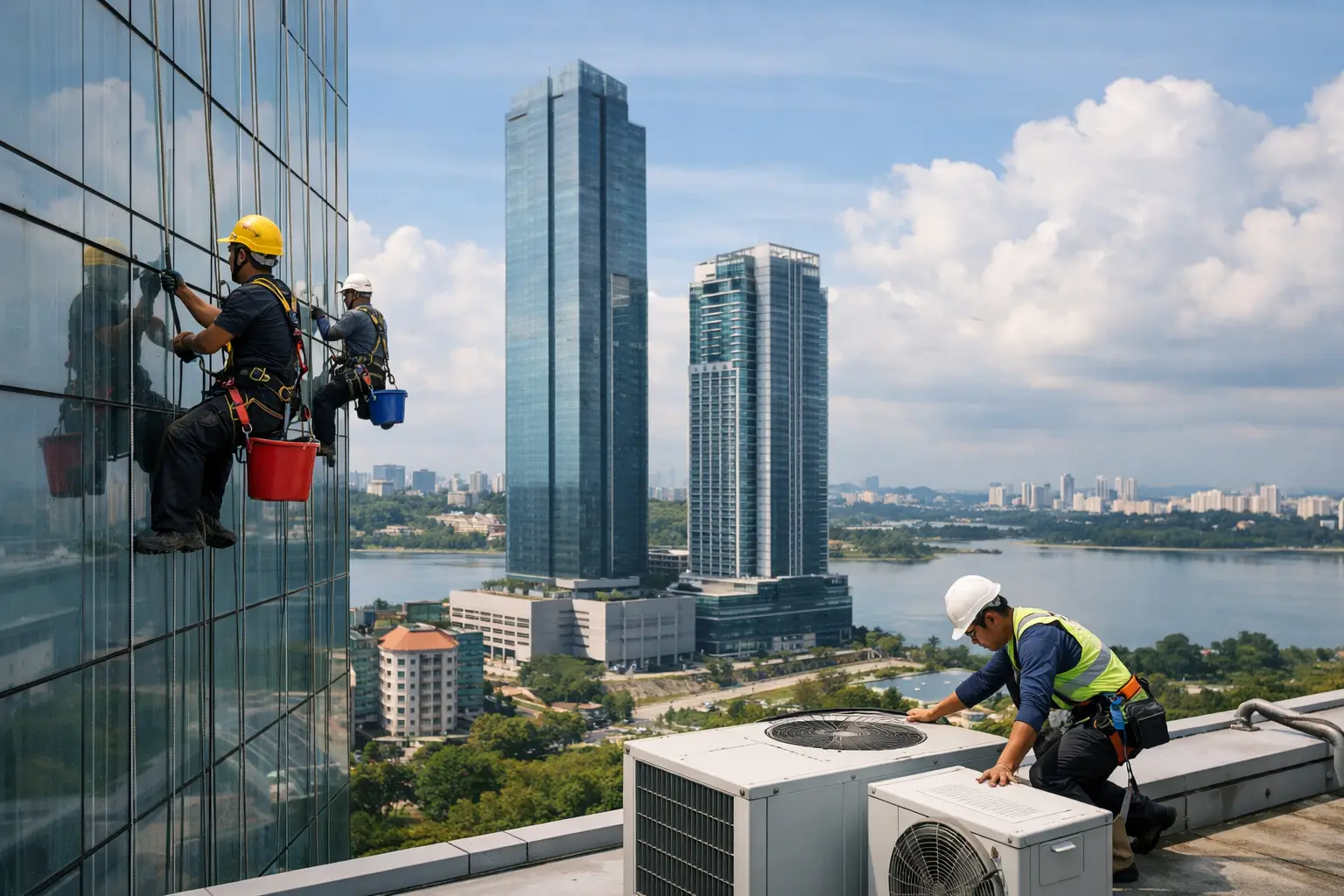
Access also affects method selection. Suspended platforms, gondolas, boom lifts, and rope access each have their place. On complex high-rise facades with limited access points or architectural projections, rope access can offer efficient reach with less disruption when planned and executed properly. Facade by Vertical Pro works in this area because many building exteriors require both technical facade understanding and safe work-at-height capability, not just general maintenance labor.
Budgeting for facade maintenance without underestimating risk
Many property teams struggle with facade budgeting because visible defects rarely show the full scope of work. A small leak complaint can point to joint failure across an entire elevation. A discolored area may reveal coating breakdown, trapped moisture, or substrate damage once access begins.
That does not mean every issue requires a major budget allocation. It means budgets should include room for investigation, access, and contingency. The cheapest line item on paper is often the one that gets replaced later when the initial scope proves incomplete.
A better planning model separates routine cleaning, planned preventive maintenance, and capital repairs. This gives stakeholders a clearer picture of what preserves day-to-day appearance versus what protects facade performance and public safety.
What to look for in a facade maintenance partner
Property owners should look for more than a cleaning vendor. The right partner should understand facade materials, deterioration patterns, safe access methods, and how to prioritize work based on risk. Documentation also matters. Inspection findings, photo records, defect mapping, and repair recommendations help building teams make defensible decisions and track recurring issues over time.
It also helps to work with a specialist who understands operational constraints. High-rise residential and commercial buildings cannot always tolerate disruptive access setups or extended facade closures. Maintenance planning should account for occupant safety, traffic flow, tenant communication, and weather windows.
Building a maintenance plan that lasts
The strongest facade maintenance plans are simple, repeatable, and based on building evidence. They include scheduled inspections, material-appropriate cleaning, prompt repair of defects that affect water tightness or safety, and periodic review of whether current methods still match the building condition.
If your building has not had a proper exterior assessment in several years, start there. It is easier to control cost and scope when problems are identified early, before they spread behind the facade or create safety concerns at height.
A well-maintained facade does more than look clean from the street. It signals that the building is being managed with care, that risks are being addressed before they become incidents, and that the asset is being protected for the long term.
Malaysia facade maintenance priorities
| Exposure | Priority |
|---|---|
| Heavy rain and wind-driven moisture | Joints, window interfaces, flashings and drainage |
| High humidity and shaded elevations | Algae, biofilm, retained moisture and coating condition |
| Strong sunlight and heat | Sealant movement, fading, brittleness and coating breakdown |
| Traffic and construction pollution | Cleaning frequency, abrasive deposits and runoff staining |
Frequently asked questions
How often should a facade be reviewed?
The interval depends on material, age, exposure and past defects. Buildings with active leakage, loose materials or rapid change need more frequent attention.
Should every elevation use the same maintenance cycle?
No. Orientation, shade, nearby roads and wind-driven rain can make one elevation deteriorate faster than another.
Build a practical maintenance programme
Start with the facade inspection checklist for managers, then ask Vertical Pro to assess the building.
The access method must be planned with the same care as the repair or cleaning method. DOSH Malaysia’s fall-prevention guidance sets out practical controls for preventing falls at work.




Leave a Reply