
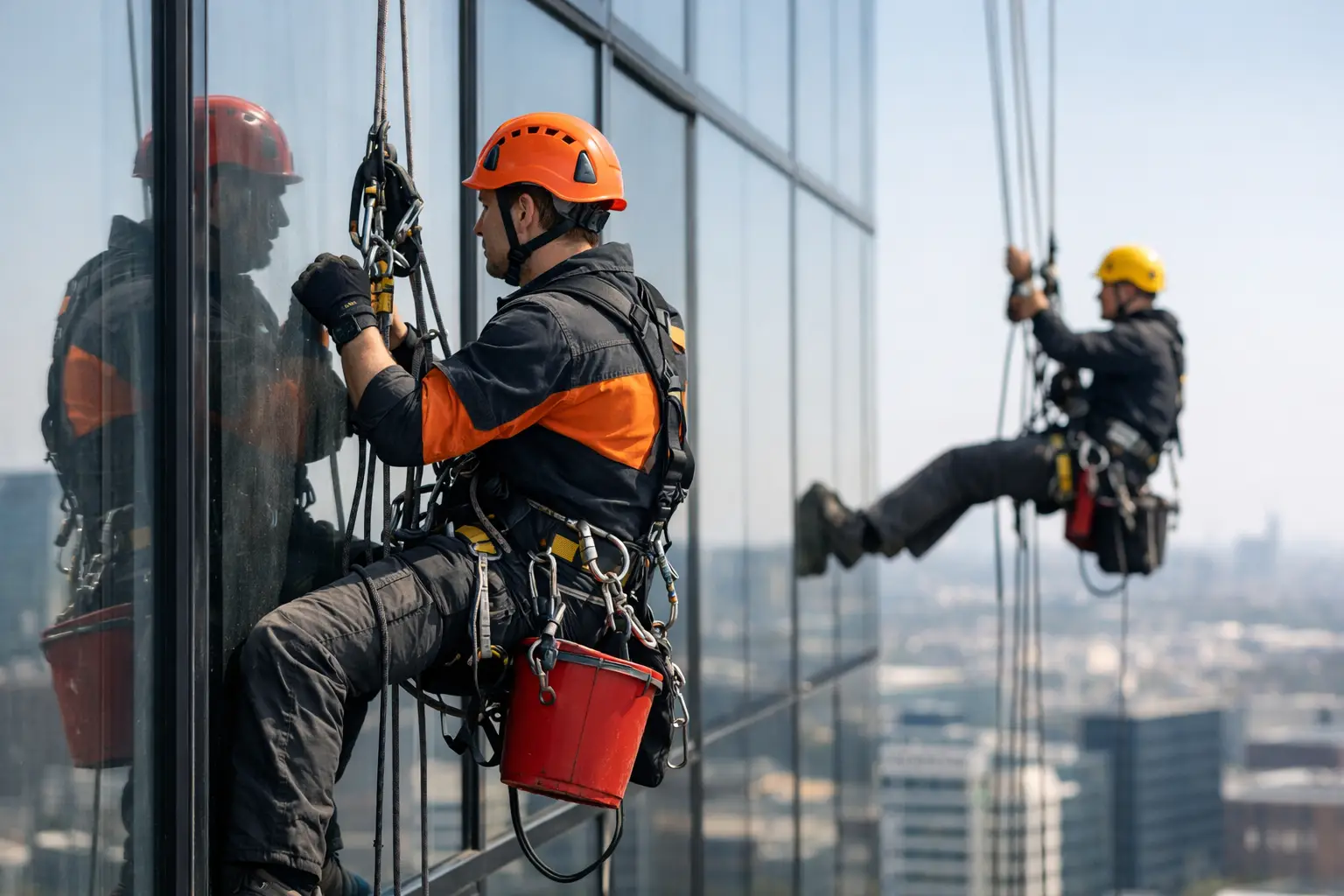
A rope technician cleaning glazing 30 stories above an occupied lobby is managing more than height. Wind can shift unexpectedly around building corners, a wet facade can affect footing and equipment handling, and work below must be protected from falling tools and debris. Top rope access safety practices turn these variables into planned, controlled work rather than risks that are addressed only after a problem appears.
For property owners and facility teams, the quality of a rope access program affects more than the people on the ropes. It influences tenant confidence, public safety, the condition of facade materials, work disruption, and the reliability of long-term maintenance plans. The right contractor treats access as an engineered part of facade care, not simply a way to reach difficult areas.
Start With a Site-Specific Risk Assessment
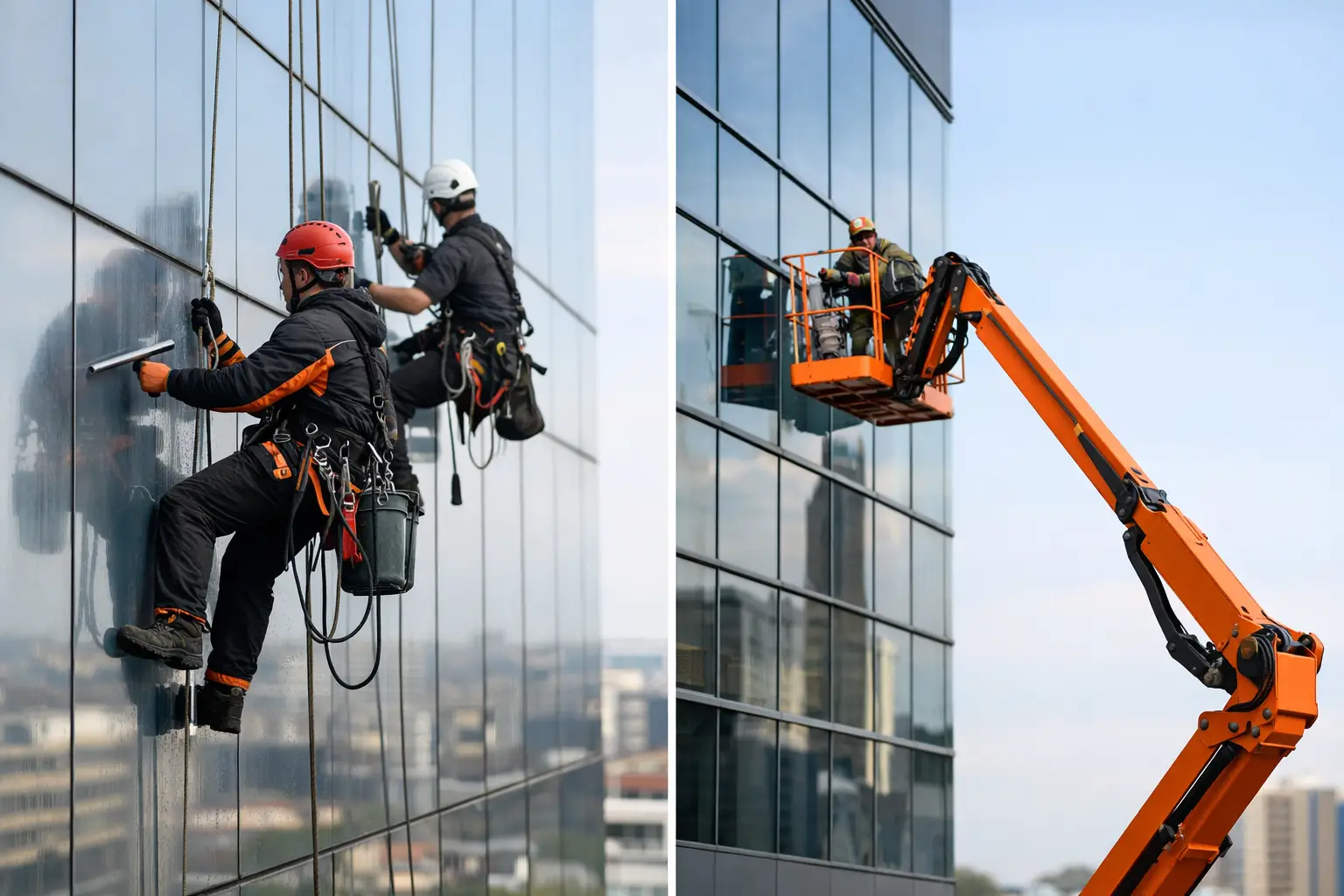
No two high-rise facades present the same conditions. A glass curtain wall, painted concrete exterior, heritage masonry surface, and aluminum cladding system each require different cleaning methods, working positions, and protection measures. Before work begins, the access team should inspect the building’s roof layout, anchor locations, facade condition, drop zones, public circulation areas, and any conflicts with building operations.
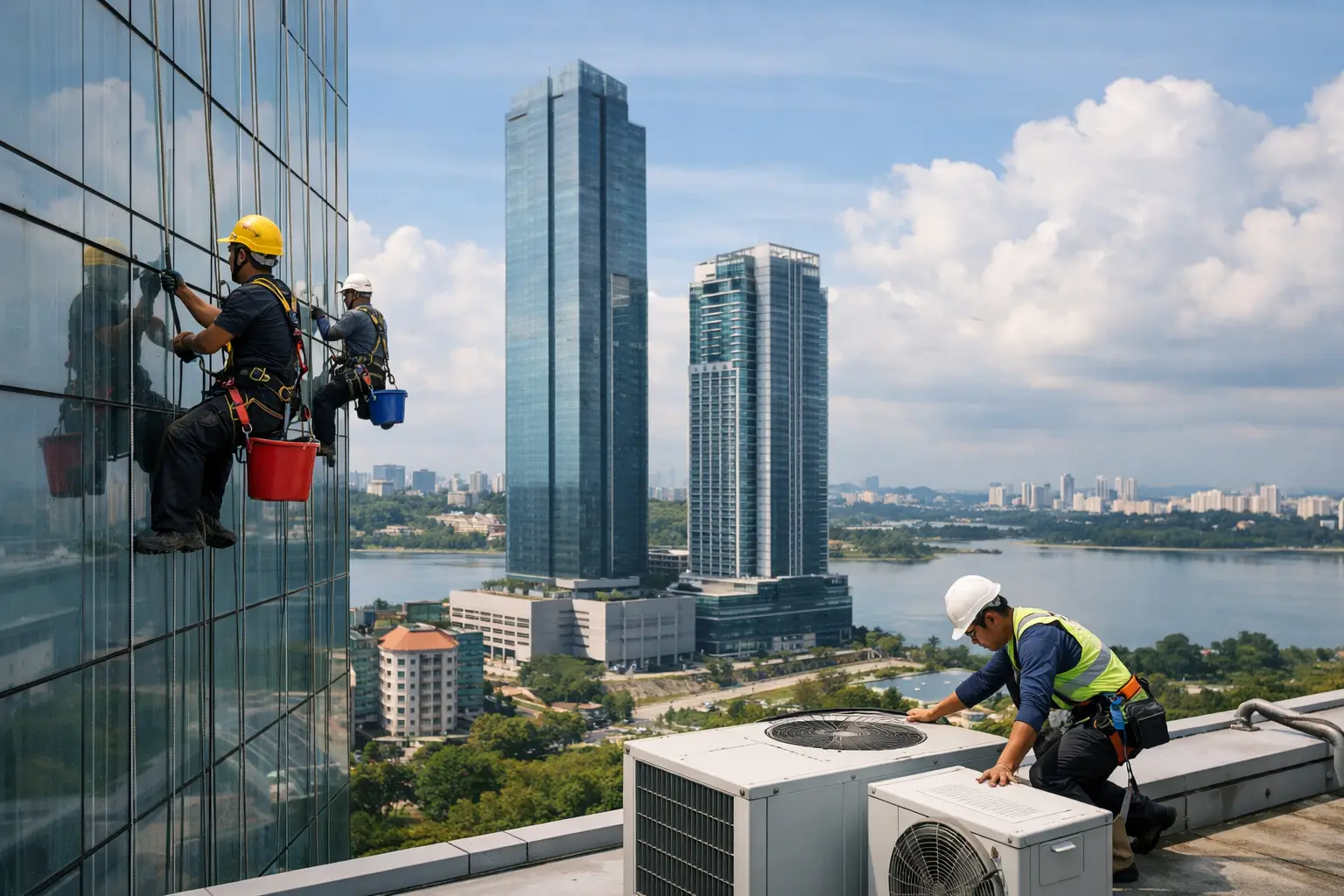
This assessment should account for conditions that may change during the project. Nearby construction, temporary rooftop equipment, active loading areas, open-air amenities, and building events can all alter the work plan. On buildings in Malaysia, frequent rainfall, high humidity, intense sun exposure, and sudden wind conditions make weather monitoring particularly relevant. A schedule that looks efficient on paper may need adjustment to maintain safe working conditions.
The assessment should result in a clear method statement and rescue plan. These documents define how technicians will access each work area, secure equipment, protect people below, communicate with site representatives, and respond if a worker becomes suspended or unable to continue. Generic paperwork is not enough. The plan must reflect the actual building and the work being performed.
Top Rope Access Safety Practices Begin at the Anchor Point
Rope access is only as reliable as the system supporting it. Technicians should use verified anchor points that are appropriate for the anticipated loads and the intended direction of work. Roof structures, parapets, davit systems, and purpose-designed facade access anchors require inspection and confirmation before use. An anchor that appears sound is not automatically suitable for rope access.
Each technician should work on independently secured primary and backup systems. This redundancy is fundamental because it prevents a single equipment or anchor failure from becoming a catastrophic event. The ropes must be protected where they pass over edges, corners, or abrasive surfaces, and their path should be kept clear of sharp metal, hot exhaust outlets, moving equipment, and chemical exposure.
Good anchor management also protects the building. Improvised connections can damage roof finishes, dislodge components, or load elements that were never designed for access work. For asset managers, requesting confirmation of the proposed access arrangement is a sensible part of contractor review, especially on older properties or buildings with unusual roof geometry.
Use Competent Technicians and Active Supervision
Rope access work demands more than comfort with heights. Technicians need formal training, demonstrated competence, current fitness for the work, and practical familiarity with the equipment and tasks involved. A person who is skilled at descending a facade may still require instruction on safe chemical handling, delicate facade cleaning, sealant inspection, or restoration work.
Supervision matters throughout the job, not just at mobilization. A competent supervisor should verify the setup, review the day’s conditions, confirm that technicians understand the scope, and stop work when conditions change. This is particularly valuable on complex facades where access routes may vary by elevation, or where one portion of the exterior has different materials and hazards than another.
Clear communication between the rope team and building management also prevents avoidable issues. The team should know who can authorize access, report a concern, isolate a rooftop area, or respond to an operational conflict. Building representatives, in turn, should be informed about the work zone, timing, noise expectations, and any temporary restrictions affecting occupants or visitors.
Inspect Equipment Before It Reaches the Edge
Harnesses, ropes, descenders, backup devices, connectors, helmets, work seats, and tool lanyards are life-safety equipment. They require a documented inspection process, correct storage, and retirement when damage, contamination, excessive wear, or manufacturer limits make them unsuitable for use. Equipment that has been exposed to chemicals during facade cleaning deserves particular attention.
Daily pre-use checks allow technicians to identify problems before loading the system. Periodic formal inspections provide another level of control and should be recorded. The goal is not paperwork for its own sake. It is to ensure that a damaged rope sheath, distorted connector gate, or worn harness component is identified before it becomes part of a loaded system.
Tool control is equally important. Brushes, scrapers, spray equipment, cameras, hand tools, and small replacement materials should be secured whenever there is a risk of dropping them. On a busy commercial property, even a small falling object can cause serious injury or damage below. Tool lanyards, closed bags, controlled transfer methods, and disciplined housekeeping reduce that exposure.
Protect Occupants, Pedestrians, and the Work Area Below
A safe rope access operation extends from the roof to ground level. Before technicians begin work, the contractor and building team should establish an exclusion zone beneath the work face. The size and configuration of that zone depend on building height, task type, wind, ground layout, and the potential for falling items or cleaning runoff.
Barriers, warning signs, security support, and alternate pedestrian routes may be needed where entrances, sidewalks, parking areas, or public spaces sit beneath the facade. In some cases, work can proceed safely with a controlled access zone. In others, the better decision is to reschedule a section of work for a quieter period or temporarily close an affected area.
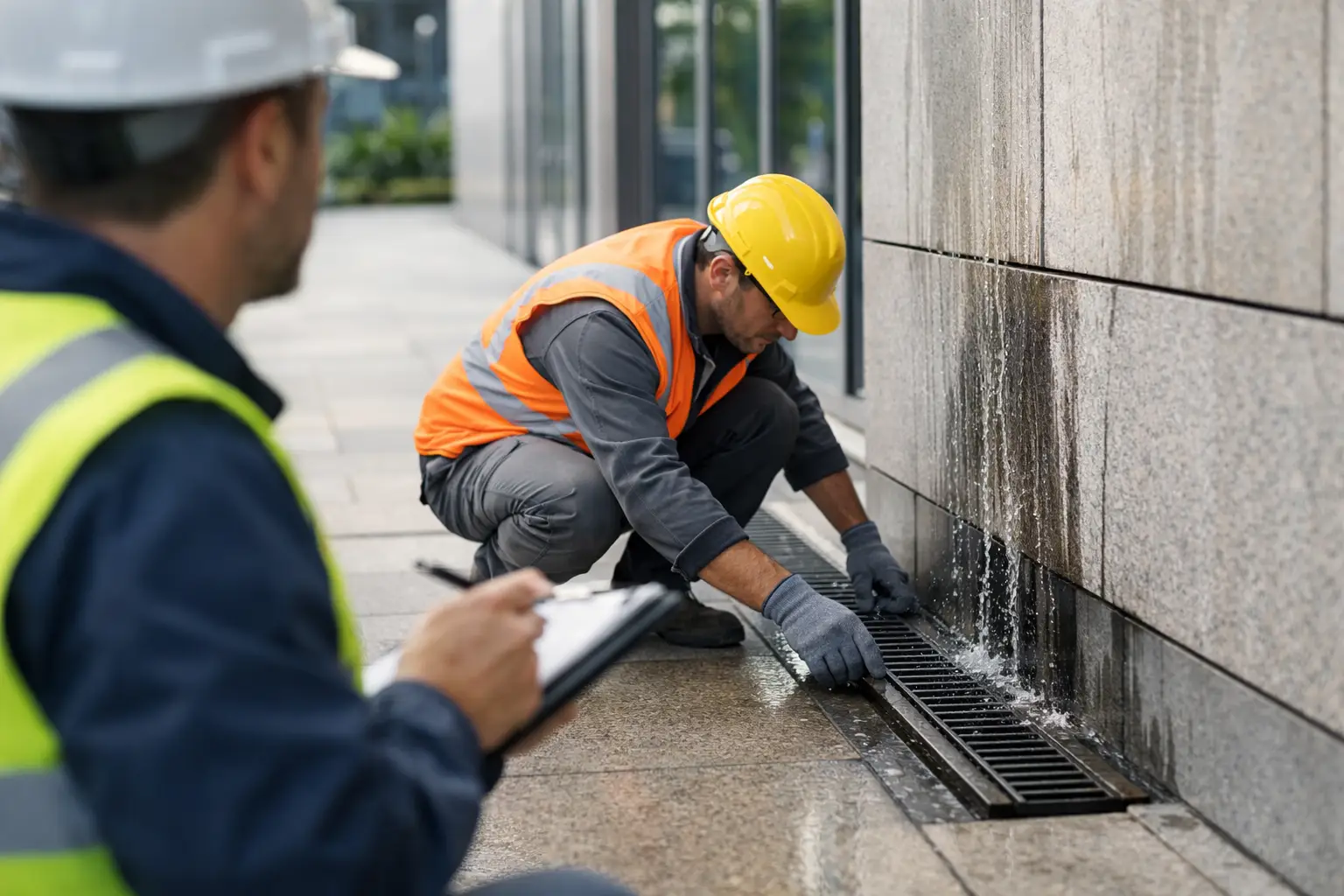
Cleaning activities require additional controls. Water, detergent, loose dirt, and degraded facade material can travel farther than expected in wind. Runoff must be managed to avoid slippery surfaces, property damage, or exposure to occupants. A professional team selects methods and products with the facade substrate and surrounding environment in mind, rather than applying one approach across every elevation.
Make Weather a Stop-Work Decision, Not an Afterthought
Weather is one of the most variable rope access hazards. Wind can push technicians away from the building or cause pendulum movement around corners. Rain can reduce visibility, make surfaces slippery, and affect the handling of ropes and cleaning tools. Lightning risk, extreme heat, and sudden storms require equally deliberate decisions.
A responsible contractor defines weather limits in the work plan and monitors conditions throughout the day. The appropriate threshold depends on the building configuration, work method, equipment, and exposure of the work area. There is no benefit in continuing a facade task simply because a crew has already mobilized. Pausing work early is often the safest and most operationally responsible choice.
Heat management also deserves attention. Extended exposure on a sun-facing elevation can reduce concentration and increase fatigue. Hydration, rest periods, task rotation, and sensible scheduling help technicians maintain the focus required for precision work at height.
Plan Rescue Before Anyone Leaves the Roof
Emergency response cannot rely on external rescue services alone. A suspended worker may develop suspension intolerance quickly, and access conditions can make outside intervention difficult. The rope access team must have a practical, site-specific means to recover a technician from the likely working positions.
Rescue planning includes suitable equipment, trained personnel, communication procedures, and a defined route for medical assistance if needed. The plan should be rehearsed and reviewed when work moves to a different facade zone or access arrangement. A rescue kit stored on the roof is useful only when the people on site know how and when to deploy it.
For building management, this is a key question during contractor selection: ask how the team will recover a worker from your particular facade. A credible answer should address the building layout and work method, not just refer to a general emergency procedure.
Treat Safety Records as Part of Asset Management
Rope access documentation creates a useful record for both safety and building care. Daily checks, incident reports, weather-related pauses, facade observations, and completed work areas can help facility teams understand recurring issues. During cleaning or inspection, technicians may identify failed sealant, corrosion staining, cracked panels, loose components, water ingress indicators, or coating deterioration that is difficult to see from ground level.
That information supports better maintenance decisions. Facade by Vertical Pro Sdn Bhd approaches rope access as a controlled means of inspecting, preserving, and maintaining exterior building systems, not merely a temporary access method. When access teams document what they observe, property stakeholders can prioritize repairs before isolated defects become larger operational concerns.
The strongest safety culture is visible in ordinary decisions: protecting a rope at an edge, pausing for weather, keeping a walkway clear, checking a connector twice, and reporting a facade defect before it worsens. Those habits give building teams confidence that essential exterior work is being completed with respect for people, property, and the long service life of the facade.
Discuss the next step
For advice on rope access safety practices, request a site assessment or quotation from Vertical Pro.
For rope access work, planning, supervision, competence and equipment need to operate as one system. IRATA International’s overview of rope access explains why each part matters to safe execution.

Leave a Reply