
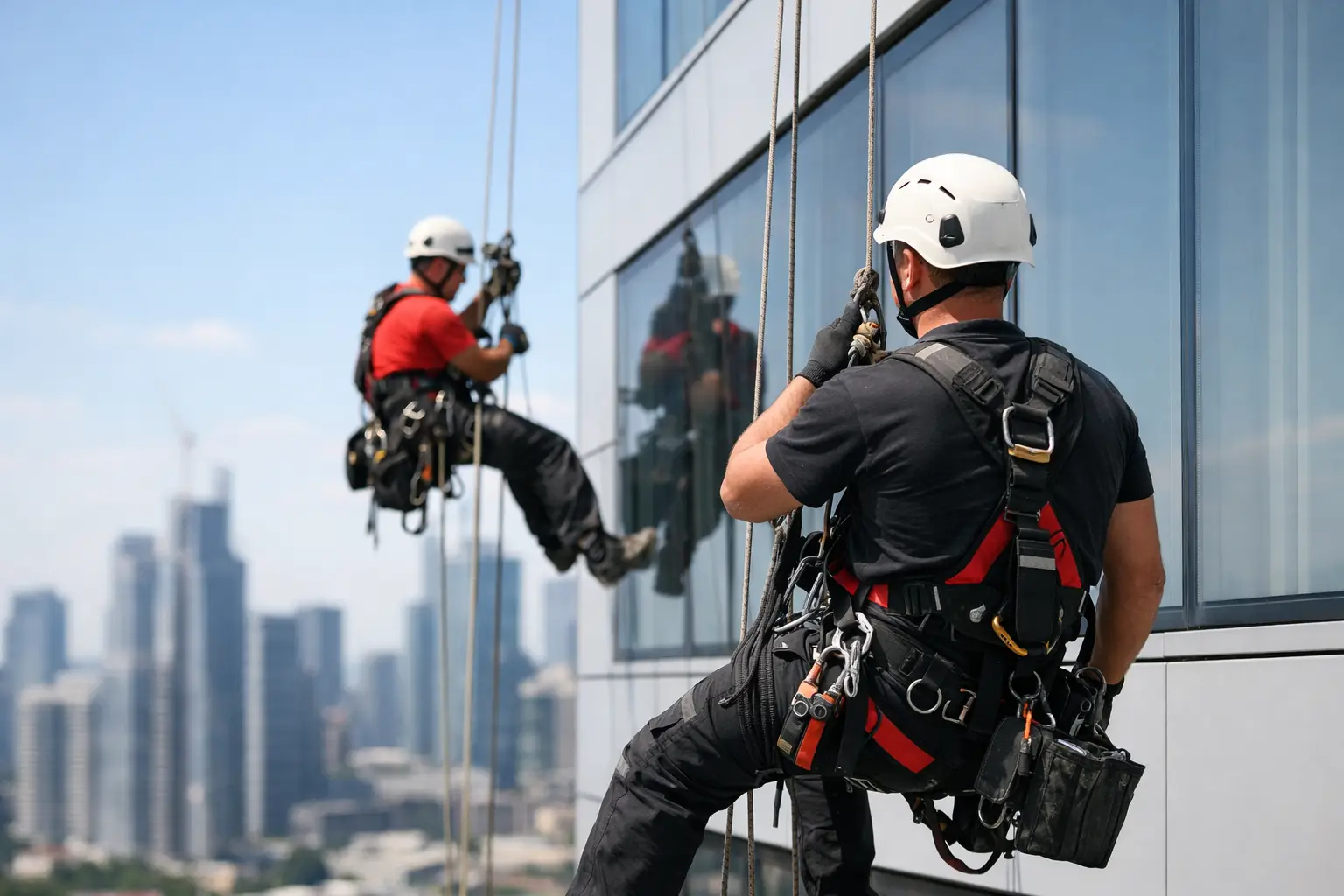
Good rope access safety planning is site-specific. It should reflect facade condition, recurring defects, weather exposure and safe access requirements.
Rope Access Safety: What to Check on Site
Use a small test area where cleaning chemicals, coatings or sealants are involved. It is easier to adjust the method before the full elevation is treated.
When a facade issue sits 30 stories above ground, the real question is not just how to reach it. It is whether the access method can control risk without slowing down the building’s operations. That is why many property owners and facility teams ask, is rope access safe? The short answer is yes – when it is carried out by properly trained technicians under a disciplined safety system.
Rope access is not improvised height work. It is a controlled method used to inspect, clean, repair, and maintain hard-to-reach exterior building areas. For facade maintenance, it often provides a practical alternative to suspended platforms, boom lifts, or full scaffolding, especially when access is limited or the work area is highly targeted.
Is rope access safe in real-world facade work?
It is safe when the work is planned correctly, the crew is competent, and the system is matched to the building and task. That distinction matters. Rope access is not automatically safe just because ropes are involved, and it is not unsafe just because technicians are working at height. Safety comes from the method, the training standard, the equipment checks, and the level of supervision on site.
In professional facade work, rope access relies on redundancy. Technicians do not depend on a single line. They typically work on a main working rope and a separate backup rope, with descenders, ascenders, connectors, and fall-arrest devices designed for controlled movement and protection. This is part of why rope access has earned a strong safety record globally when used within established standards.
For building owners, that means the conversation should move beyond appearances. Rope access can look more exposed than a platform or scaffold to someone unfamiliar with the system. In practice, a well-run rope access operation is highly structured, with pre-job planning, anchor verification, rescue readiness, weather monitoring, and ongoing supervision.
Why rope access can be safer than people expect
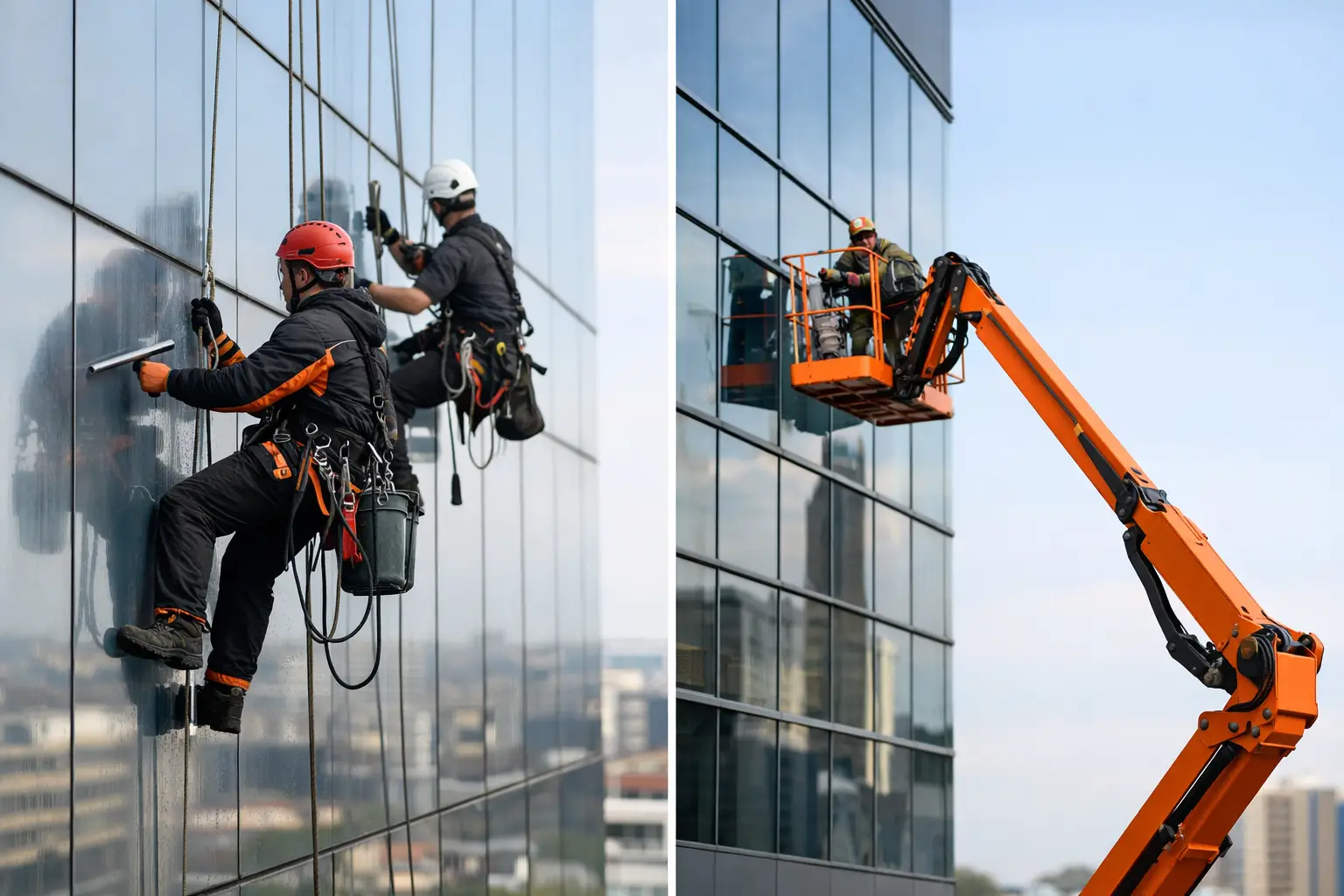
One reason rope access is often misunderstood is visibility. A suspended cradle or a full scaffold can seem more substantial because there is more equipment in sight. But more equipment does not always mean lower risk. Large access setups can introduce their own hazards, including complicated assembly, greater loading demands, larger exclusion zones, and more public interface.
Rope access reduces some of that complexity. A smaller access footprint means fewer moving parts on the building exterior and less disruption around the site. For localized facade defects, sealant failures, cladding inspections, water ingress investigation, or exterior cleaning, that efficiency can help crews focus on the task instead of managing an oversized access system.
That said, safer does not mean suitable for every job. If a task requires heavy materials, prolonged stationary work, or large-scale replacement activity, another access method may be more appropriate. The safest choice is the one that fits the scope, duration, and building conditions.
What makes rope access safe
The strongest safety factor in rope access is not the rope itself. It is the system behind the work.
Training is the first requirement. Professional rope access technicians are trained in movement, positioning, equipment use, hazard awareness, rescue procedures, and work-at-height discipline. This is specialized competence, not general maintenance experience with ropes added later.
Planning is just as important. Before work begins, the team should assess the facade condition, roof access points, anchor locations, drop zones, weather exposure, public protection requirements, and emergency procedures. A proper method statement and risk assessment should reflect the actual building, not a generic template.
Equipment control is another major factor. Rope access systems rely on certified gear that must be inspected before use, maintained properly, and retired when necessary. Anchors need special attention because the whole system depends on secure attachment points. On a facade project, anchor suitability cannot be assumed. It must be verified.
Supervision closes the gap between paperwork and reality. Conditions change on active buildings. Wind shifts. Roof areas become congested. Tenant activity affects access routes. Supervisors play a critical role in making sure the work stays aligned with the safety plan as the day develops.
Common risks and how professionals manage them
Like any work at height, rope access carries real risks. The question is whether those risks are recognized and controlled.
Falls are the most obvious concern, which is why redundancy and fall-arrest systems are fundamental. Equipment failure is another concern, addressed through inspection routines, quality gear, and backup systems. Human error is managed through training, supervision, clear procedures, and limiting unnecessary complexity on the rope.
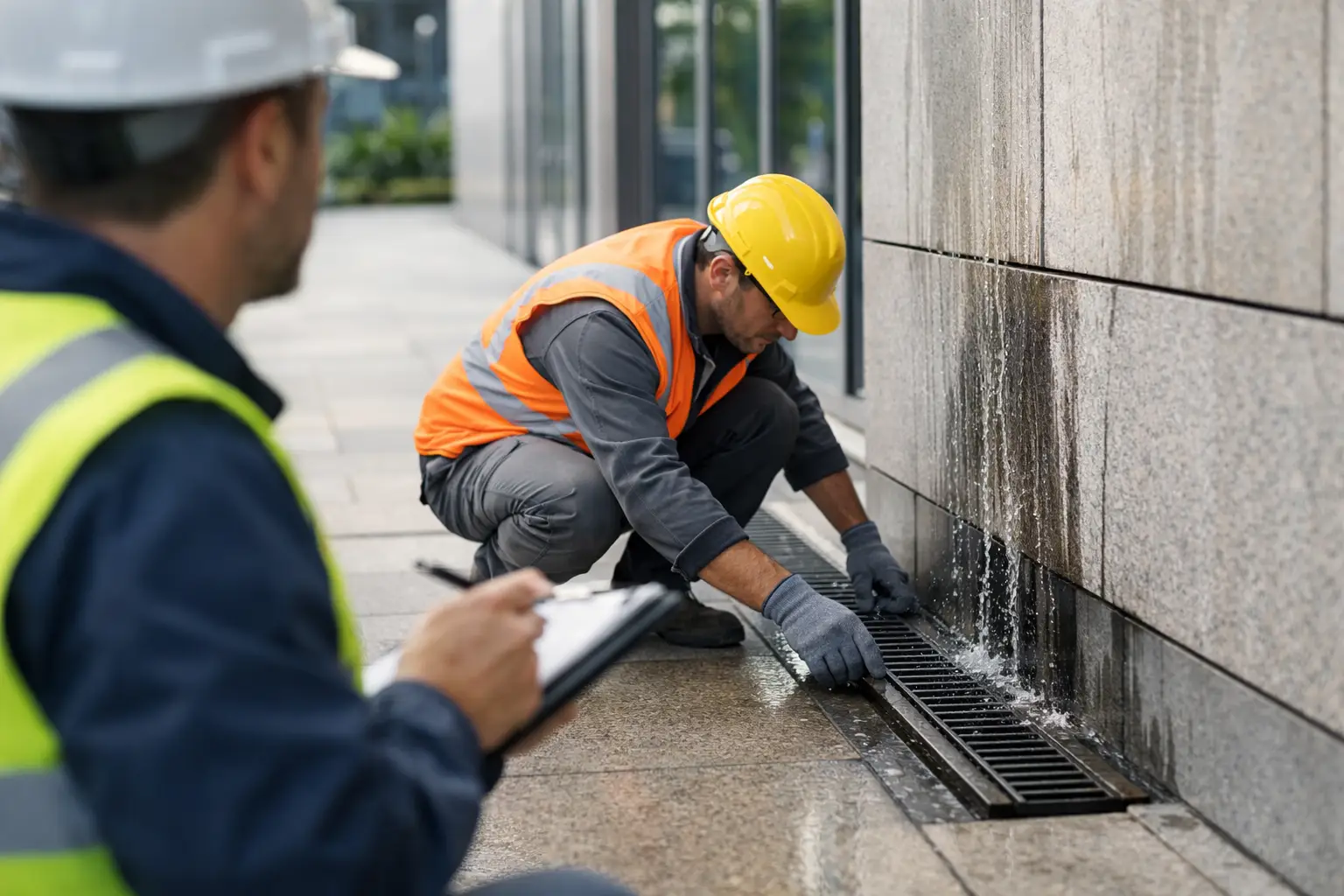
Weather is especially relevant in facade work. On high-rise buildings, wind conditions can change quickly and create swing hazards or reduce control near the facade. Rain can affect surface conditions and visibility. In Malaysia’s climate, heat and sudden weather shifts also matter. Safe rope access work includes weather thresholds and the authority to pause the job when conditions are no longer acceptable.
Dropped objects are another serious issue, particularly in occupied commercial and residential properties. Professional rope access teams manage this with tool lanyards, controlled material handling, exclusion zones, and site communication. For building managers, this part is not minor. Public-facing safety is one of the clearest signs of a disciplined contractor.
Is rope access safe for occupied buildings?
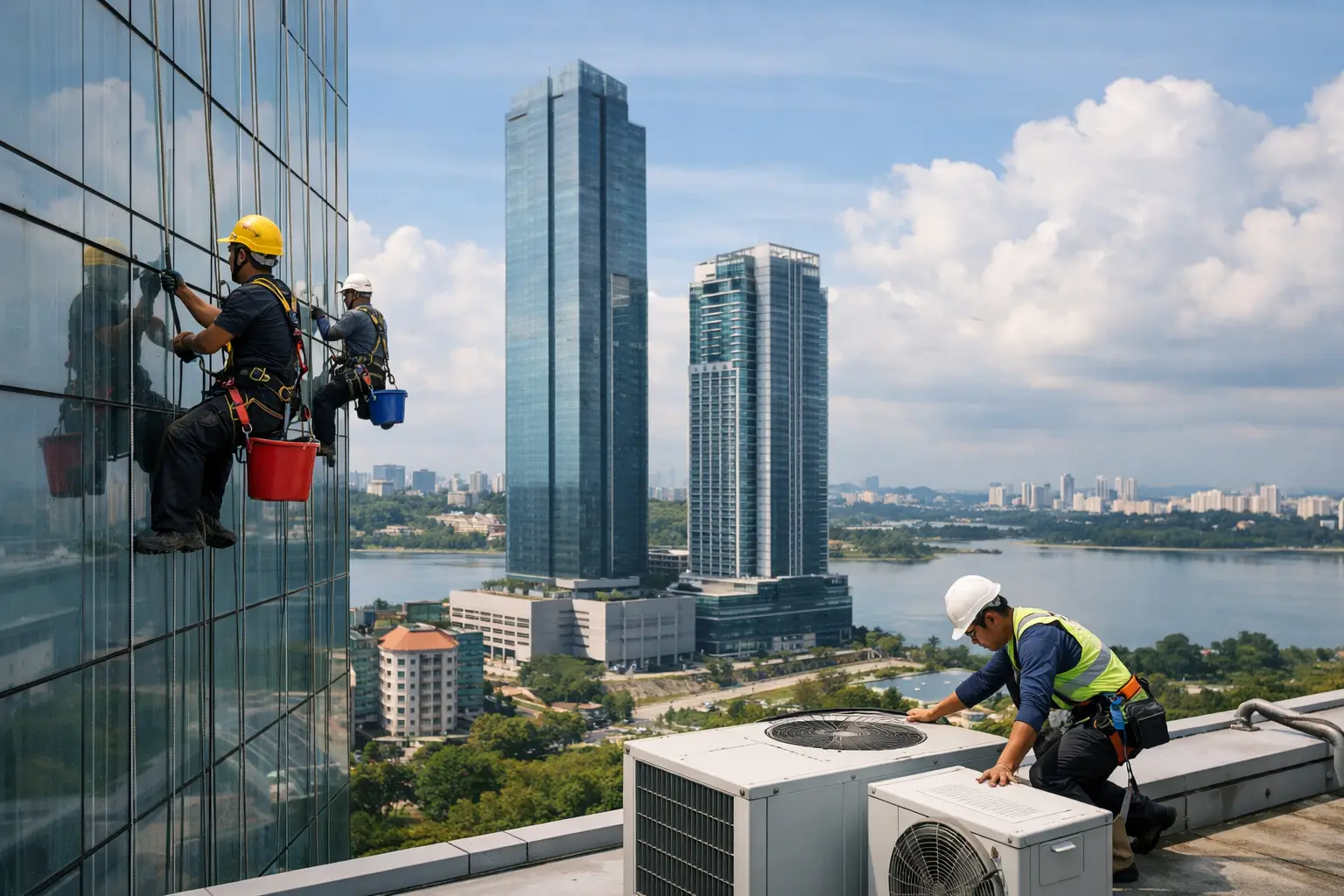
In many cases, yes – and that is one reason it is widely used for facade maintenance. Rope access can often be deployed with less disruption than larger access systems. It usually requires less ground occupation, less visual obstruction, and less interference with entrances, parking, and daily operations.
That makes it especially useful for office towers, residential developments, hotels, and mixed-use properties where normal activity needs to continue during maintenance. The work can also be more targeted. Instead of mobilizing major equipment across the full elevation, technicians can access specific facade areas that need inspection or repair.
However, occupied buildings add their own safety responsibilities. Access routes, roof controls, tenant communication, pedestrian management, and timing all need to be handled carefully. A capable rope access provider understands that facade work is not happening in isolation. It is happening on a live asset with reputational, operational, and liability considerations.
When rope access is the right choice
Rope access is particularly effective when facade work is localized, elevated, or difficult to reach by conventional methods. It works well for facade inspections, sealant checks, crack assessments, minor repair tasks, cleaning, and condition surveys on towers or architecturally complex exteriors.
It is also valuable when a building has limited space at ground level or where installing larger access systems would create unnecessary disruption. On urban sites with traffic flow, tight boundaries, or active public areas, a smaller access footprint can be a meaningful advantage.
Still, decision-makers should resist one-size-fits-all thinking. Rope access is a specialized solution, not a universal answer. If heavy restoration is needed across a broad facade area, another method or a combination of methods may be safer and more efficient.
How to judge whether a rope access contractor is safety-focused
If you are responsible for a building, the safest project usually starts with the right questions. Ask how the team assesses anchors, what training standard its technicians follow, how rescue is planned, and who supervises the work on site. Ask how weather decisions are made and how public protection is managed below the work zone.
The quality of the answers matters. Safety-focused contractors speak clearly about process, controls, limitations, and responsibility. They do not treat rope access as simply a faster way to get someone over the edge. They treat it as a technical access method that must be engineered around the building and the task.
This is especially important in facade maintenance, where access and building performance are closely linked. A contractor that understands facade systems will usually make better decisions about inspection points, defect identification, material sensitivity, and work sequencing. That technical understanding supports safety because it reduces guesswork once the team is on the rope.
The better question is whether it is safe for your building
So, is rope access safe? Yes, when it is designed and managed by qualified professionals. But the better question for owners and facility teams is whether it is safe for your building, your facade condition, and your maintenance objective.
That answer depends on the structure, the scope of work, the site environment, and the competence of the contractor. On the right project, rope access is not just safe. It is often one of the most controlled and practical ways to carry out high-rise facade work with minimal disruption.
For building stakeholders, that should be the standard. Not the most visible access method, and not the most familiar one, but the one that manages risk properly while protecting the building, the people around it, and the long-term condition of the facade.
Local work-at-height reference
For local work-at-height principles, refer to the Department of Occupational Safety and Health Malaysia. The project should still use certified rope access technicians, suitable equipment, supervision and a site-specific rescue plan.
Frequently asked questions
Is rope access safer than scaffolding or a boom lift?
No access method is universally safest. The correct choice depends on the task, duration, facade geometry, anchor options, ground conditions, weather, rescue requirements and people below.
What documents should a building manager review?
Review the risk assessment, method statement, technician competency, equipment records, anchor and access plan, exclusion-zone controls, supervision arrangements and rescue plan.
Discuss the safest access method
Ask Vertical Pro to assess the building and proposed work scope before selecting rope access or another access system.

Leave a Reply