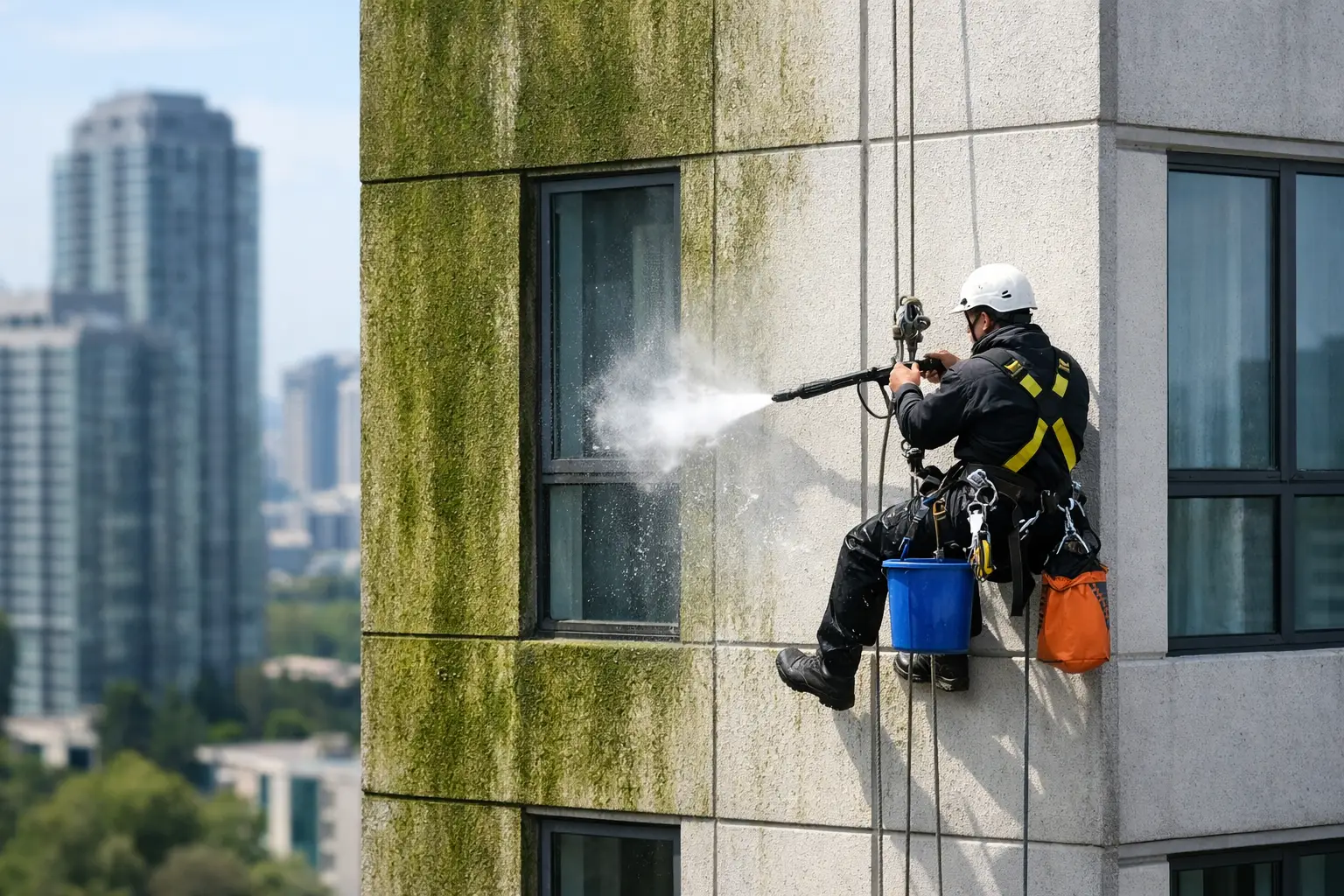
Green streaks on a facade are rarely just a cosmetic issue. In Malaysia’s humid, rain-heavy climate, algae can establish itself in shaded areas, around drainage paths, beneath ledges, and on porous finishes surprisingly quickly. To remove facade algae safely, building teams need more than water pressure and a cleaning crew. They need a method that protects the cladding, prevents water intrusion, and manages work-at-height risks without disrupting occupants or daily operations.
For property owners and facility managers, the goal is not simply to make a building look clean for the week. It is to restore the facade without accelerating finish deterioration, staining adjacent materials, or creating avoidable safety exposure.
Why algae needs a facade-specific response
Algae thrives where moisture remains on the building envelope. North- and east-facing elevations, recessed balconies, canopy undersides, planter-adjacent walls, and areas affected by failed drainage often show growth first. Pollution particles and airborne dust can give algae an additional surface to cling to, especially on textured coatings, exposed concrete, stone, and aging sealants.
The visual effect can undermine a property’s appearance, but the operational concern goes further. Algae may hold moisture against a porous surface, obscure early coating failure, and make inspection of cracks, failed sealant joints, or drainage stains more difficult. It can also leave surfaces slippery where cleaning runoff reaches ledges, walkways, or access platforms.
Not every green mark is algae. Some discoloration is caused by mineral deposits, corrosion runoff, fungal growth, or embedded pollution. Treating every stain with the same chemical or cleaning pressure is one of the most common causes of unnecessary facade damage. A professional assessment identifies the contaminant and the substrate before any cleaning program begins.
How to remove facade algae safely: start with assessment
A safe cleaning plan begins from the ground and moves upward through inspection, testing, access planning, and controlled execution. This sequence matters because facade materials do not respond equally to moisture, detergents, biocides, abrasion, or pressure.
Identify the facade material and its condition
Glass, aluminum composite panels, painted render, natural stone, precast concrete, terracotta, and curtain wall systems each have different cleaning limits. Even within one building, the facade may include several materials with separate maintenance requirements.
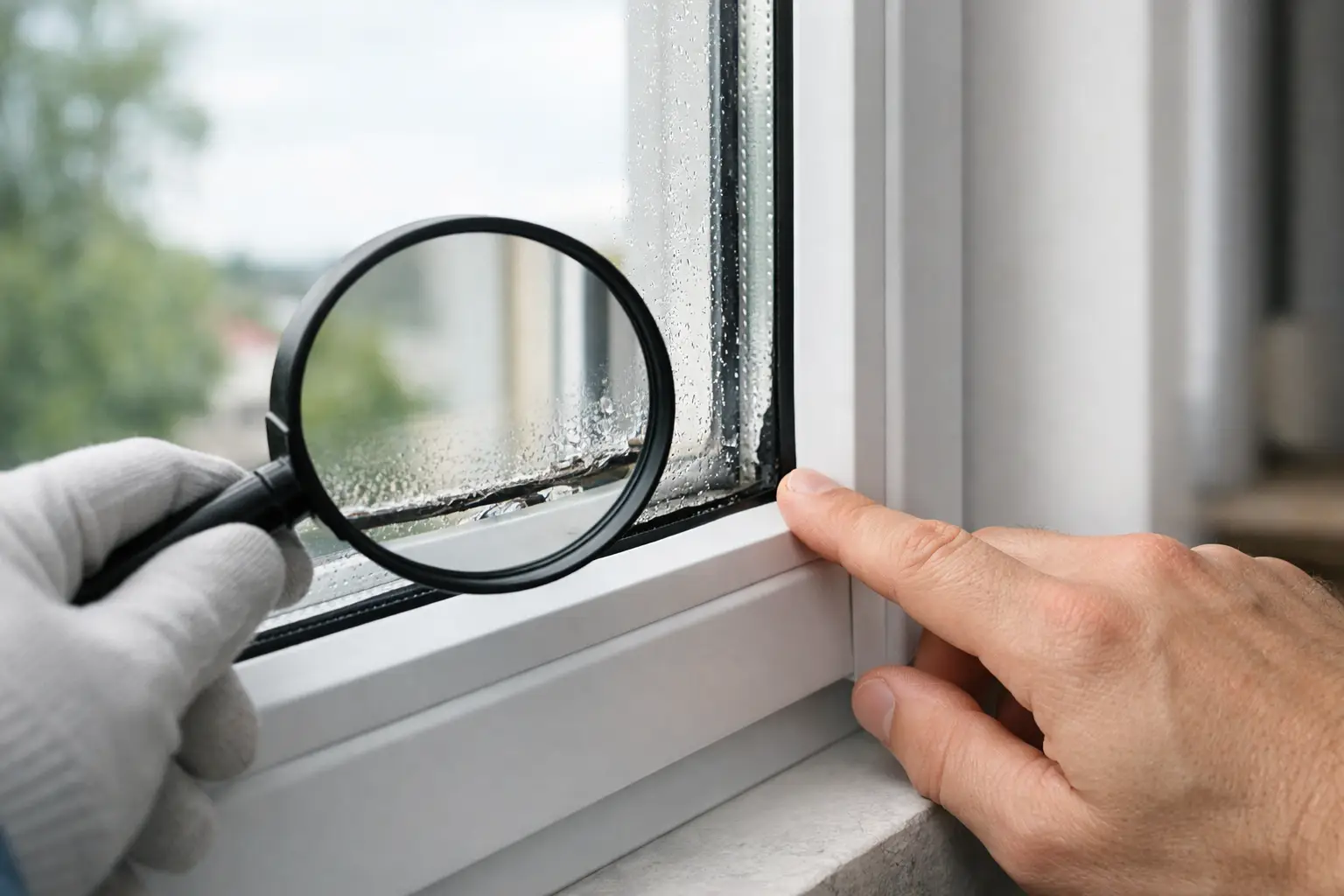
Before treatment, the team should check for coating chalking, open joints, damaged gaskets, cracked glazing, loose panels, corroded fixings, and compromised sealant. If these conditions are present, cleaning water or chemicals can enter the envelope and turn a surface-cleaning task into an internal leakage issue.
A small test patch should be completed in an inconspicuous location. This confirms whether the chosen solution removes biological growth without etching glass, fading paint, bleaching stone, damaging sealant, or leaving a visible cleaning halo. Test results should guide dwell time, dilution, agitation method, and rinsing requirements for the full elevation.
Find the moisture source
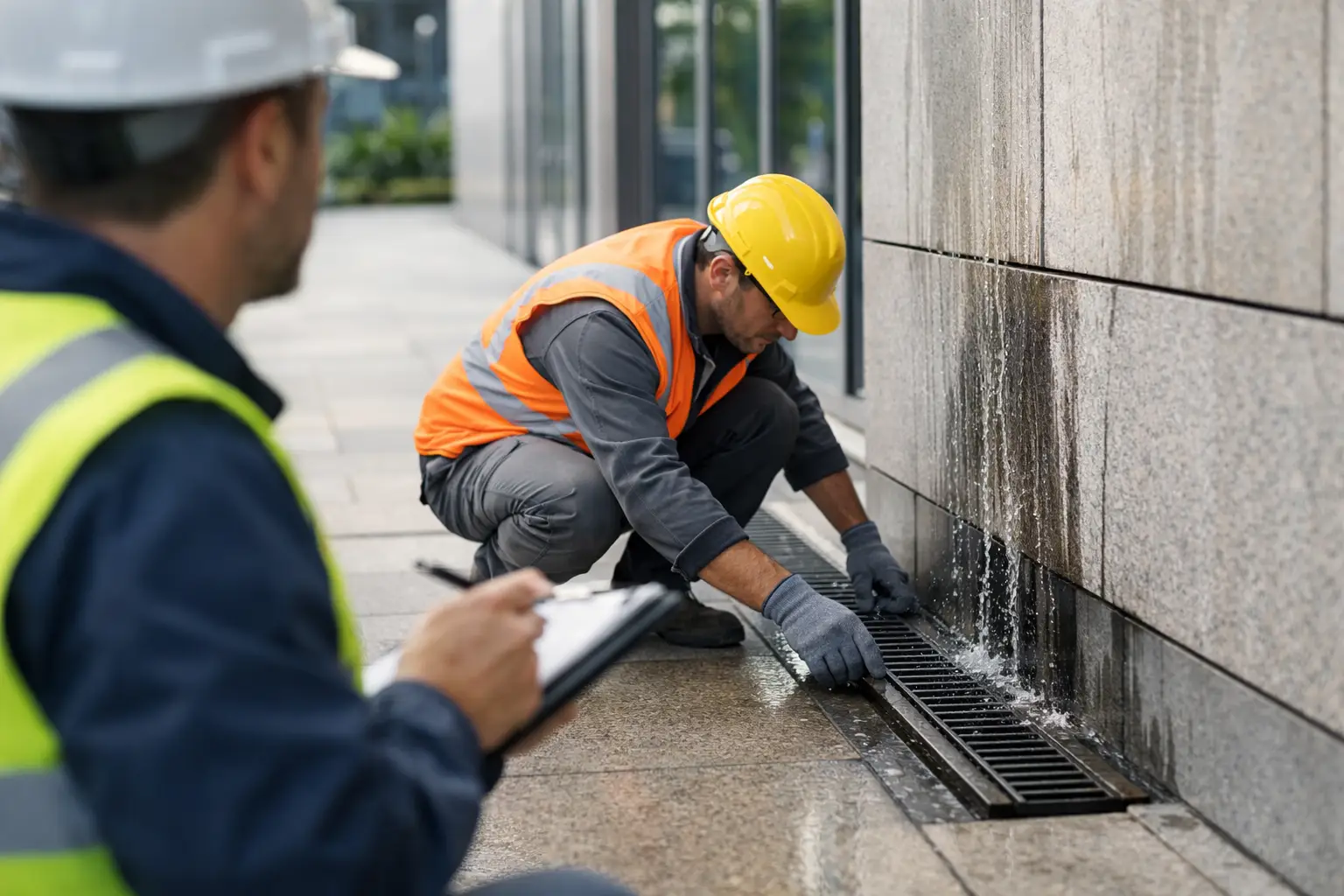
Cleaning algae without addressing why the area stays wet often leads to rapid regrowth. Inspect roof drainage, downpipes, scuppers, air-conditioning condensate discharge, planter irrigation, leaking joints, and ledges that retain water. A dark vertical stain below a parapet, for example, may indicate an overflow or drainage defect rather than an isolated cleaning problem.
This is where facade maintenance becomes preventive rather than reactive. Correcting a blocked drain, redirecting condensate, or repairing a failed joint may reduce future cleaning frequency while protecting the building envelope.
Choose methods that protect the surface
The right algae-removal method depends on the substrate, the degree of growth, building height, and environmental controls available on site. Chemical treatment is often effective, but it must be compatible with the facade and managed carefully to avoid damage to landscaping, occupants, and neighboring properties.
For many exterior surfaces, a purpose-selected biocidal cleaner applied at the correct dilution can loosen and neutralize algae before gentle rinsing. The product should be used according to the manufacturer’s instructions and only after substrate testing. Strong household bleach, acid-based cleaners, and unverified chemical mixtures are not suitable defaults for commercial facade work. They can discolor finishes, attack metal components, weaken sealants, and create runoff concerns.
Pressure washing also requires restraint. Excessive pressure can drive water behind cladding panels, erode mortar, remove protective coatings, fracture brittle finishes, or force contaminants deeper into porous materials. The nozzle type, pressure level, standoff distance, spray angle, and water volume all affect the outcome. On sensitive cladding and glazed systems, low-pressure rinsing with soft brushes or non-abrasive pads is often the safer approach.
Mechanical scrubbing should be limited to tools that will not scratch the material. Abrasive pads, wire brushes, and aggressive scraping may remove algae, but they can permanently alter glass coatings, painted surfaces, stone faces, and aluminum finishes. A clean facade that has been visibly scratched or stripped of its protective coating is not a successful result.
Plan access and safety before work begins
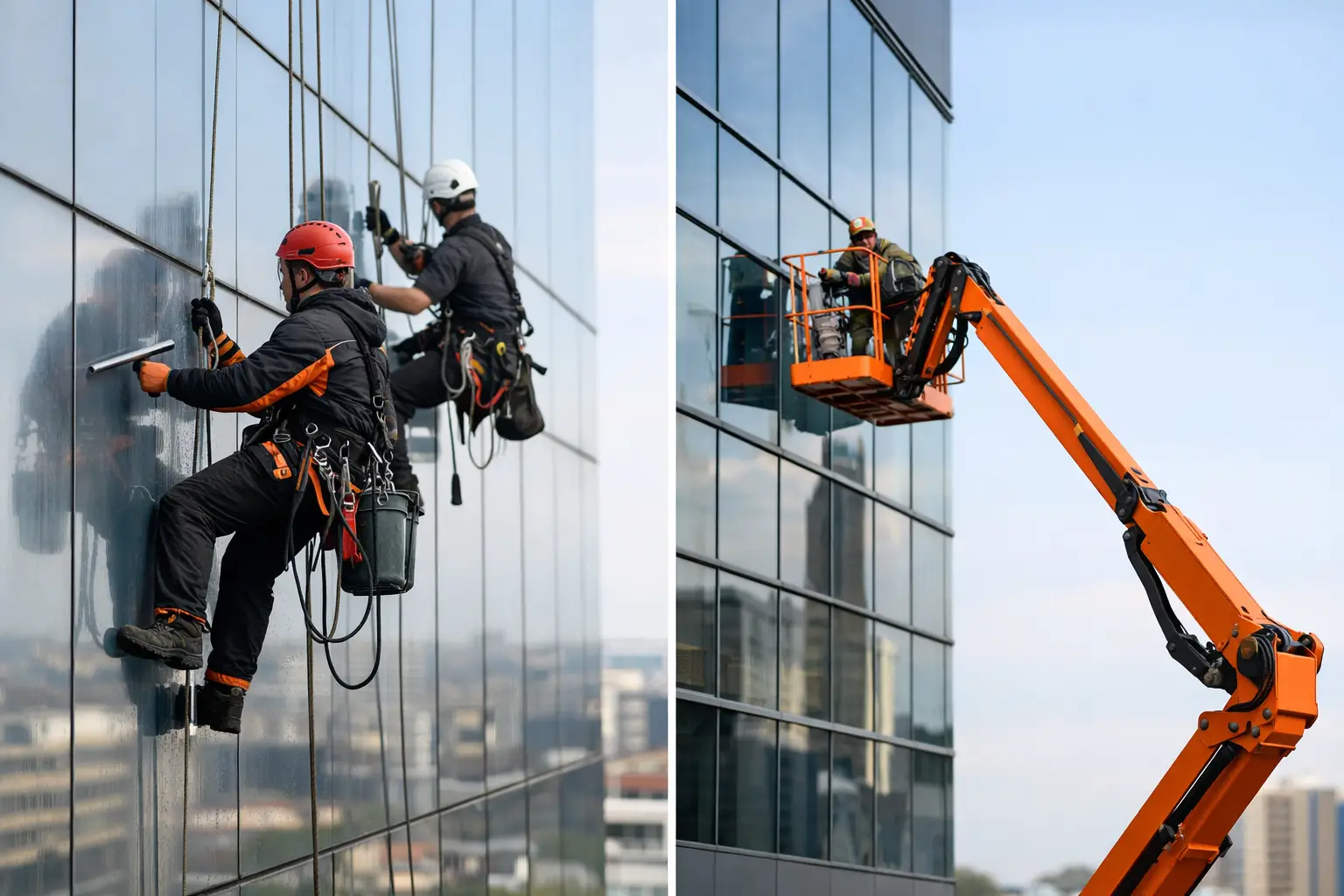
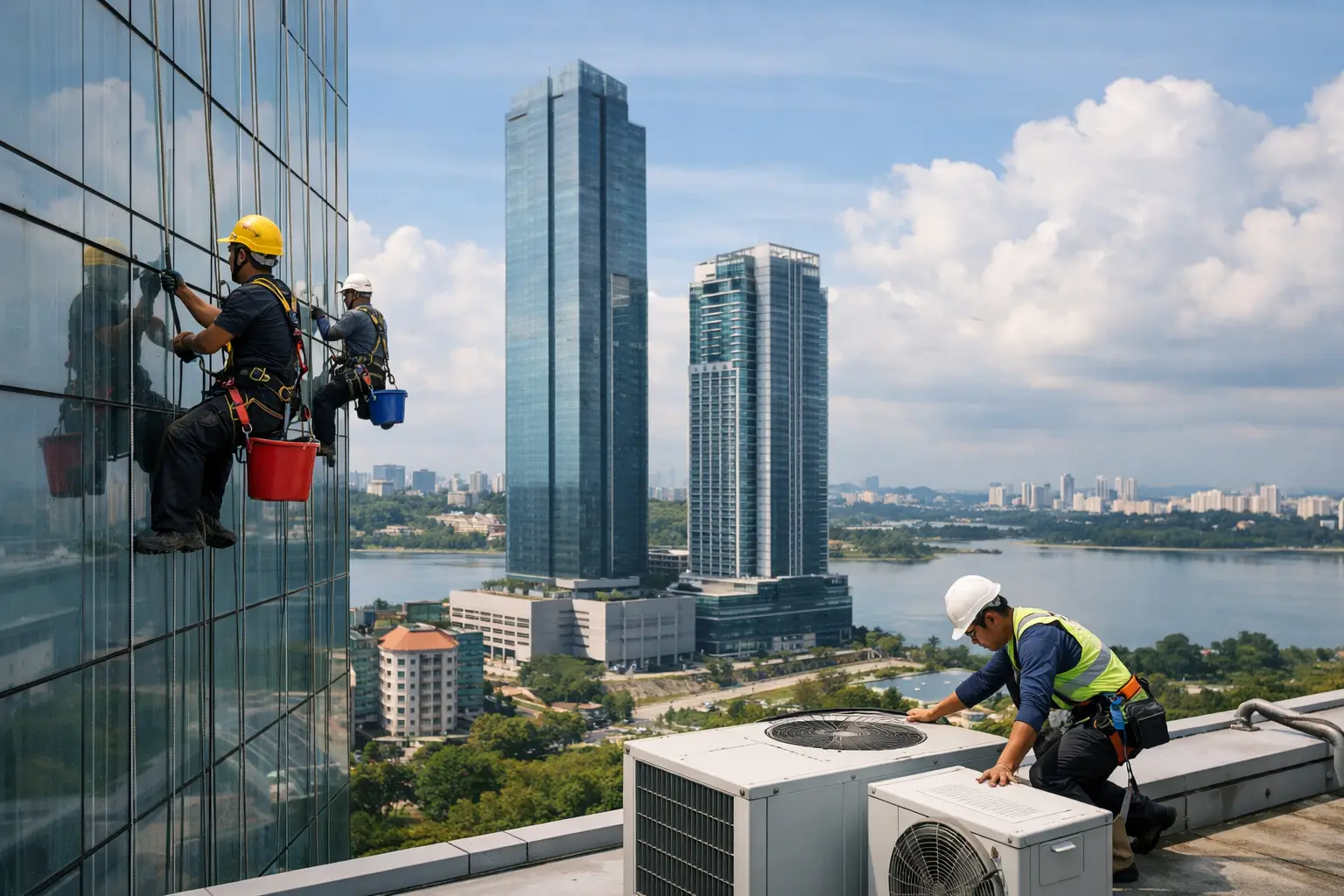
High-rise algae removal is fundamentally a work-at-height operation. The access method should be selected for the building’s facade geometry, anchor system, roof layout, setback areas, and the location of affected surfaces. Rope access can provide efficient reach to difficult elevations and localized staining, while building maintenance units, suspended platforms, mast climbers, or boom lifts may be more appropriate for other facade configurations.
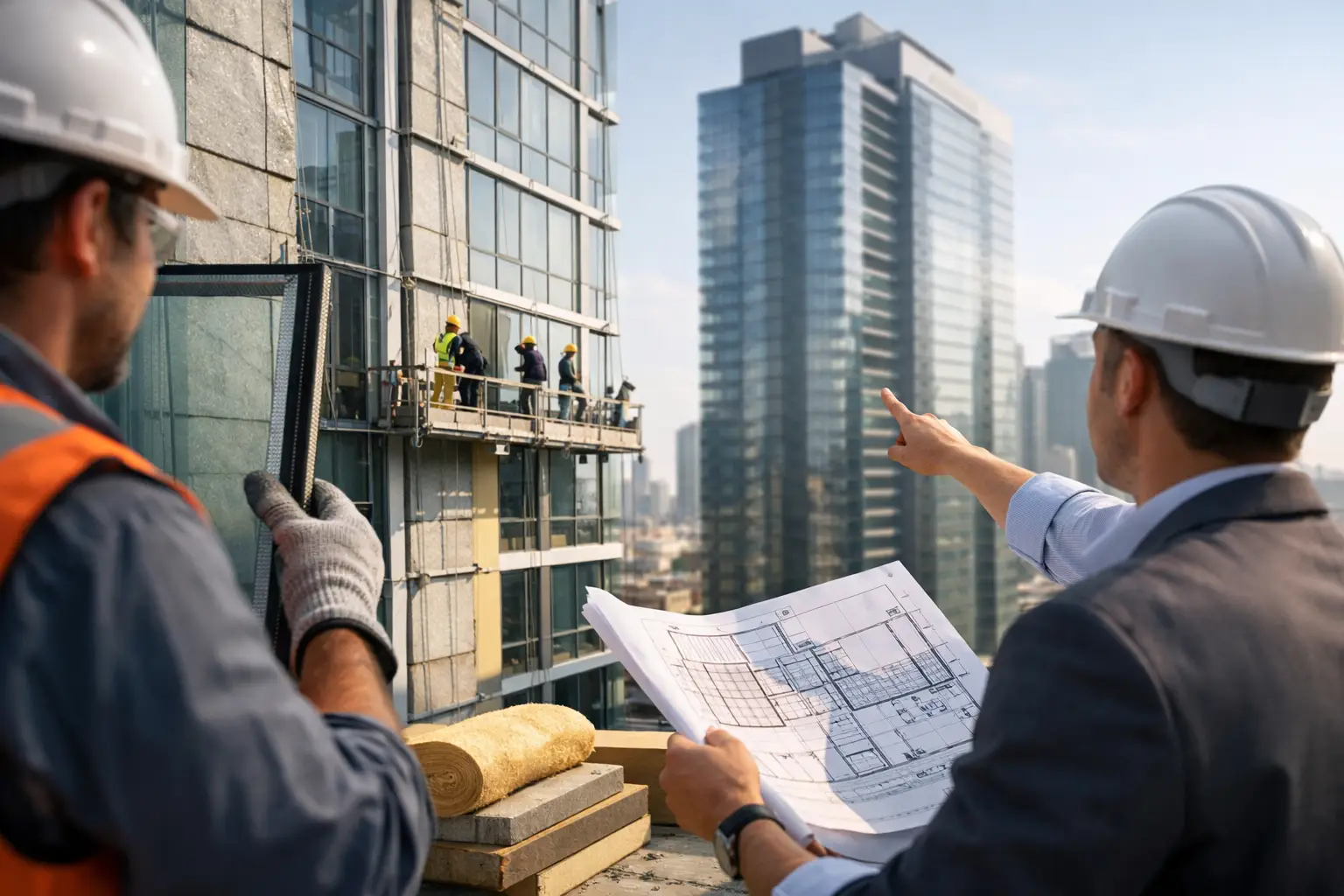
The access choice must be supported by a site-specific risk assessment and method statement. This should address anchor suitability, rescue arrangements, weather limits, exclusion zones, falling-object controls, communication procedures, and protection of pedestrians, vehicles, landscaping, and occupied areas below.
Wind and rain can change conditions quickly, particularly on tall buildings. Wet surfaces become more hazardous, suspended workers can be affected by gusts, and uncontrolled runoff may reach public areas. Work should be paused when conditions exceed the safe operating limits of the access system or the approved work method.
Chemical handling also needs clear controls. Workers require appropriate personal protective equipment, safe mixing procedures, labeled containers, and access to safety data information. Runoff must be contained or managed so cleaning solution does not enter stormwater drains untreated or affect planted areas. On occupied properties, the team should coordinate timing with building management to protect entrances, parking access, and tenant operations.
Avoid the shortcuts that create bigger maintenance issues
Facility teams sometimes face pressure to remove visible staining quickly before inspections, tenant events, or handover activities. That urgency can lead to practices that create long-term damage. Applying a strong cleaner at random concentration, using high-pressure equipment on an unknown surface, or allowing untrained workers to operate at height may produce a short-lived visual improvement with a substantial maintenance risk.
Another common shortcut is cleaning only the visibly affected patch. This can leave a sharp contrast between treated and untreated areas, especially on weathered coatings or porous stone. A qualified contractor will assess whether localized treatment is appropriate or whether a broader, controlled wash is needed to achieve an even result.
It also depends on the building’s maintenance history. A facade that has not been cleaned for years may have algae layered with pollution, mineral staining, and degraded coating residue. In that case, algae treatment may need to be combined with restoration work, coating repair, joint remediation, or drainage correction rather than treated as a standalone wash.
Build algae prevention into the maintenance plan
The most effective way to reduce algae is to inspect and clean before growth becomes dense. Periodic facade inspections can identify persistent moisture patterns, deteriorating sealants, drainage defects, and early biological staining while corrective action remains manageable.
A maintenance plan should record the facade materials, approved cleaning methods, test-patch results, access arrangements, cleaning dates, and recurring problem locations. This creates a practical reference for future work and helps managers spot whether a stain is returning in the same place. Photographic records are particularly useful for monitoring changes around joints, ledges, parapets, and drainage outlets.
For high-rise offices, residential towers, and heritage-sensitive properties, specialist execution is usually the prudent choice. A facade-focused team can align surface treatment, access planning, worker competency, and protection measures in one coordinated scope. Facade by Vertical Pro Sdn Bhd approaches exterior cleaning as part of the building’s broader envelope care, not as a cosmetic task separated from safety and long-term performance.
A clean facade should leave more than a better first impression. It should give building stakeholders a clearer view of the envelope’s actual condition, reduce moisture-related deterioration, and establish a safer baseline for the next inspection.
Discuss the next step
For advice on facade algae removal, request a site assessment or quotation from Vertical Pro.
A maintenance schedule should follow the building’s actual wetting and drying pattern. The climate context in METMalaysia’s explanation of Malaysia’s climate helps explain why conditions vary by location and season.
Leave a Reply