
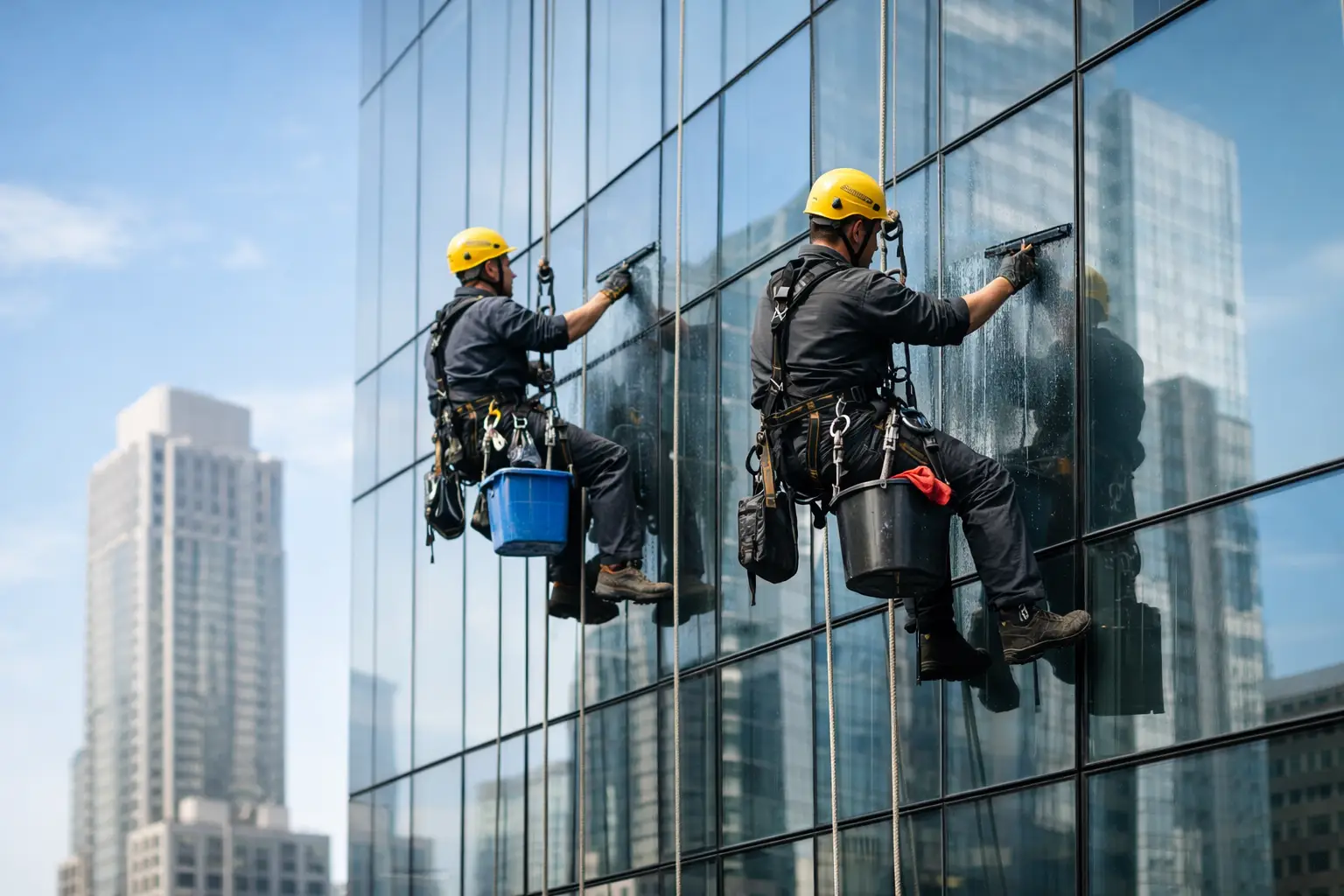
A streaked facade is rarely just a cosmetic issue. On a high-rise building, surface staining, trapped grime, algae growth, and airborne pollutants often point to a larger maintenance gap – one that can affect tenant perception, material performance, and long-term repair needs. That is why high rise facade cleaning should be treated as a planned building care function, not an occasional response to visible dirt.
For property owners, facility teams, and management corporations, the challenge is not simply getting the exterior washed. It is choosing the right cleaning method for the facade system, managing work at height safely, and protecting the building while normal operations continue below. When those decisions are made well, facade cleaning supports more than appearance. It helps preserve the building envelope, reduce premature deterioration, and keep the asset presenting at the standard occupants and visitors expect.
Why high rise facade cleaning matters
High-rise facades absorb more stress than many stakeholders realize. In dense urban environments, exterior surfaces collect traffic residue, construction dust, industrial fallout, bird droppings, and biological growth. In Malaysia’s humid and rainy climate, moisture can keep contaminants active on the surface longer, especially in shaded areas or on facade zones with poor drainage.
Over time, this buildup does more than dull the finish. Some contaminants can stain coatings, mark sealant lines, accelerate surface wear, or create uneven weathering across elevation faces. Glass may lose clarity. Metal panels may show persistent deposits. Stone and rendered surfaces can develop discoloration that becomes harder to remove if left untreated.
There is also the reputational side. Office towers, residential developments, hotels, and mixed-use properties are judged from the outside first. A neglected exterior can suggest broader maintenance issues, even when internal systems are well managed. For asset owners, that matters because presentation affects confidence, tenant satisfaction, and the perceived quality of the property.
What makes high-rise facade cleaning more complex
Cleaning a low-rise building and cleaning a tower are very different tasks. Height is only part of the challenge. The real complexity comes from access, facade diversity, and the need to avoid damage while working efficiently.
Most high-rise buildings combine several materials on one elevation. A single project may involve curtain wall glass, aluminum composite panels, natural stone, precast concrete, painted surfaces, sealants, louvers, and architectural fins. Each material responds differently to water pressure, detergents, agitation, and environmental exposure. A cleaning approach that works on glass can be too aggressive for a coated panel or too wet for a detail with vulnerable sealant joints.
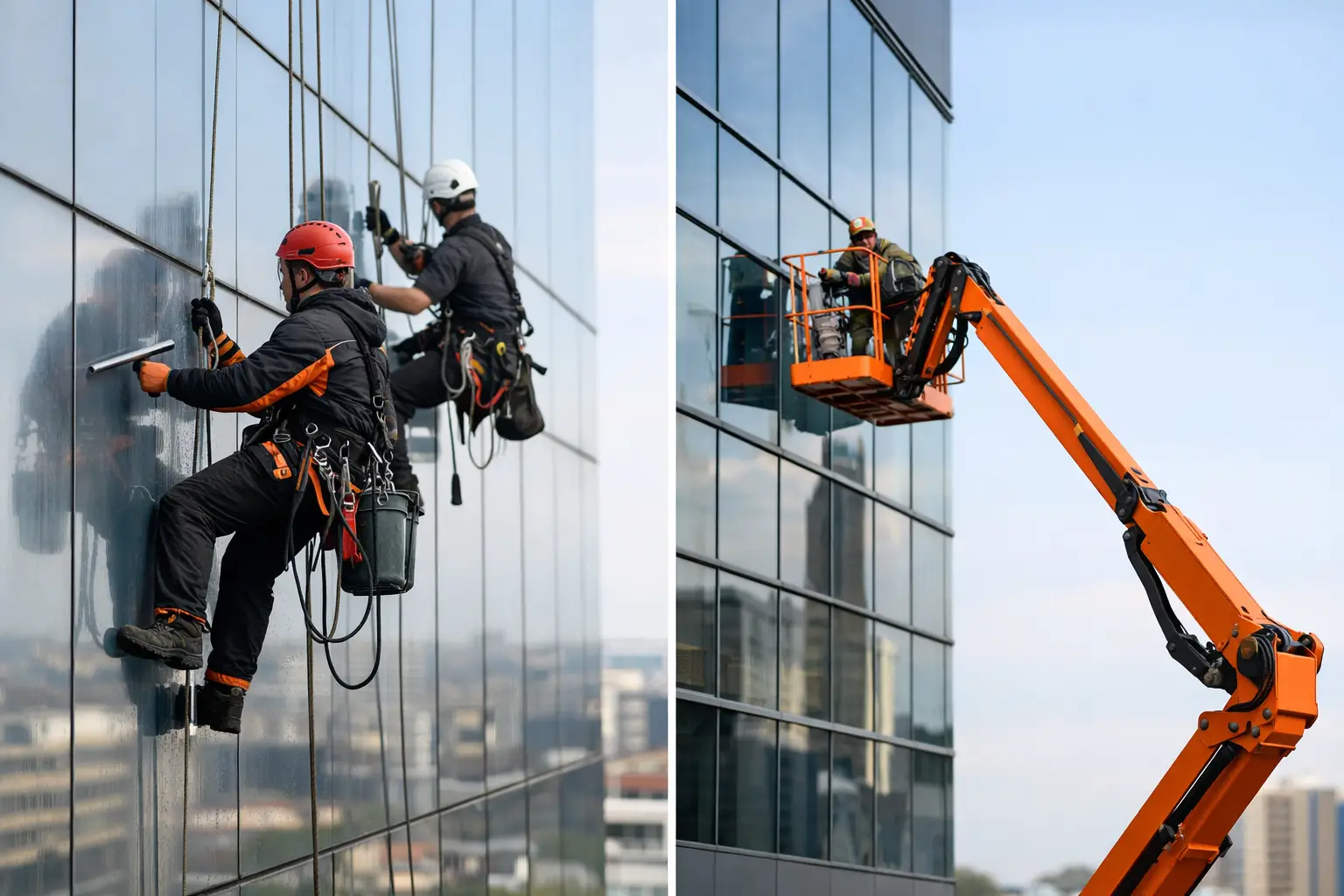
Access also shapes the method. Some buildings are suited to rope access. Others require gondolas, boom lifts, or a combination of systems depending on setbacks, roof conditions, and facade geometry. Buildings with podiums, canopies, signage, or busy public areas need tighter work planning because pedestrian movement, drop zones, and tenant operations must be managed throughout the project.
This is why facade cleaning should be approached as technical maintenance, not general exterior washing. The building itself determines the right process.
Choosing the right cleaning method for the facade
The safest and most effective method depends on the surface condition, the type of contamination, and the construction details of the facade. There is no universal formula, and that is where many cleaning problems begin.
For routine maintenance on glass and non-porous cladding, low-pressure washing combined with suitable cleaning agents is often enough to remove dirt without stressing the surface. This approach is typically preferred where the goal is controlled cleaning with minimal risk to coatings and joints.
For facades affected by stubborn deposits, algae, mineral staining, or atmospheric buildup, a more targeted treatment may be required. Even then, stronger chemistry or mechanical action should be chosen carefully. Aggressive methods can etch glass, strip protective finishes, or leave visible patchiness across panels.
Porous materials such as stone, concrete, and render need even more attention. These surfaces can absorb contaminants and cleaning solutions alike. If the wrong product is used, the result may be deeper staining, moisture retention, or a surface that weathers unevenly after cleaning.
A professional assessment matters because the visible dirt is only part of the picture. The cleaning team also needs to identify fragile sealants, existing cracks, delaminating coatings, failed joints, and other conditions that may worsen if treated incorrectly.
The role of rope access in high-rise work
For many tall buildings, rope access is one of the most practical ways to carry out facade cleaning. It allows trained technicians to reach difficult exterior zones with precision, particularly on buildings where suspended platforms or large mechanical access systems are not ideal.
The benefit is not just reach. Rope access can improve flexibility around architectural features, reduce setup constraints in tight urban sites, and allow focused cleaning on selected elevations or problem areas. That makes it useful for ongoing maintenance programs, localized staining treatment, and buildings with irregular facade profiles.
That said, rope access is not automatically the right answer for every project. Roof anchorage, facade configuration, weather exposure, and the scope of work all affect suitability. On some buildings, a gondola system is more efficient for broad elevation coverage. On others, a blended access plan works better.
What matters most is that access planning is built around safety, facade protection, and the actual conditions on site – not convenience alone.
When should a building be cleaned?
The best timing depends on building use, location, and facade material. A tower near high-traffic roads or active construction zones will typically need more frequent attention than a sheltered property in a less exposed setting. Buildings with large glass elevations often require closer visual standards, while textured or porous surfaces may show biological growth sooner in humid conditions.
In practice, many buildings wait until staining becomes obvious from the street. That is understandable, but not always efficient. Once contaminants become embedded, the cleaning process can become more involved and the risk of permanent marking increases.
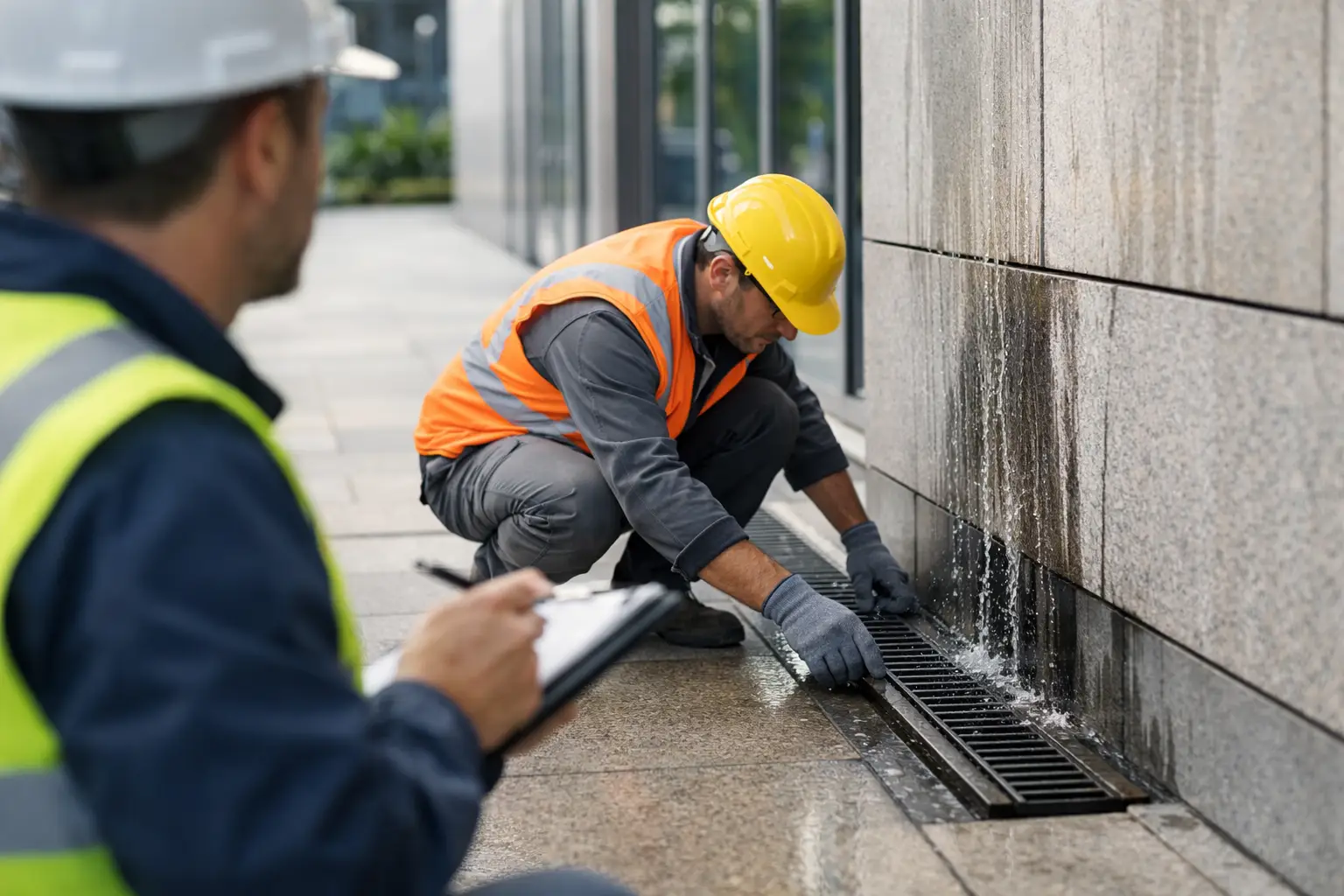
A better approach is to treat facade cleaning as part of planned maintenance. Visual inspections can help determine whether the issue is general dirt accumulation, drainage-related staining, runoff from failed sealants, or early material deterioration. That distinction matters because not every dirty facade has a cleaning problem. Sometimes it has a water management problem.
For property teams managing premium commercial or residential assets, condition-based scheduling is often the most reliable path. It keeps cleaning aligned with actual exposure and facade performance rather than waiting for the building to look neglected.
What building managers should expect from the process
A well-managed facade cleaning project begins before any technician goes over the edge. Site review, access assessment, risk control planning, and material identification should all happen early. This stage helps prevent common issues such as unsuitable cleaning agents, poor water control, tenant disruption, or incomplete coverage on hard-to-reach areas.
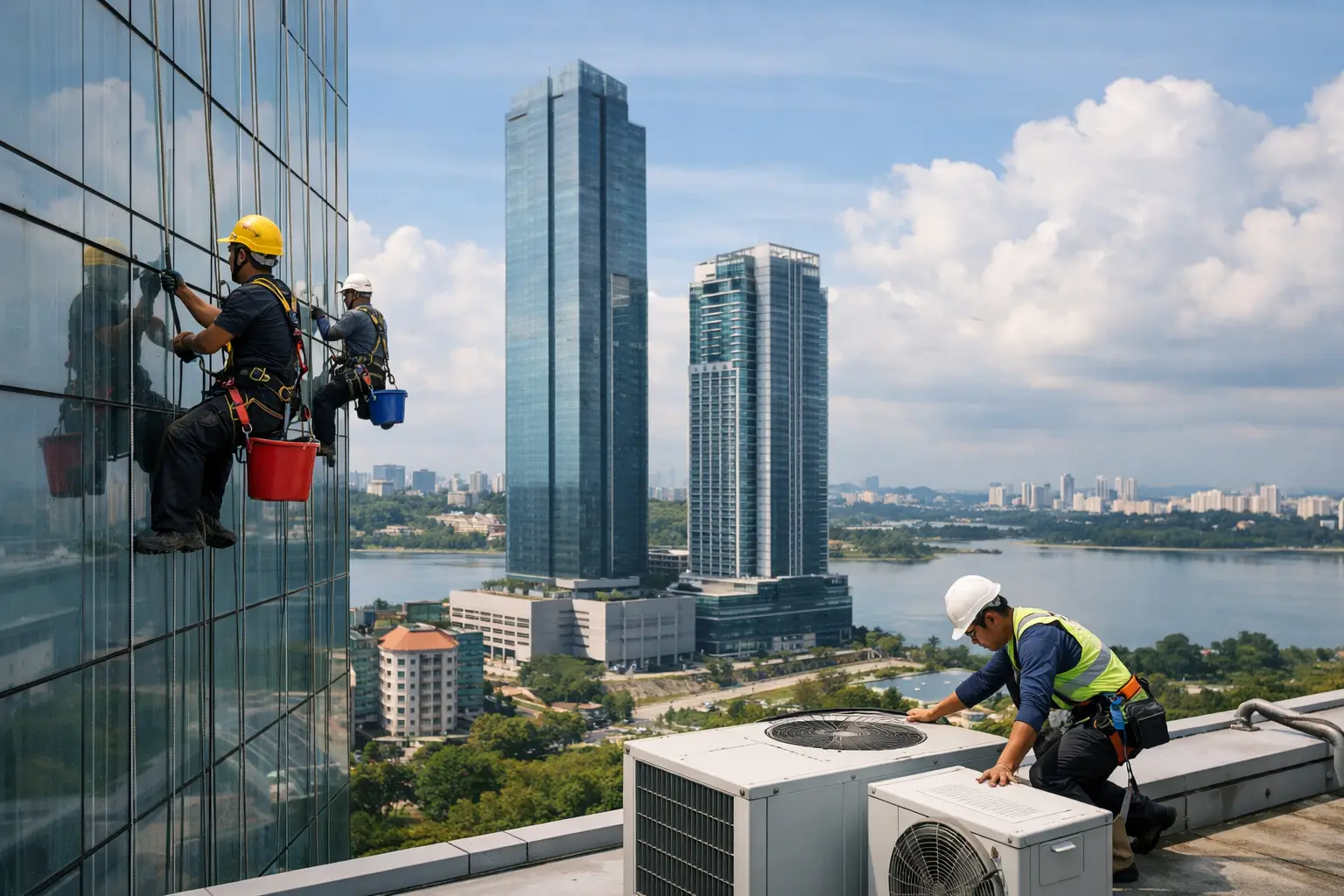
During execution, communication matters almost as much as cleaning technique. Occupants may need notice. Ground-level zones may require controlled access. Sensitive areas such as entrances, retail frontages, landscaped spaces, and parked vehicles need protection. On occupied buildings, the work should be organized to maintain safe daily operations while progress continues above.
Quality control is another point decision-makers should pay attention to. A facade can appear cleaner from a distance while still showing inconsistent treatment up close. Streaking, missed edges, runoff marks, and uneven results often happen when crews move too quickly or use methods not suited to the surface.
Experienced facade specialists look beyond immediate visual improvement. They pay attention to how the cleaning interacts with joints, finishes, sealants, and facade detailing because the goal is not simply to make the building look better for a few weeks. It is to clean the exterior without creating the next maintenance problem.
Cleaning is also a chance to spot early defects
One of the practical advantages of high rise facade cleaning is that close-access work often reveals issues that are easy to miss from ground level. Technicians may identify failed sealant lines, loose components, coating breakdown, hairline cracking, blocked drainage paths, or localized corrosion during the cleaning process.
That early visibility is valuable. Small exterior defects can become larger envelope problems if they are ignored, especially in climates with frequent rain, strong UV exposure, and recurring moisture cycles. A cleaning program that is paired with condition awareness gives building owners a better chance to intervene before defects become disruptive repairs.
For this reason, facade cleaning should not sit in isolation from broader exterior maintenance planning. It works best when it supports inspection, preservation, and long-term asset care together.
A clean facade sends a clear message about how a building is managed, but the deeper value is what happens behind that appearance. When cleaning is done with the right access method, the right surface knowledge, and the right maintenance mindset, it protects far more than curb appeal. It helps keep the building performing the way it was meant to.
Discuss the next step
For advice on high rise facade cleaning, request a site assessment or quotation from Vertical Pro.
The access method must be planned with the same care as the repair or cleaning method. DOSH Malaysia’s fall-prevention guidance sets out practical controls for preventing falls at work.

Leave a Reply