
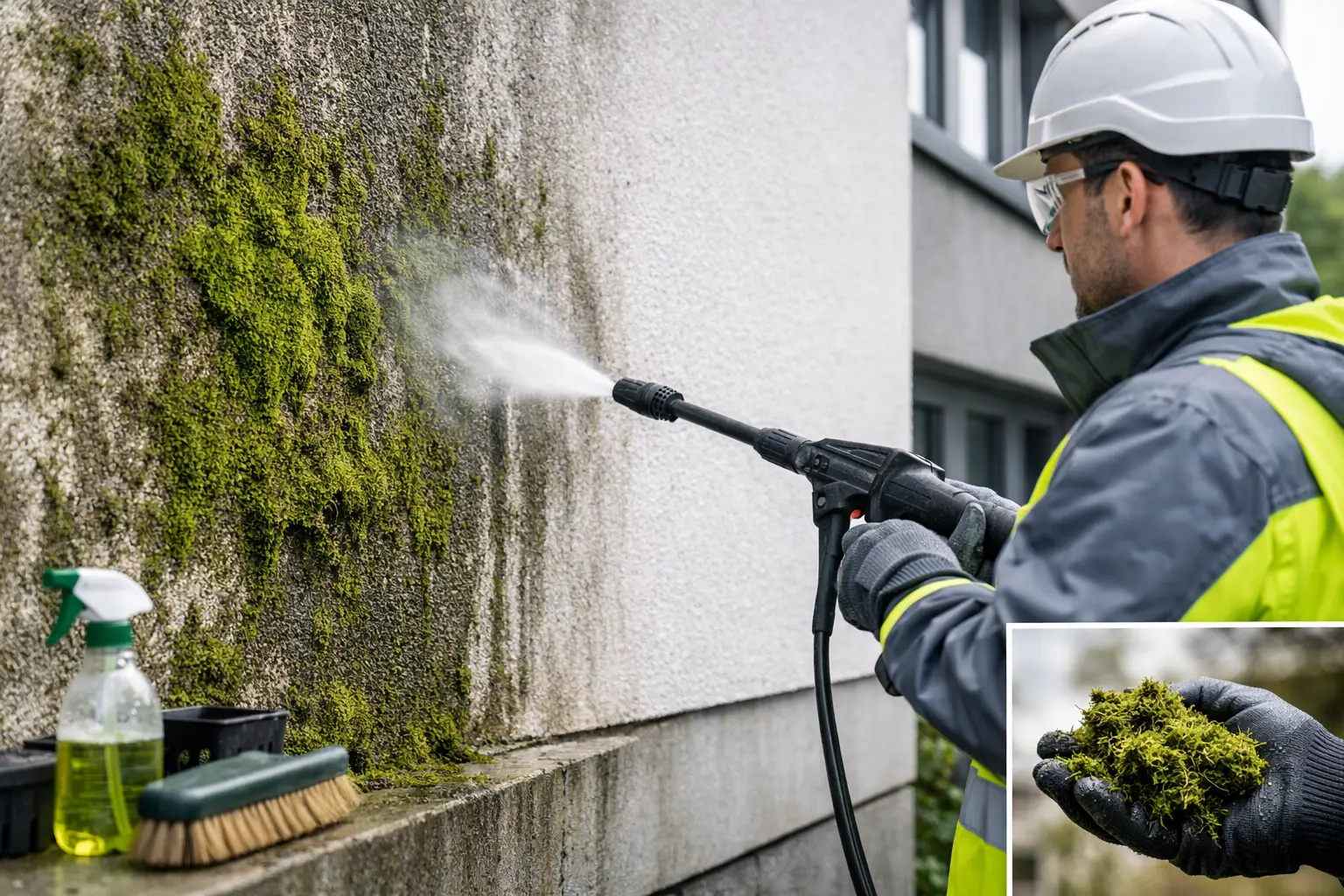
A green stain on an upper-level wall is rarely just a cosmetic issue. In humid, rain-exposed conditions, moss can retain moisture against a facade, obscure early material defects, and make a building appear poorly maintained. Selecting the right facade moss removal methods requires more than applying a cleaner. The approach must suit the facade material, the height and access conditions, the drainage pattern, and the need to protect people and property below.
For building managers and asset owners, the goal is not simply to leave the exterior looking clean for a short period. It is to remove biological growth without damaging finishes, prevent unnecessary water ingress, and address the conditions that allow moss to return.
Why Moss Establishes on Building Facades
Moss develops where surfaces remain damp for extended periods. Shaded elevations, ledges beneath air-conditioning discharge points, leaking gutters, blocked rainwater outlets, and sections exposed to wind-driven rain are common problem areas. Dust, airborne pollutants, and organic debris can create a thin surface layer that helps spores take hold.
In Malaysia’s tropical climate, moisture and warmth create favorable growing conditions for moss, algae, and lichen throughout much of the year. However, the underlying cause is often localized rather than building-wide. One elevation may be affected because it receives less sunlight, while another may have a drainage or sealant failure that keeps the substrate wet.
Moss should not be confused with every green or dark mark. Algae often forms a thin, slippery film, while lichen can bond more firmly to mineral surfaces. Staining from rust, pollution, or failed coatings requires a different treatment. A professional inspection identifies what is present before the cleaning method is chosen.
Facade Moss Removal Methods for Different Surfaces
The safest method depends on the facade assembly. A technique that works well on sound concrete may be unsuitable for painted render, natural stone, curtain wall seals, or aging heritage materials. Testing a small, discreet area is a disciplined first step, particularly where the original finish is unknown.
Low-pressure water cleaning
Low-pressure rinsing can remove loose moss, dirt, and residual cleaning solution from durable surfaces. It is often used as part of a controlled cleaning process rather than as a standalone answer. Water flow must be directed carefully so it does not enter joints, open cracks, vents, or failed sealant lines.
This method has limits. Using excessive pressure can erode cement render, strip coatings, disturb mortar joints, force water behind cladding, or damage sealants. High pressure may produce a visibly clean surface quickly, but it can also scatter spores and leave embedded biological roots behind. On high-rise buildings, uncontrolled runoff is an additional operational concern.
Biocidal treatment followed by gentle removal
For established moss, a suitable biocidal treatment is commonly the most controlled option. The treatment is applied at the correct dilution and allowed sufficient contact time to neutralize biological growth. The dead material can then be removed with soft brushing, low-pressure rinsing, or a combination of both.
This approach reduces the need for aggressive mechanical action, which is valuable on painted surfaces, textured coatings, and delicate architectural details. The cleaning team must manage runoff, protect glazing and adjacent finishes, and ensure that chemicals are selected for the specific substrate. Treatment should never be treated as a one-size-fits-all product application.
Manual brushing and localized detailing
Soft-bristle brushing is effective for small areas, corners, recessed details, and surfaces where water use must be limited. It gives technicians close control over the cleaning action and is useful after biocidal treatment has loosened growth.
Manual work is slower on large elevations, but it can be the better choice when protecting decorative stone, fragile render, signage, or complex facade features. Abrasive pads, wire brushes, and scraping tools should be avoided unless a material specialist has confirmed they will not scratch, gouge, or remove the protective surface layer.
Steam or hot-water cleaning
Steam and hot-water systems can assist with biological growth on certain durable materials by reducing the need for strong chemicals. They may be appropriate for selected masonry and stone applications, subject to testing and manufacturer guidance.
Heat is not automatically safer. Rapid temperature change can stress some finishes, sealants, glazing components, and weathered materials. The equipment also requires trained handling, particularly when work is performed at height. This method is best considered as a specialist option, not a default solution.
What to avoid
Bleach-heavy, acidic, or highly alkaline cleaners can discolor coatings, etch stone, corrode metal components, and weaken surrounding materials when incorrectly used. Household cleaning methods are especially risky on elevated facades because overspray and runoff are difficult to control.
Dry scraping may remove visible moss but can leave spores and roots in textured surfaces. More seriously, it may damage the coating that protects the substrate. A clean-looking wall that has lost its protective finish may develop staining and moisture-related deterioration sooner than expected.
Access and Safety Are Part of the Cleaning Method
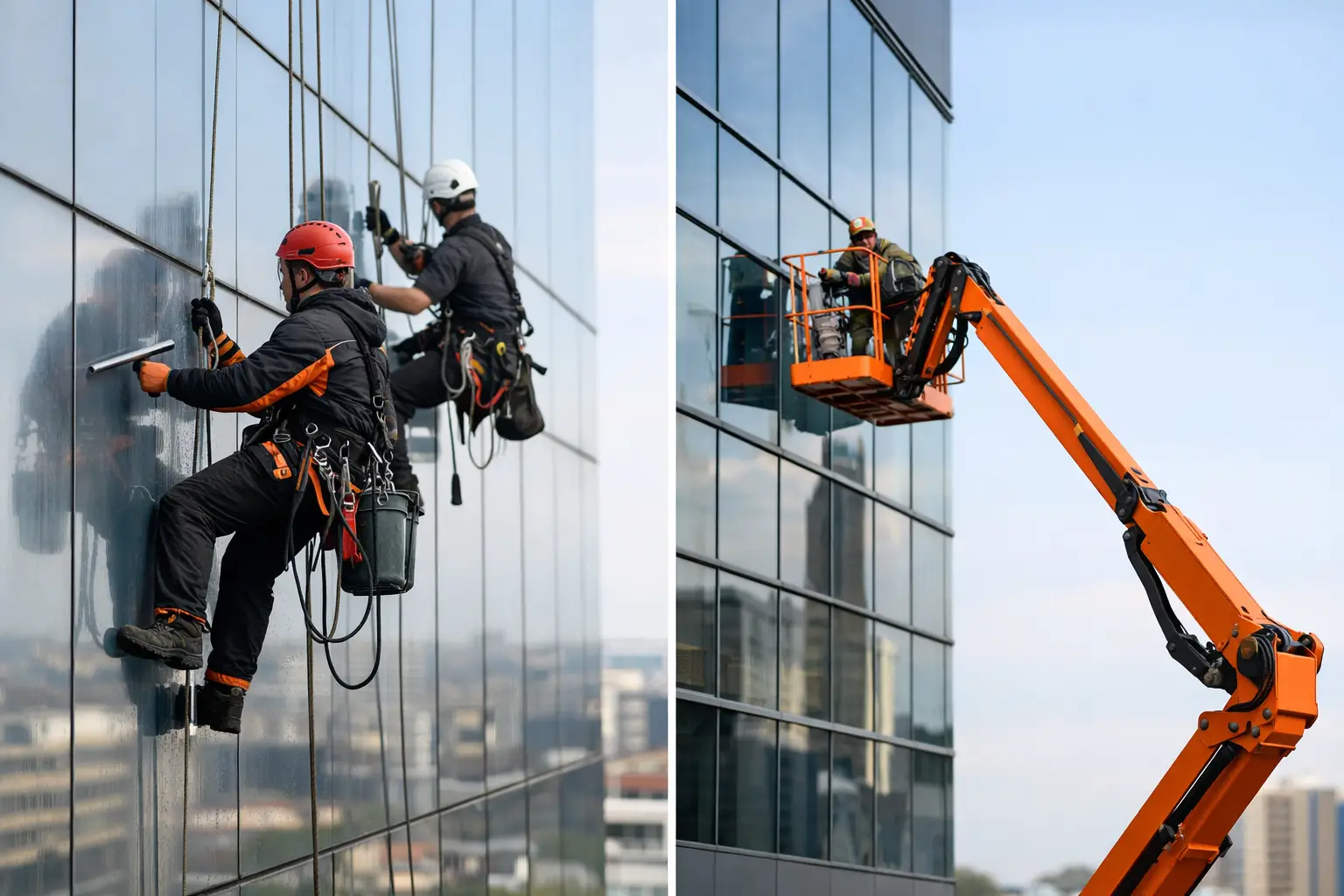
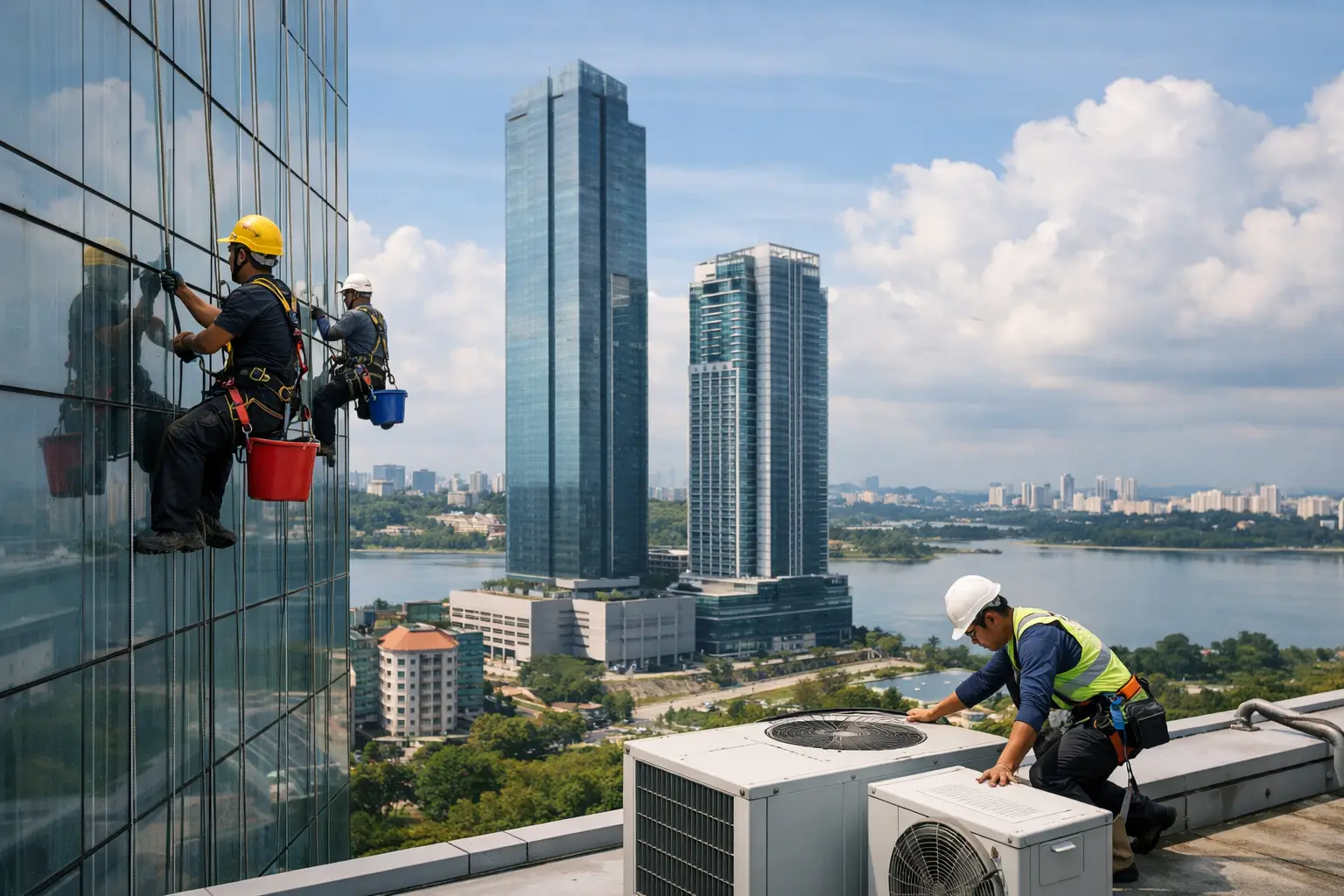
On a high-rise property, the access strategy determines whether moss removal can be carried out safely and thoroughly. Rope access is often well suited to localized growth on upper elevations, narrow setbacks, architectural projections, and areas that conventional equipment cannot reach efficiently. It allows trained technicians to work close to the surface, inspect defects, and control cleaning precisely.
Other conditions may call for suspended platforms, boom lifts, or ground-based access. The best choice depends on facade geometry, building surroundings, public exposure, loading restrictions, and the scope of work. Access planning should include exclusion zones, fall protection, anchor assessment, equipment checks, weather monitoring, and runoff control.
Safety also protects the building. Technicians working from appropriate access systems are less likely to overreach, apply excessive pressure, or miss growth concealed behind fins, ledges, and sunshades. For occupied offices and residential buildings, scheduling and site control help minimize disruption to tenants, pedestrians, and daily operations.
Treat the Cause, Not Only the Visible Growth
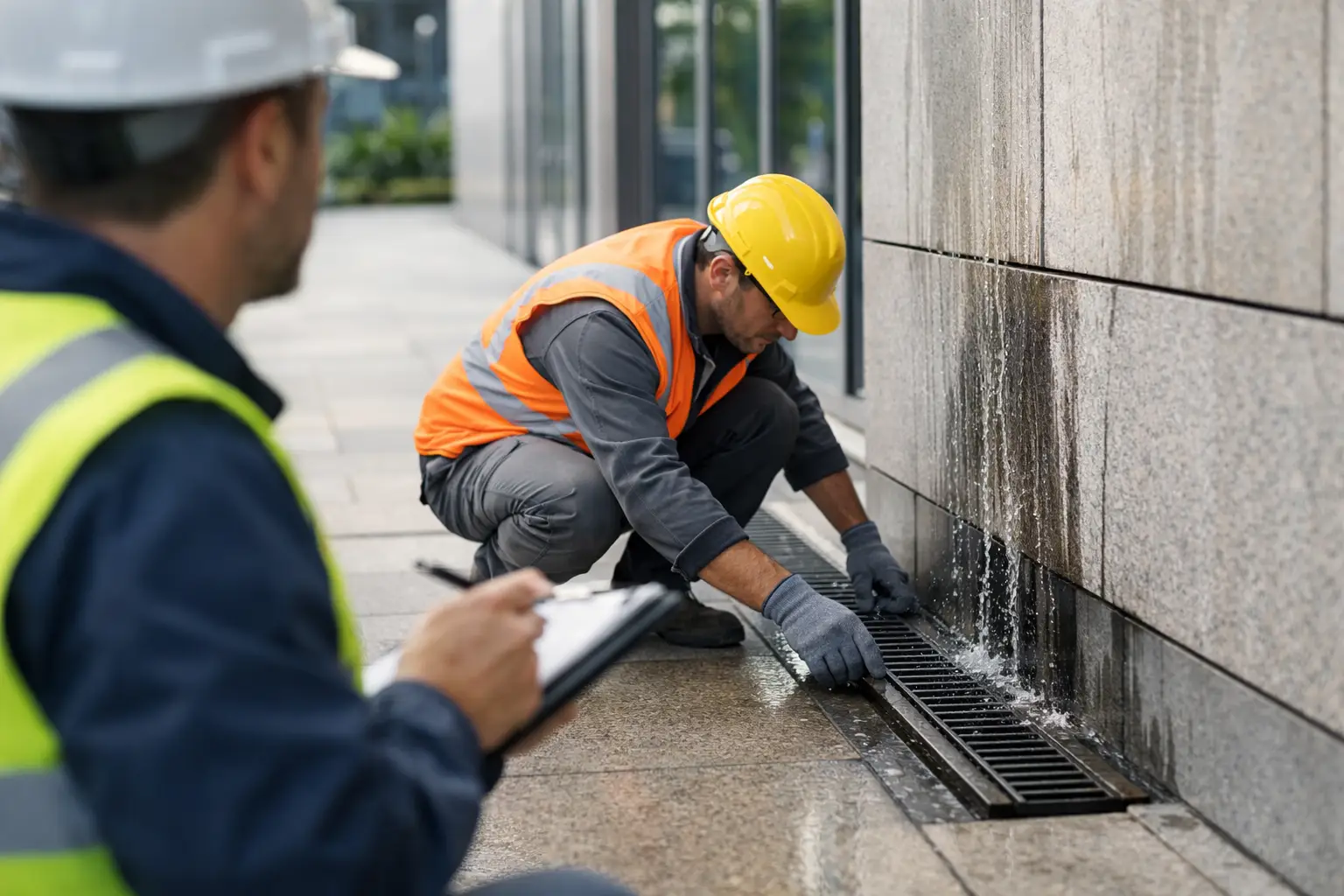
Moss will return if the facade remains consistently wet or collects debris. Once cleaning is complete, the affected area should be reviewed for contributing defects. Common findings include blocked gutters, inadequate drip edges, leaking pipework, failed joint sealant, cracks in render, and deteriorated waterproofing at parapets or window interfaces.
Vegetation close to the building can also reduce airflow and keep lower walls shaded. Maintenance teams may need to clear drainage paths, remove accumulated debris from ledges, and coordinate landscaping changes where appropriate. These measures are often modest, but they can materially extend the period between cleanings.
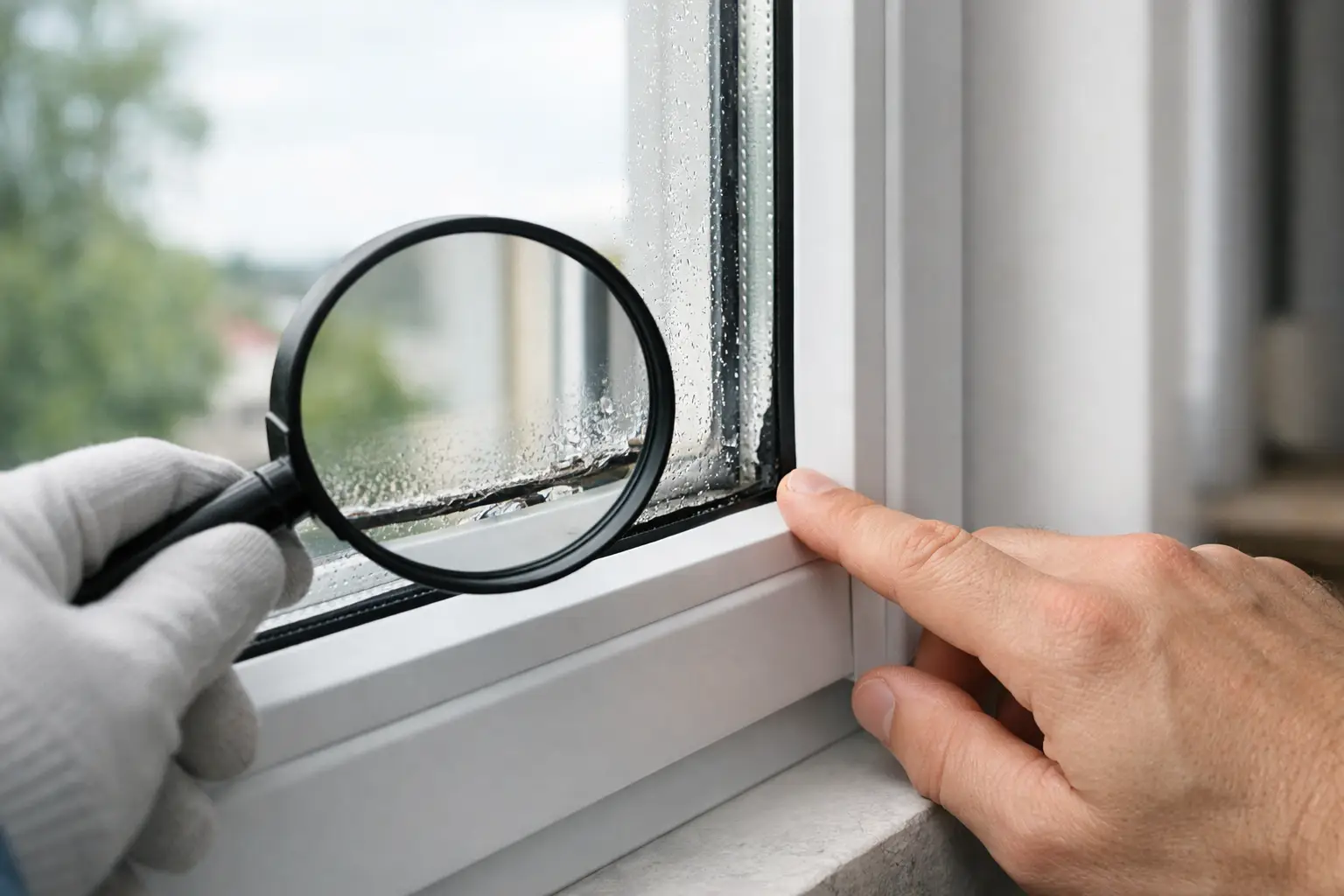
For coated facades, restoration or recoating may be necessary if the existing finish is chalking, porous, cracked, or no longer providing adequate protection. Cleaning cannot restore a coating that has reached the end of its service life. Similarly, recurring growth around a window or cladding joint may point to a water-management issue that requires repair rather than repeated washing.
Establish a Practical Maintenance Plan
A planned inspection program is more effective than waiting for green growth to become prominent from street level. Inspections after prolonged wet periods can identify drainage issues early, while routine facade surveys help record changes in staining, coating condition, sealant performance, and access needs.
The right frequency depends on the building’s exposure, material type, orientation, surrounding vegetation, and cleaning history. A tower beside a busy road may need more frequent washing because pollution deposits help retain moisture. A shaded residential elevation may require localized biological treatment before the rest of the facade needs attention.
Documentation matters. Photographs, inspection findings, treatment records, and noted defects create a reliable maintenance history. This supports better planning, helps distinguish recurring symptoms from new issues, and gives asset teams a clearer basis for prioritizing remedial work.
Moss removal is most effective when it is treated as part of facade care rather than a surface-only cleaning task. A measured method, suitable access plan, and attention to moisture sources protect the appearance and performance of the building long after the green staining has been removed.
Discuss the next step
For advice on facade moss removal, request a site assessment or quotation from Vertical Pro.
Malaysia’s facade maintenance conditions are shaped by persistent humidity and frequent rain. METMalaysia’s explanation of Malaysia’s climate provides useful context for setting realistic inspection intervals.

Leave a Reply