
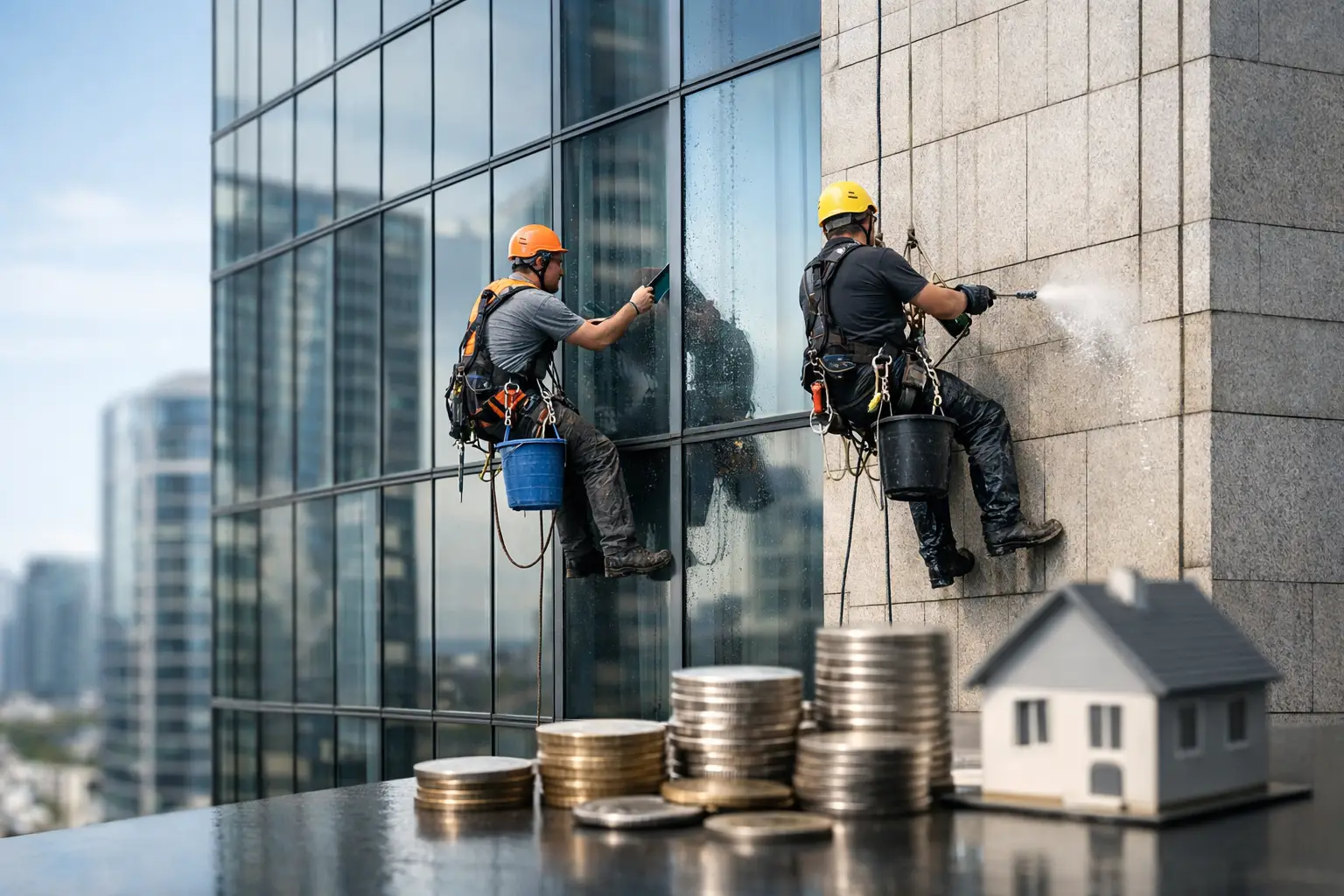
When a facade starts showing traffic film, algae streaking, mineral deposits, or patchy discoloration, the first question many property teams ask is about facade cleaning cost per square foot. That question is reasonable, but on real buildings, square footage alone rarely tells the full story. For high-rise offices, residential towers, podium structures, and heritage facades, the actual service scope depends on access conditions, material sensitivity, contamination level, and safety planning.
For building owners and facility managers, that distinction matters. A facade cleaning program is not just a cosmetic task. It supports asset presentation, helps prevent premature surface deterioration, and reduces the likelihood that minor exterior issues stay hidden behind dirt buildup for too long.
Why facade cleaning cost per square foot is only a starting point
Square footage is useful because it gives teams a common way to estimate project size. A larger facade generally requires more labor time, more planning, and more equipment deployment than a smaller one. But two buildings with the same exterior area can require very different cleaning methods.
A glass curtain wall with consistent access zones is not the same as a facade with recessed balconies, decorative fins, ledges, signage, sealant joints, and mixed cladding materials. The second building often takes longer to clean safely and thoroughly, even if the total measured area appears similar.
This is why experienced facade contractors treat cost per square foot as a reference point rather than a fixed rule. In practice, the final scope is shaped by risk, complexity, and the performance requirements of the exterior surface.
What affects facade cleaning cost per square foot
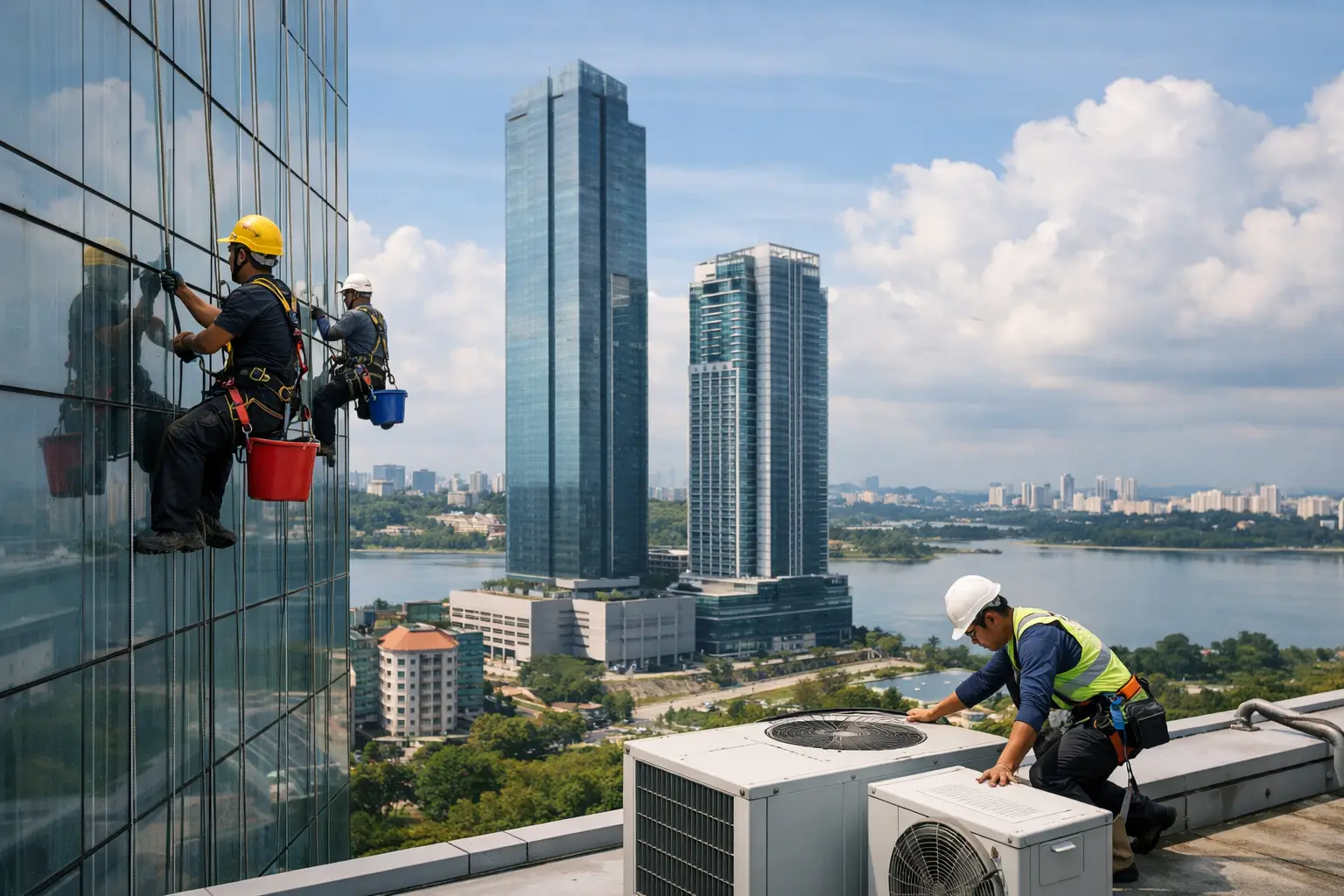
The biggest variable is access. If technicians can reach the facade easily using standard suspended access or planned rope access routes, execution is usually more straightforward. If the building has transfer slabs, setbacks, fragile roof zones, awkward anchor positions, or active public circulation below, planning becomes more involved.
Height also changes the nature of the work. Mid-rise buildings can sometimes be serviced with simpler methods, while taller structures demand tighter control over weather exposure, drop zones, rigging, and movement sequencing. On occupied properties, the team also has to coordinate around entrances, parking areas, tenant activity, and public safety.
Facade material matters just as much. Glass, aluminum composite panels, painted surfaces, natural stone, precast concrete, and rendered finishes each respond differently to cleaning agents and pressure levels. What works well on one material may damage coating integrity, leave etching, or create uneven visual results on another. A proper cleaning scope should always account for surface compatibility.
The type of soiling is another major factor. Light dust and routine urban grime are very different from stubborn carbon staining, algae growth, efflorescence, rust runoff, bird fouling, or hard water deposits. More aggressive contamination usually means more time, more testing, and more controlled treatment methods.
The building conditions that change the job
The age and maintenance history of a building often tell you more than the size alone. A facade that has been cleaned regularly is usually easier to restore to a consistent appearance. A facade that has gone years without maintenance may have embedded staining, sealant runoff marks, and surface degradation that complicate cleaning.
This is especially relevant in Malaysia, where heat, humidity, rainfall, and urban pollution accelerate visible facade wear. Exterior surfaces can collect biological growth and atmospheric residue faster than many owners expect. Buildings near busy roads, coastal areas, or dense commercial districts may require more frequent facade care simply because the environmental load is higher.
Design features also influence the scope. Deep reveals, projecting sunshades, louver systems, perforated screens, and architectural fins create areas where dirt accumulates unevenly. They can also slow technician movement and limit line of sight during cleaning. On paper, the square footage may not look unusual. On site, the work can be significantly more detailed.
Why access strategy has such a large impact
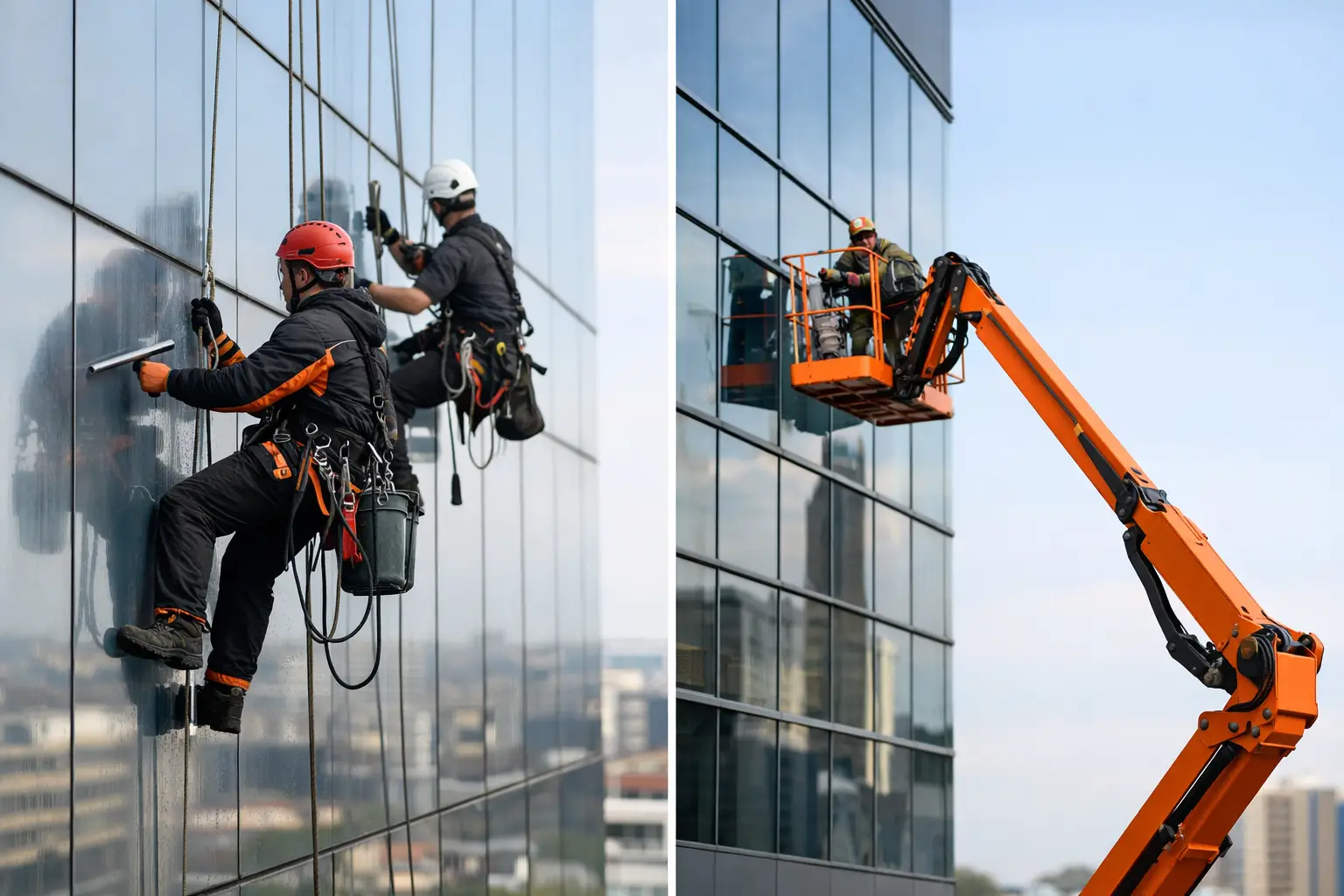
On high-rise buildings, cleaning quality and safety depend heavily on how the facade will be accessed. Rope access can be highly efficient for targeted or difficult-to-reach elevations, particularly where traditional access systems are impractical. Building maintenance units, gondolas, scaffolding, boom lifts, and mobile platforms may also be appropriate depending on the facade layout.
The right method depends on the building, not on a standard preference. A specialist contractor evaluates anchor suitability, roof constraints, descent paths, rescue planning, ground control, and the effect of wind exposure on external work. This is one reason generic square foot assumptions can be misleading. The same facade area may require a very different access plan from one property to the next.
For occupied towers, access strategy also affects disruption. A well-planned cleaning operation protects pedestrian routes, avoids unnecessary interruption to tenants, and reduces the chance of repeated mobilization. That kind of planning is part of professional facade care, not an extra detail after the fact.
Cleaning method affects outcomes, not just scope
There is no single best way to clean every facade. Low-pressure washing may be appropriate in some cases, while purified water cleaning, soft washing, detergent-based treatment, manual detailing, or stain-specific remediation may be better in others. The surface condition, contamination type, and finish sensitivity should determine the method.
This is where building owners benefit from a facade specialist rather than a general exterior cleaning approach. The goal is not simply to remove visible dirt. The goal is to improve appearance without shortening the service life of coatings, glazing, sealants, stone finishes, or other facade elements.
A careful contractor will usually assess whether a test patch is needed before full execution. That small step helps confirm visual results, detect adverse reactions, and set a realistic standard for the broader cleaning program.
How to evaluate a facade cleaning scope properly
If you are comparing service proposals, start by looking beyond the facade cleaning cost per square foot and examine how each contractor defines the work. The scope should identify the facade areas included, the access method, the surface types, the cleaning process, and any assumptions about staining severity or existing defects.
A vague proposal may appear simpler, but it can create problems once work begins. If heavy staining, inaccessible zones, or material sensitivities were not addressed up front, expectations can quickly separate from reality. Clear documentation protects both the property team and the contractor.
It also helps to ask whether the contractor is inspecting while cleaning. Exterior cleaning often reveals open joints, cracked sealant, coating failure, loose elements, or localized water-related staining that was harder to spot before the surface was washed. For asset owners, that added visibility has real value because it supports preventive maintenance planning.
When regular cleaning makes more sense than reactive cleaning
Many buildings are cleaned only when appearance has already deteriorated enough to trigger complaints, investor concern, or tenant dissatisfaction. That reactive approach usually leads to more difficult restoration work and less control over maintenance timing.
A scheduled facade care program is typically more effective. Regular cleaning helps preserve a consistent building image, allows earlier detection of facade defects, and reduces the chance that dirt buildup masks developing issues. For properties with premium positioning or public-facing visibility, that consistency matters.
There is also an operational benefit. Planned maintenance is easier to coordinate than urgent cleaning before an audit, handover, inspection, or major event. When building teams can choose the timing, they can manage access, notices, and site control more efficiently.
What property teams should prepare before requesting a proposal
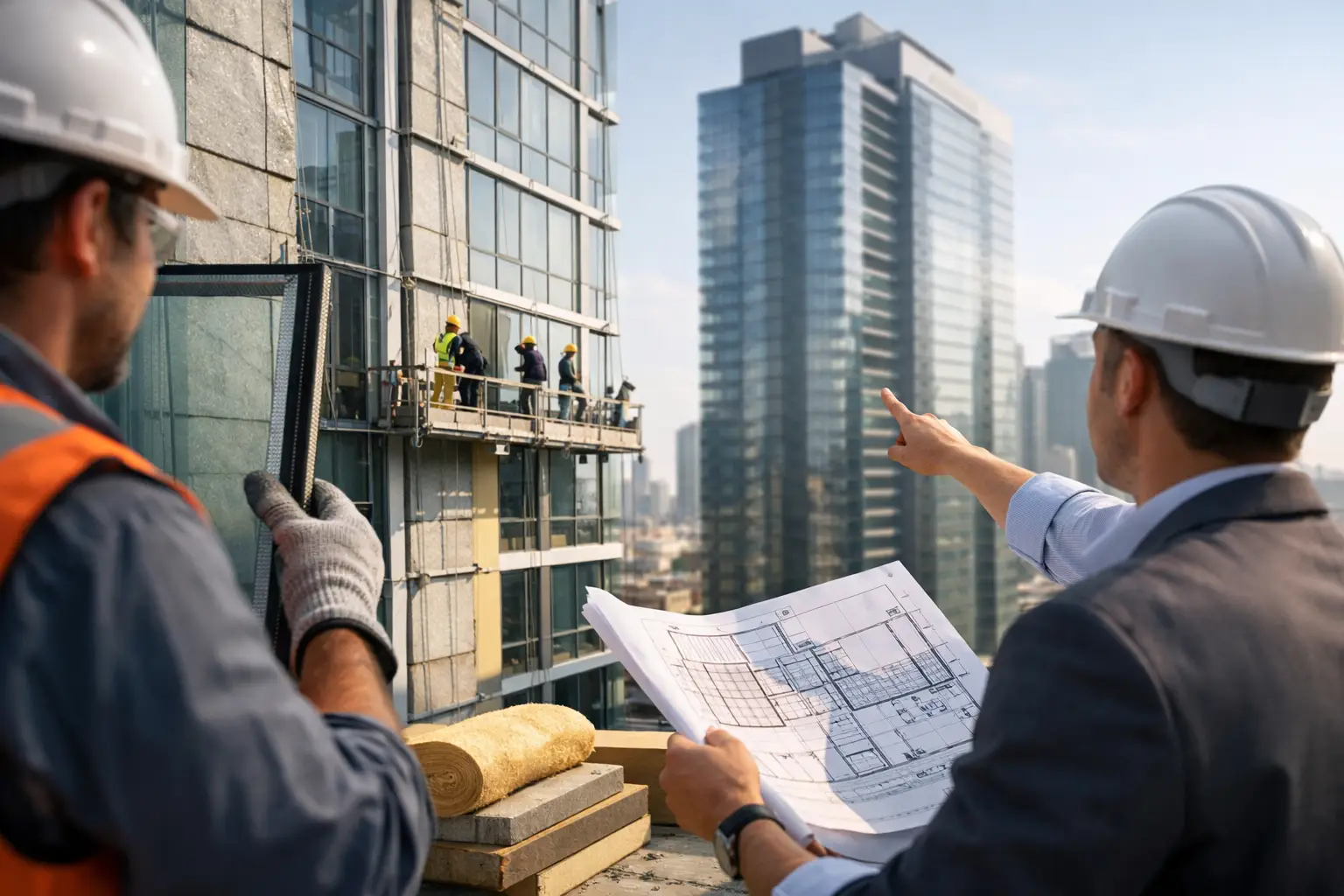
A strong proposal process starts with good building information. Elevation drawings, facade material descriptions, past maintenance records, and known access constraints help the contractor assess the work more accurately. Photos of typical staining and problem areas are useful as well, especially for early review.
It is also worth identifying whether the objective is routine appearance maintenance, post-construction cleanup, stain treatment, pre-handover preparation, or cleaning linked to a broader facade inspection program. Those goals shape the service approach. A routine wash and a condition-led maintenance intervention are not the same thing.
If your building has known issues such as leaks, failed sealants, brittle coatings, or recurring algae growth, mention them early. Cleaning can improve visibility, but it does not replace repair work where the facade system itself is deteriorating.
A better way to think about facade cleaning
For serious asset owners, facade cleaning cost per square foot should be treated as one reference among several, not the sole measure of value. The real question is whether the scope fits the building, protects the exterior materials, and supports safe, efficient access with minimal operational disruption.
A well-maintained facade does more than look clean from the street. It reflects how the property is managed, helps preserve material performance, and gives your team a clearer view of the building envelope over time. That is usually where the smarter maintenance decisions begin.
Questions to ask before comparing quotations
- Is access equipment, mobilisation and public protection included?
- Does the method suit the actual glass, stone, metal or coated surface?
- Are test patches, water treatment and waste control included?
- Will defects discovered during cleaning be documented?
- Are exclusions and assumptions stated clearly?
Frequently asked questions
Can facade cleaning be priced without a site visit?
A preliminary range may be possible from drawings and photographs, but a firm scope normally requires confirmation of access, surface condition and site restrictions.
Is the lowest rate always the best value?
No. A lower rate may exclude access preparation, protection, specialist treatment or documentation. Compare the full method and deliverables, not only the unit rate.
Request a site assessment
Vertical Pro can review the facade condition, access constraints and required outcome before preparing a practical proposal. Request a facade cleaning quotation.
For work above ground level, the scope should include fall prevention and public protection—not only the technical task. See DOSH Malaysia’s fall-prevention guidance for the relevant safety framework.
Leave a Reply