

Facade defects usually announce themselves through small changes: hairline cracks near joints, sealant that has started to shrink, staining below window lines, loose render, or panels that no longer sit quite right. For building owners and managers, facade inspection services are how those early signs get identified before they become safety issues, water ingress problems, or larger restoration works.
On high-rise and mid-rise properties, exterior defects are easy to miss from ground level. That is exactly why inspections need to be systematic, technically informed, and suited to the building’s height, materials, and exposure conditions. In Malaysia’s climate, where heat, heavy rain, humidity, and urban pollution all work against exterior finishes, facade condition can change faster than many stakeholders expect.
Why facade inspection services matter
A facade is not only the visible face of a building. It is part of the structure’s protective envelope. When that envelope is compromised, the effects often move beyond appearance. Moisture can enter through failed joints. Surface cracks can widen under repeated weather exposure. Loose elements can create risk to occupants, pedestrians, and nearby property.
For asset owners, inspection is a practical risk management measure. It supports safer building operation, helps maintenance teams prioritize the right interventions, and reduces the chance of reactive works being triggered by a complaint or incident. It also protects presentation standards, which matters for office towers, residential developments, hospitality assets, and commercial properties where the building exterior shapes first impressions.
There is also a long-term maintenance advantage. Buildings that are inspected at reasonable intervals tend to have more predictable repair planning. Instead of waiting until defects become obvious and disruptive, owners can address localized deterioration while the scope is still manageable.
What facade inspection services typically include
The exact scope depends on the building type and the concerns being investigated, but most facade inspection services begin with a visual assessment of the exterior envelope. That includes cladding, glazing interfaces, sealant joints, concrete surfaces, painted finishes, masonry, render, parapets, and architectural features that may be exposed to weathering or movement.
A proper inspection looks for more than visible dirt or cosmetic wear. The objective is to identify defects, deterioration patterns, and conditions that may affect safety or performance. That can include cracking, delamination, spalling concrete, corrosion staining, failed sealants, water marks, displaced panels, surface erosion, biological growth, and signs of previous repairs no longer performing as intended.
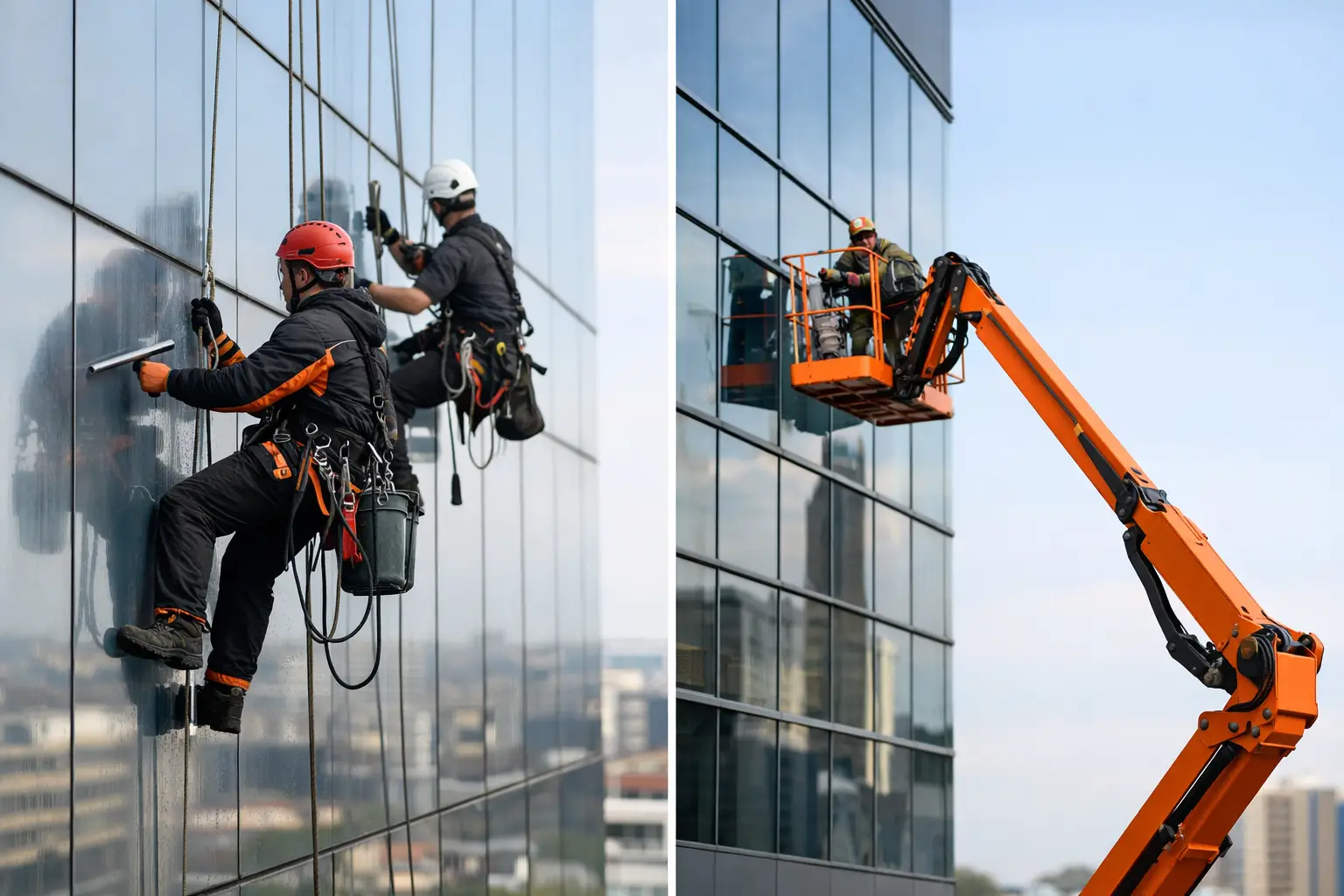
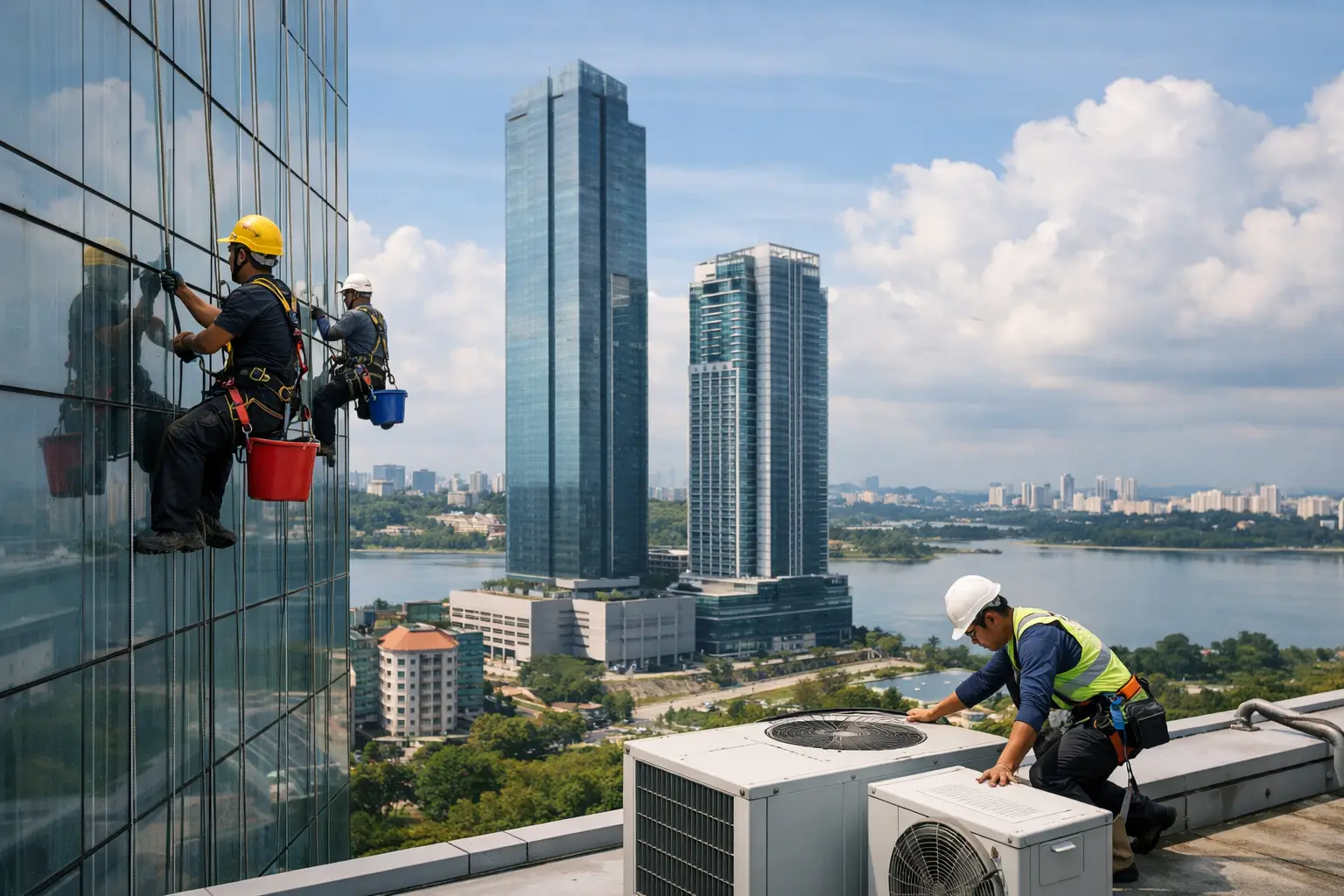
On taller buildings, access method matters. Ground-based observation may be useful for broad review, but it is often not enough for accurate condition assessment. Close-up access through rope access systems, suspended platforms, or other work-at-height methods allows inspectors to examine details that cannot be reliably judged from a distance. For complex facades, this is often the difference between assumption and evidence.
Depending on the building and the suspected issue, inspections may also include simple condition testing, photographic documentation, defect mapping, and recommendations for maintenance or remedial action. In some cases, the most valuable outcome is not just finding a defect, but understanding its pattern – whether it is isolated, repeated across elevations, driven by water penetration, or linked to movement at transitions and joints.
Common facade issues inspections are meant to catch
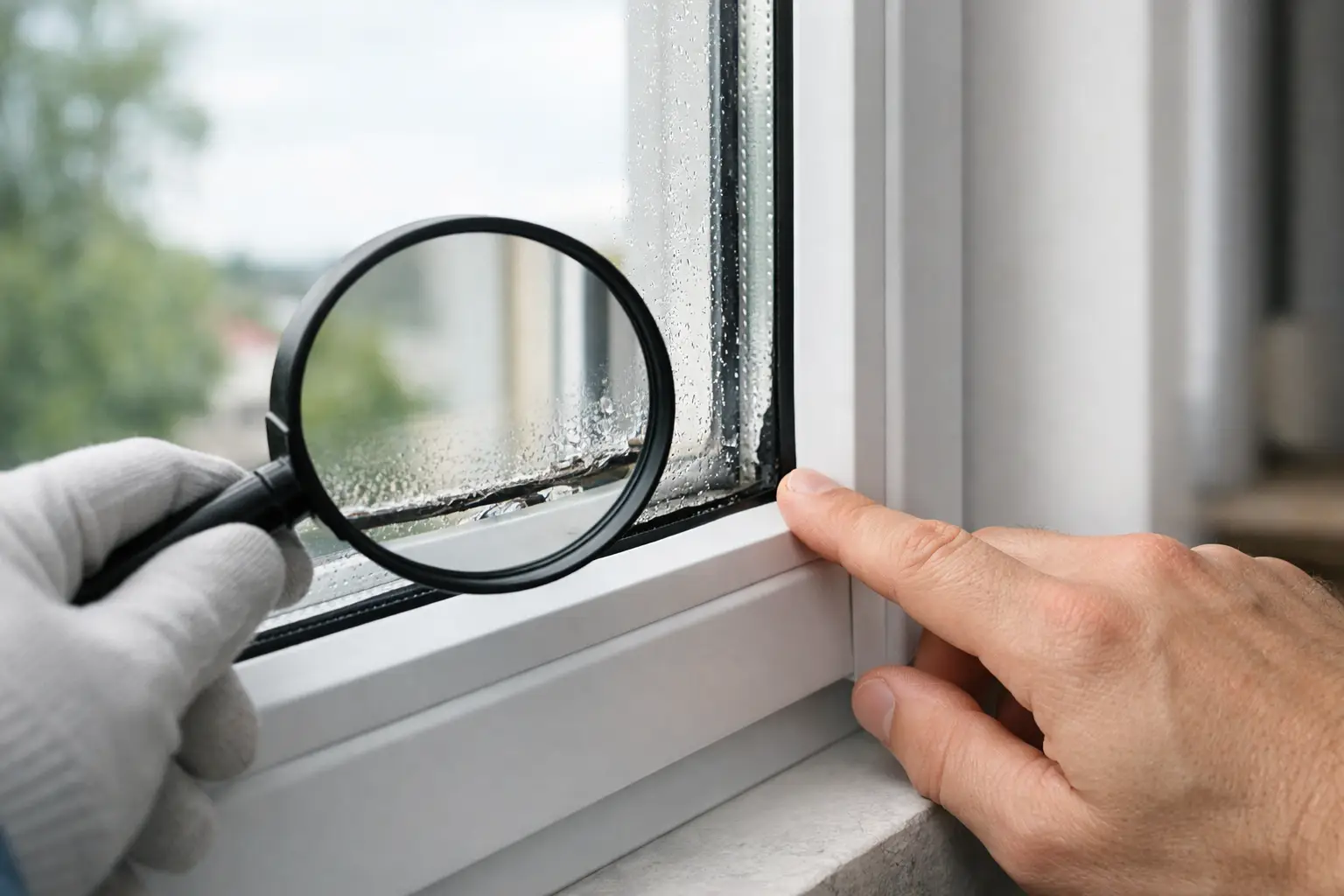
Different facade systems fail in different ways, and that is why specialist knowledge matters. A concrete facade may show cracking, spalling, and reinforcement corrosion. A painted rendered wall may develop blistering, peeling, and moisture retention. Curtain wall and glazed systems may reveal seal failure, gasket deterioration, or water leakage around interfaces.
High-rise buildings in tropical urban settings also face environmental stress that is easy to underestimate. Repeated wet-dry cycles, UV exposure, airborne pollutants, and biological growth can all shorten the service life of exterior finishes and jointing materials. Areas exposed to prevailing rain or direct sun often age differently from sheltered elevations, so a uniform maintenance assumption does not always hold.
Architectural details deserve particular attention. Ledges, fins, decorative projections, canopies, and parapet edges can trap water or conceal deterioration. These areas may not be the largest portions of the facade, but they often present outsized risk if material becomes loose or if moisture is allowed to migrate inward.
When a building should be inspected
There is no single inspection schedule that suits every property. It depends on building height, facade type, age, location, prior repair history, and exposure conditions. Still, there are clear moments when inspection becomes especially necessary.
A newly acquired building should be inspected so the owner or management team has a realistic understanding of current facade condition. Older properties should be reviewed more carefully as materials age and prior repairs begin to lose effectiveness. Buildings that have experienced leaks, falling debris, visible cracking, staining, or occupant complaints should not wait for the next planned maintenance cycle.
Inspections are also appropriate after severe weather events, before major cleaning or restoration programs, and when preparing a longer-term maintenance plan. For heritage or architecturally sensitive buildings, early inspection is even more valuable because inappropriate repairs can create lasting damage to original materials.
The difference between inspection and cleaning or repair
One common mistake in facade maintenance is treating cleaning as diagnosis. Cleaning can improve appearance and reveal hidden defects, but it is not the same as inspection. A clean facade may still have failed joints, movement cracks, or loose elements that remain undetected without a trained assessment.
The same applies to repair. Repair addresses known defects, while inspection establishes what those defects are, how extensive they may be, and what sequence of action makes sense. If repairs begin without a clear inspection process, the result can be patchwork work scopes that solve the visible symptom but miss the underlying issue.
That is why inspection should sit near the front of any serious facade maintenance strategy. It creates the basis for informed decision-making, especially on larger assets where access is difficult and repair priorities must be set carefully.
Why access capability is part of inspection quality
Facade assessment is only as good as the ability to reach and view the right areas. Buildings with setbacks, recessed zones, curved elevations, and limited roof access often require more specialized planning than a standard visual check can provide. Rope access is particularly useful where precision, close-up review, and minimal disruption are priorities.
For property managers, this has operational value. Effective access planning allows inspection teams to assess difficult areas without unnecessary interruption to tenants, visitors, or daily building use. It also improves inspection accuracy by reducing reliance on distant observation.
In Malaysia, where many commercial and residential assets are exposed to intense weather and urban grime, high-level facade issues can advance quickly if they are left unobserved. A technically competent inspection team with the right access method is better positioned to identify conditions early and recommend practical next steps.
What decision-makers should expect from inspection findings
A useful facade inspection does not end with a vague statement that the building needs attention. It should help stakeholders understand what was observed, where it occurs, how serious it may be, and what action should follow. That may involve routine monitoring, localized repair, broader restoration planning, or a more detailed investigation of specific areas.
The best reporting is clear enough for non-technical decision-makers to use, while still grounded in facade-specific knowledge. Facility teams need a basis for action. Asset owners need to understand risk. Management bodies need documentation that supports responsible maintenance planning. When inspection findings are organized and practical, decisions become faster and better aligned with building priorities.
For multi-building portfolios, this clarity matters even more. Not every defect is urgent, and not every elevation will require the same level of intervention. A disciplined inspection process helps separate cosmetic wear from performance issues and routine maintenance from higher-risk defects.
Facade inspection services as part of building stewardship
Buildings age in layers. Surface dirt appears first, then sealants harden, coatings lose performance, cracks widen, and moisture finds paths where it should not. Facade inspection services give owners and managers a way to see that progression clearly and respond before the exterior becomes a liability.
For properties that depend on safety, presentation, and long-term durability, inspection is not a formality. It is part of responsible stewardship. And when the facade starts telling you something is changing, the best time to look closely is before the building forces the issue.
What the inspection deliverable should contain
- Building elevations and areas inspected
- Access method and inspection limitations
- Photographs linked to defect locations
- Description of observed conditions without unsupported assumptions
- Priority ranking for safety, investigation and maintenance
- Recommended next steps, testing or specialist review
Frequently asked questions
Is a facade inspection the same as an engineering assessment?
Not necessarily. A maintenance inspection can document visible conditions, while structural or specialist concerns may require assessment by an appropriately qualified professional.
Should cleaning happen before inspection?
Cleaning may improve visibility, but urgent loose-material or access risks should be reviewed first. The sequence depends on the building condition.
Define an inspection scope
Use the building-manager inspection checklist to prepare information, then request a professional facade assessment.
A technically correct repair can still be poorly planned if safe access is treated as an afterthought. DOSH Malaysia’s fall-prevention guidance provides a structured basis for the work-at-height plan.


Leave a Reply