

A dark streak beneath a window sill, orange marks below a steel fixing, or green growth on a shaded elevation is more than a cosmetic issue. Understanding what causes facade staining helps building managers distinguish routine surface soiling from early signs of water-management, material, or maintenance problems. On high-rise properties, the pattern and location of a stain often reveal as much as its color.
In Malaysia’s humid, high-rainfall urban environment, facade staining can develop quickly. Rain carries airborne contaminants down the building face, persistent moisture supports biological growth, and inaccessible areas may go unnoticed until discoloration becomes widespread. A professional assessment should look beyond cleaning requirements to identify why the staining formed in the first place.
What Causes Facade Staining? The Main Sources
Facade stains rarely have a single cause. More often, moisture, airborne dirt, the facade material, and a local design detail interact over time. The following sources are the most common across commercial towers, residential buildings, and older properties.
Rainwater runoff and poor drainage
Rainwater is one of the principal transport mechanisms for stains. As water flows over roofs, ledges, window frames, air-conditioning condensate pipes, and facade joints, it collects dust, pollutants, and particles before depositing them on the surface below. This creates vertical streaks, usually concentrated beneath projections or drainage points.
Blocked gutters, undersized downpipes, defective flashings, and overflowing planters can intensify the problem. Even a well-designed facade can stain when water repeatedly follows the same path. A narrow dark streak may indicate a localized issue, while broad, uneven staining can point to general runoff across the elevation.
The solution is not always simply to clean the wall. If the drainage detail remains defective, the same stains will return after the next wet season. Cleaning should be paired with inspection of water paths, outlets, joints, and surface slopes.
Air pollution and urban dust
Buildings in busy urban areas are constantly exposed to vehicle emissions, construction dust, industrial particles, and general airborne grime. These deposits settle across the facade, but they become more visible where rainwater washes them into concentrated lines or where sheltered areas receive little natural rinsing.
Pollution staining is often gray, black, or brown. It is especially noticeable on light-colored coatings, textured concrete, porous stone, and horizontal architectural details. In Kuala Lumpur, Selangor, Johor, and Penang, properties near major roads, active construction zones, ports, or dense commercial districts may experience faster accumulation.
The facade finish matters. Smooth glass and aluminum generally release dirt more easily than rough concrete or unsealed natural stone. However, improper cleaning can permanently alter either type of surface, so the cleaning method must suit the cladding, coating, sealant, and staining source.
Biological growth from persistent moisture
Green, black, or brown discoloration may be algae, mold, mildew, lichen, or other biological growth. These organisms thrive where moisture remains on the facade for extended periods, particularly on shaded elevations, recessed walls, areas behind landscaping, and surfaces affected by leaking pipes or failed joints.
Biological staining is common in tropical conditions because warm temperatures and high humidity support rapid growth. It can also hold moisture against porous finishes, making the facade slower to dry. On painted concrete, render, and stone, this may contribute to coating degradation or surface deterioration if left unmanaged.
A biocidal treatment may be appropriate, but it should be selected after identifying the substrate and the source of moisture. Treating visible growth without correcting water ingress, condensation discharge, or drainage defects is only a short-term measure.
Metal runoff and corrosion
Rust-colored stains are a strong indicator that metal is involved. Corroding steel brackets, unprotected fasteners, balcony railings, facade support components, and aged mechanical fixtures can release iron-rich runoff when wet. The resulting orange or reddish-brown streaks may travel far below the original source.
Not every rust-colored stain means the facade structure is compromised. It may come from a minor exposed fixing. However, corrosion near cladding anchors, embedded reinforcement, or safety-critical components requires prompt technical review. Water entering through cracks or failed sealants can accelerate corrosion behind the visible surface.
Removing rust stains also requires care. Aggressive acidic products may damage stone, glass, coatings, or cementitious surfaces. The correct approach depends on whether the priority is removing deposited staining, stabilizing the corroding component, or both.
Efflorescence and mineral deposits
White, powdery deposits on brick, concrete, render, or masonry are often efflorescence. It occurs when water moves through a porous material, dissolves naturally occurring salts, and leaves them on the surface as the water evaporates. Hard white streaks may also result from mineral-rich water draining from planters, cooling equipment, or leaking pipework.
Efflorescence is not always structurally serious, particularly on new masonry as materials dry and cure. Repeated or worsening deposits, however, suggest continuing moisture movement. That can be linked to water ingress, failed waterproofing, cracks, or inadequate drainage.
The distinction matters. Brushing away a light salt deposit may improve appearance, but persistent deposits require investigation of the moisture source. Sealing a wall before it is dry or before water pathways are resolved can trap moisture and create further damage.
Material incompatibility and failed coatings
Some stains originate within the facade system rather than from the surrounding environment. A failing coating can discolor unevenly, chalk, blister, or collect dirt more readily than intact areas. Sealant oils, adhesive residues, incompatible cleaning chemicals, and leaching from adjacent materials may also create visible marks.
This is particularly relevant after refurbishment work. If a new coating, sealant, or repair mortar is incompatible with the existing substrate, its appearance and weathering behavior may differ from the rest of the elevation. Staining can then become an early warning that the repair detail needs review.
Reading the Pattern Before Choosing a Cleaning Method
The location of staining provides practical clues. Vertical lines beneath windows commonly indicate runoff. Marks around joint lines may point to sealant deterioration or water entry. Staining concentrated on one shaded side of a building is more likely to involve biological growth, while localized orange marks often lead back to metal components.
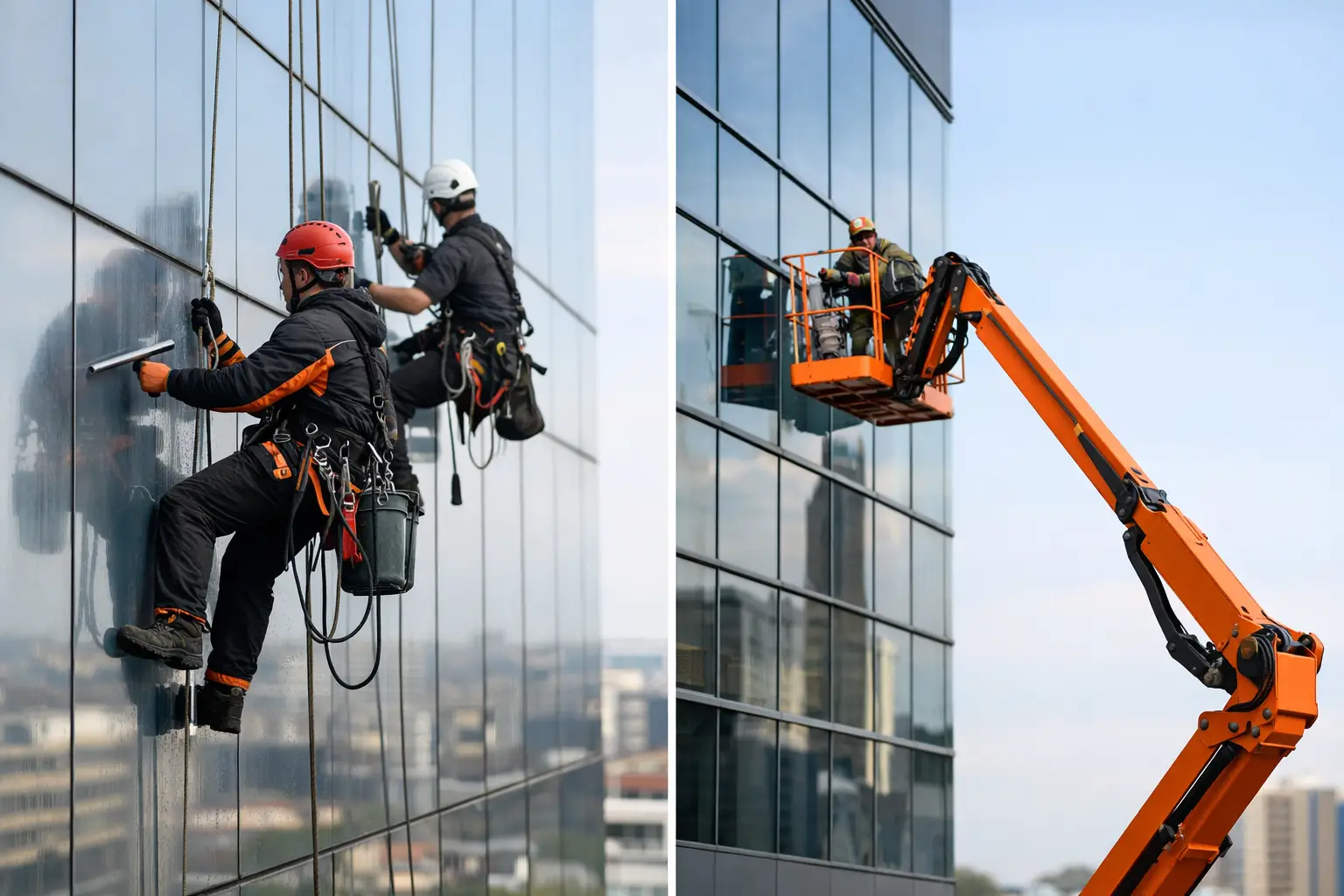
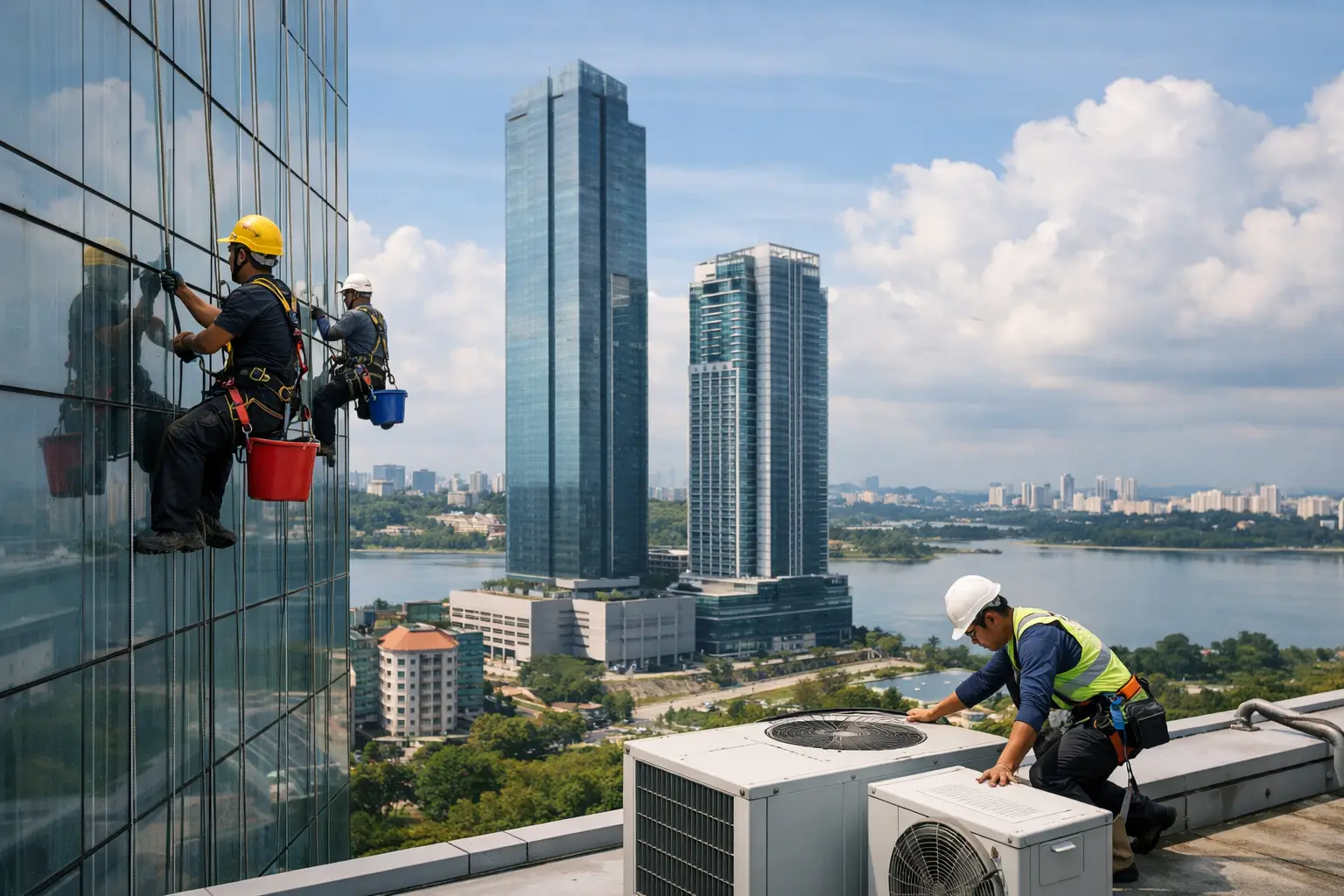
A reliable facade inspection records the stain color, shape, height, direction, and recurrence. It also considers recent facade repairs, nearby construction activity, plumbing alterations, landscaping, and weather exposure. For tall buildings, rope access allows technicians to inspect close to the surface without the disruption of extensive ground-based access equipment.
This diagnosis is essential because a method that works on loose urban grime may be unsuitable for algae, mineral deposits, or corrosion staining. High-pressure washing, for example, can be effective on selected durable surfaces but may force water into joints, damage weak render, or disturb aging sealants. The safest method is determined by the facade material, its condition, and the cause of staining.
Why Stain Removal Alone Is Not Enough
A clean facade improves curb appeal, tenant confidence, and the perceived standard of property management. But appearance is only one part of the maintenance decision. Recurrent staining can indicate water is moving where it should not, and that movement may eventually affect coatings, sealants, fixings, or internal finishes.
Planned facade maintenance reduces the risk of treating every stain as an isolated cleaning task. It combines periodic washing with inspections of drainage details, joints, coatings, exposed metalwork, and high-risk areas such as parapets, balconies, and service penetrations. The appropriate frequency depends on the building’s location, facade type, exposure, and surrounding activities.
Heritage buildings require additional caution. Their stone, render, and older masonry may be more porous or sensitive to chemicals and pressure. Any cleaning or restoration work should protect the original fabric rather than create a temporarily brighter surface at the expense of long-term condition.
A Practical Response for Building Teams
When stains appear, document them before arranging cleaning. Photograph the affected area from a distance and, where safe, close up. Note when the stains were first observed and whether they worsen after rain. This information helps identify whether the issue is environmental buildup or a repeating water-related defect.
Next, arrange a facade-focused assessment for stains that recur, spread rapidly, appear near joints or metalwork, or are accompanied by cracking, peeling, dampness, or loose material. A specialist can recommend an appropriate cleaning process and identify repairs that may be needed before the surface is treated.
For asset owners, the most useful question is not simply how to remove the stain. Ask where the water, contaminant, or material residue came from and whether that source will remain after cleaning. Addressing that question early keeps the facade looking cared for while protecting the systems behind its appearance.
A maintenance schedule should follow the building’s actual wetting and drying pattern. The climate context in METMalaysia’s explanation of Malaysia’s climate helps explain why conditions vary by location and season.


Leave a Reply