
A water stain on an interior wall rarely starts as an interior problem. More often, it begins outside – at a failed sealant joint, a cracked render surface, an open window perimeter, or a facade system that has been absorbing moisture far longer than anyone realized. That is why building facade waterproofing repair should be treated as a building performance issue, not just a cosmetic fix.
For owners and facility teams responsible for mid-rise and high-rise assets, the stakes are practical. Water intrusion can damage finishes, disrupt occupied spaces, accelerate corrosion, reduce facade lifespan, and create recurring maintenance cycles that never fully resolve the cause. A disciplined repair approach protects the exterior envelope, preserves asset value, and reduces avoidable risk.
What building facade waterproofing repair actually involves
Building facade waterproofing repair is the process of identifying how water is entering or moving through the facade, correcting the defect, and restoring the exterior’s ability to resist ongoing exposure. In real buildings, that usually means more than applying a coating over a visible crack.
A proper repair strategy may include facade inspection, crack assessment, sealant replacement, substrate preparation, localized patching, joint treatment, membrane or coating application, and post-repair testing. The exact scope depends on the facade type and the failure mechanism. Concrete, painted render, precast panels, curtain walls, stone cladding, and metal systems all fail differently and need different repair methods.
This is where many maintenance efforts go off track. The visible leak point inside the building may be far from the actual entry point on the exterior. Water can travel behind finishes, through hairline cracks, along slab edges, and across deteriorated joints before it appears indoors.
Why facades in tropical urban conditions fail faster
In Malaysia, facade exposure is demanding. Buildings face frequent rainfall, high humidity, intense UV exposure, and daily thermal movement. Add airborne pollutants, biological growth, and age-related material fatigue, and even a well-built facade can start showing weakness if inspection and upkeep are delayed.
Sealants are a common example. They do not fail all at once. They harden, shrink, lose adhesion, or tear at movement points. To the untrained eye, the facade may still look acceptable from ground level. At close range, however, small openings can already be admitting water.
Coatings behave similarly. A waterproof coating that was effective years ago may now be chalking, blistering, thinning, or losing bond to the substrate. Concrete and render can also develop microcracks that seem minor but become entry routes during repeated rain exposure.
The trade-off is that not every aged facade needs full-area treatment. Some buildings need targeted repairs and joint renewal. Others have widespread failure and need a more comprehensive waterproofing restoration plan. The right answer depends on condition, exposure pattern, and how long the defects have been active.
Signs your facade waterproofing problem is no longer minor
Some warning signs are obvious, such as recurring leaks around windows or damp patches after rain. Others are easier to dismiss until the damage spreads.
If you are seeing efflorescence, peeling paint, mold growth near perimeter walls, stained spandrel zones, cracked sealant lines, or isolated corrosion marks, the facade should be inspected. The same applies when leak complaints return after previous patch repairs. Repetition usually means the original repair treated the symptom, not the pathway.
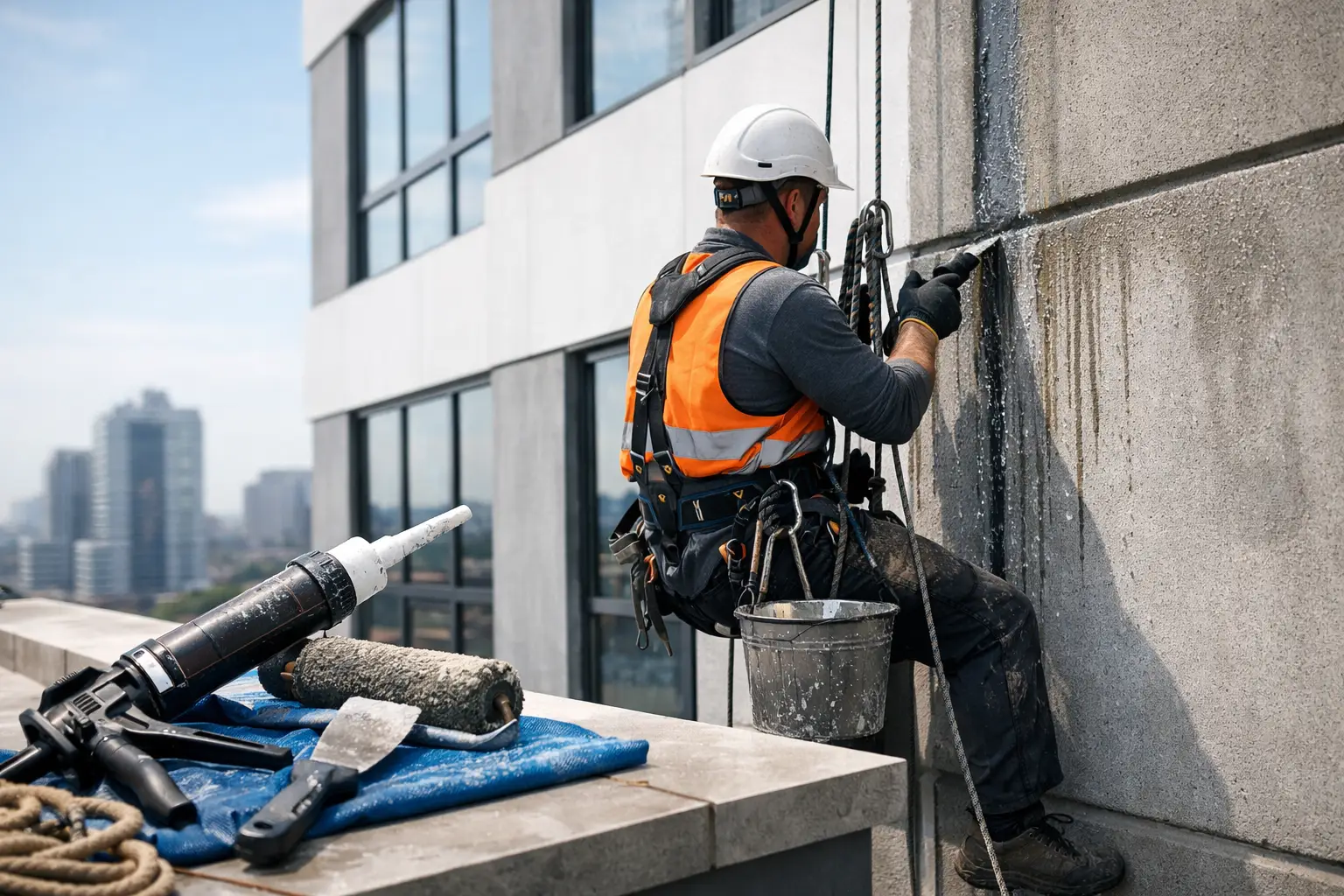
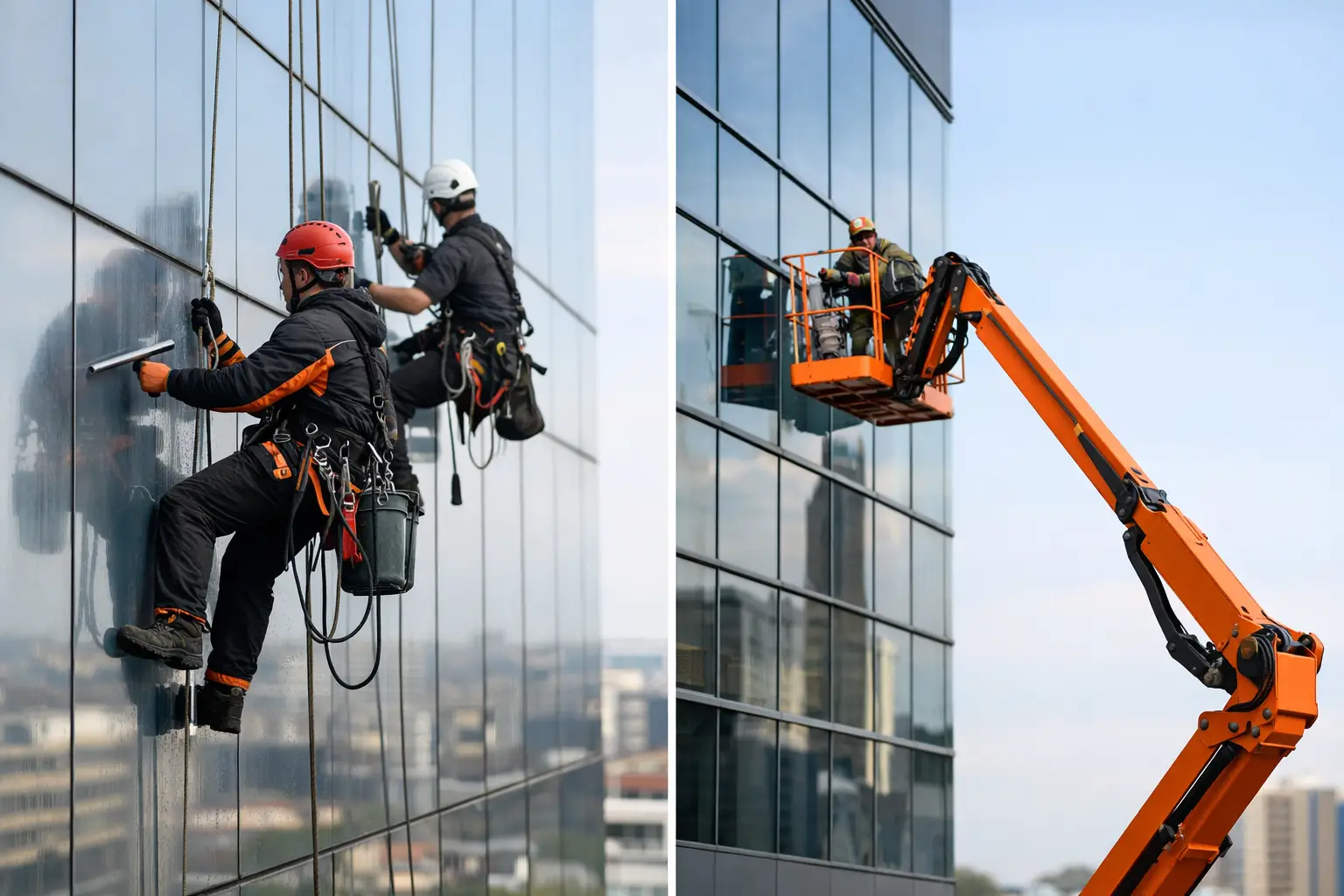
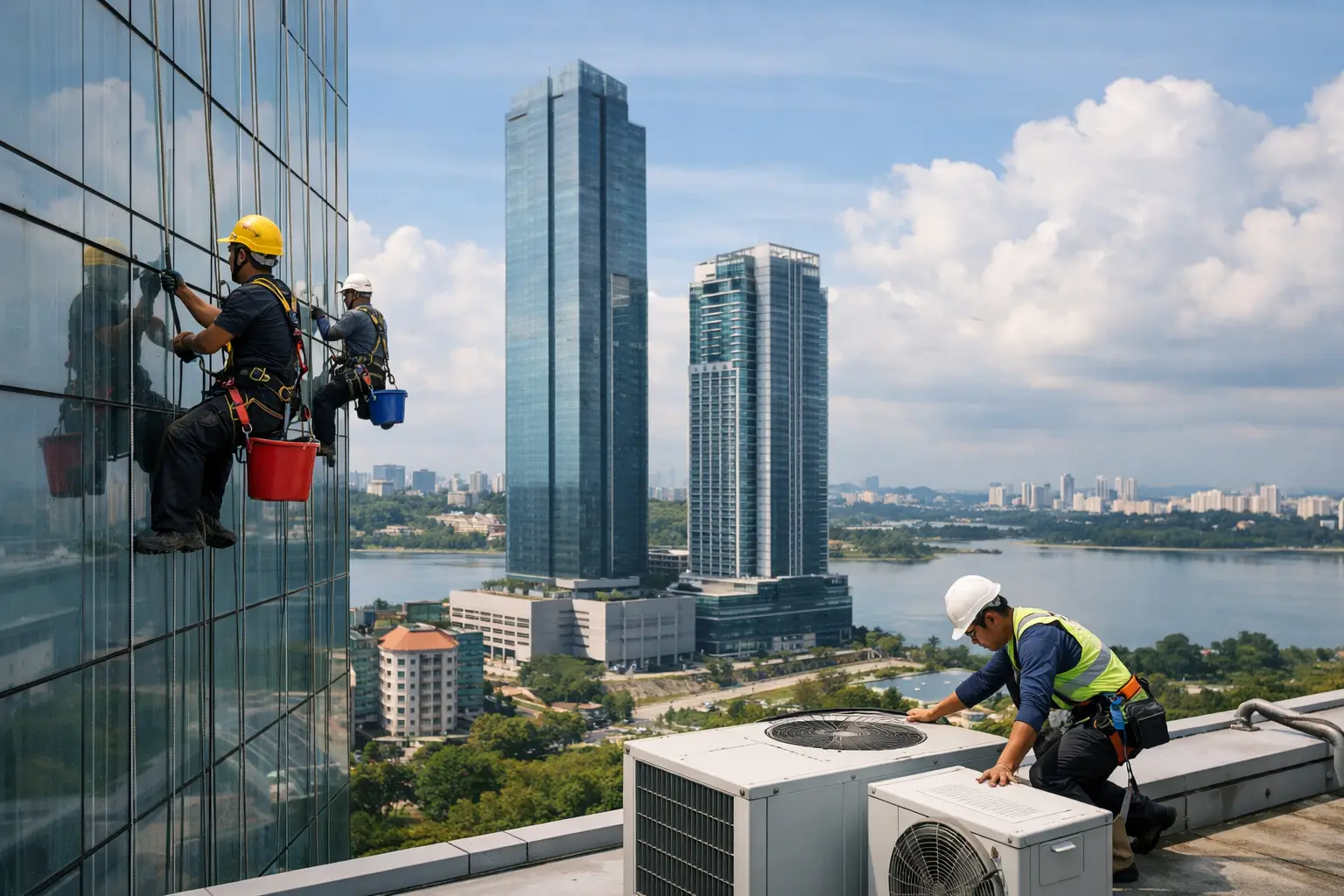
On high-rise buildings, another concern is access. When areas are difficult to reach, defects are often left longer than they should be. This is one reason facade-specific teams using rope access can be valuable for inspection and repair. They can assess details up close, including joints, corners, undersides, and transition points that are impossible to evaluate properly from the ground.
How a professional building facade waterproofing repair process should work
1. Investigate before selecting a product
The first step is diagnosis. A dependable contractor should want to know where leaks occur, when they occur, what facade materials are involved, and whether previous repairs were attempted. Visual inspection is essential, but it should be supported by a technical understanding of how water moves through facade assemblies.
This matters because the same symptom can have different causes. A crack in render may be a simple surface defect, or it may reflect substrate movement. A leaking window perimeter may be a sealant issue, a failed backing material, poor slope detail, or water entering from above. Repairing the wrong layer wastes time and leaves the building vulnerable.
2. Prepare the substrate properly
Surface preparation is not a minor step. It is often the difference between a repair that lasts and one that fails early. Loose coatings, dirt, biological growth, dust, and unsound material must be removed so that repair products can bond correctly.
This is especially important on older facades. Applying waterproofing materials over deteriorated surfaces can trap moisture, reduce adhesion, and create a false sense of completion. In some cases, localized concrete or render repair is needed before any waterproofing system should be installed.
3. Repair defects at the right level
Effective facade waterproofing repair usually combines multiple actions. Cracks may need routing and filling. Failed sealants should be removed and replaced, not skimmed over. Open joints may require proper backing and resealing. Damaged patches may need rebuilding. Only after those defects are corrected should a coating or membrane system be considered, if the facade calls for one.
This is where a one-method approach becomes risky. Not every problem is solved by crack injection, and not every facade should be fully coated. The right repair method should match the facade material, the scale of deterioration, and the building’s movement behavior.
4. Verify the repair outcome
A professional approach does not end when the final coat dries. The repaired areas should be checked for continuity, adhesion, coverage, and detail completion around penetrations, joints, and interfaces. On leak-prone facades, controlled testing or careful post-rain observation may also be appropriate.
For building managers, this step matters because facade repairs are often judged only after the next storm. Verification reduces uncertainty and helps create a more reliable maintenance record.
Common repair mistakes that create repeat failures
One of the most common mistakes is treating waterproofing as a surface-only problem. If water is entering through failed joints, an exterior paint layer alone will not stop it for long. Another mistake is leaving adjacent defects unaddressed. A repaired crack beside a failed movement joint is still part of a vulnerable system.
Poor material compatibility is another issue. Some coatings and sealants do not perform well over certain substrates or aged finishes without the correct preparation and primers. Even good products can fail if used in the wrong sequence or thickness.
There is also the issue of access strategy. On tall buildings, rushed access planning can lead to incomplete repairs, especially around difficult details. A facade specialist will typically approach the building in sections and document defect patterns rather than simply responding to isolated complaint points.
When localized repair is enough and when broader treatment is needed
Not every building needs full facade rehabilitation. If defects are isolated and the surrounding facade remains sound, targeted waterproofing repair may be the most efficient path. This often applies to limited crack zones, isolated sealant failures, or specific water entry points around openings.
Broader treatment is usually more appropriate when the facade shows widespread coating breakdown, multiple leak locations, recurring moisture complaints across elevations, or age-related deterioration across similar details. In those cases, piecemeal repair can become an endless cycle.
The decision should be based on inspection findings, not guesswork. For property stakeholders managing occupied assets, a phased repair program is sometimes the best middle ground. It addresses the highest-risk areas first while planning for longer-term facade preservation.
Why facade expertise matters more than general waterproofing experience
Facade waterproofing is not just about keeping water out. It is about understanding interfaces, movement, vertical exposure, material weathering, and safe access to complex exterior surfaces. A contractor may be experienced in general waterproofing but still lack the facade-specific judgment needed for high-rise conditions.
This is particularly relevant for office towers, residential developments, and architecturally sensitive buildings where visual consistency and operational safety matter alongside technical performance. Repair work must be carried out without creating avoidable facade staining, uneven finishes, or access-related disruption.
Specialists such as Facade by Vertical Pro Sdn Bhd approach the problem from the perspective of envelope performance, not just short-term patching. That difference tends to show up in diagnosis quality, repair detailing, and how well the work holds up over time.
Building facade waterproofing repair should feed into maintenance planning
The most effective repair is the one that becomes part of a broader facade maintenance strategy. Once defects are identified and corrected, the next question should be what the building needs to avoid a repeat cycle. That may include periodic inspections, sealant condition reviews, facade cleaning to expose early defects, and planned maintenance of vulnerable elevations.
Waterproofing failures rarely appear overnight. They build slowly, then become urgent all at once. When asset teams treat facade condition as an ongoing management responsibility rather than an occasional emergency, they gain better control over risk, appearance, and building durability.
If your building has started showing leak patterns, staining, or exterior deterioration, the smartest next step is not a quick patch. It is a careful facade-led assessment that finds the source, matches the repair to the system, and restores confidence before the next heavy rain tests the envelope again.
Diagnosis before repair
| Symptom | Possible investigation |
|---|---|
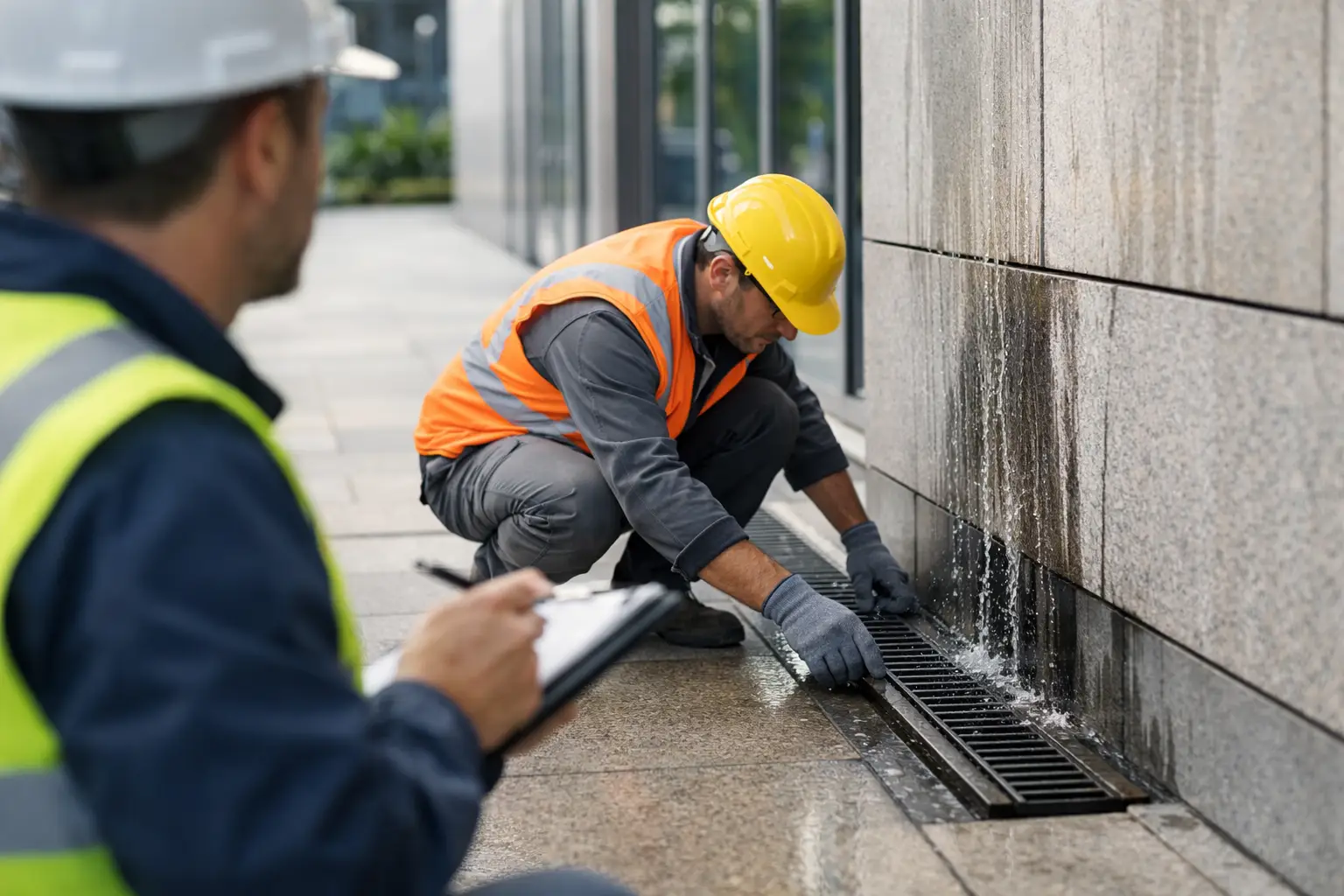
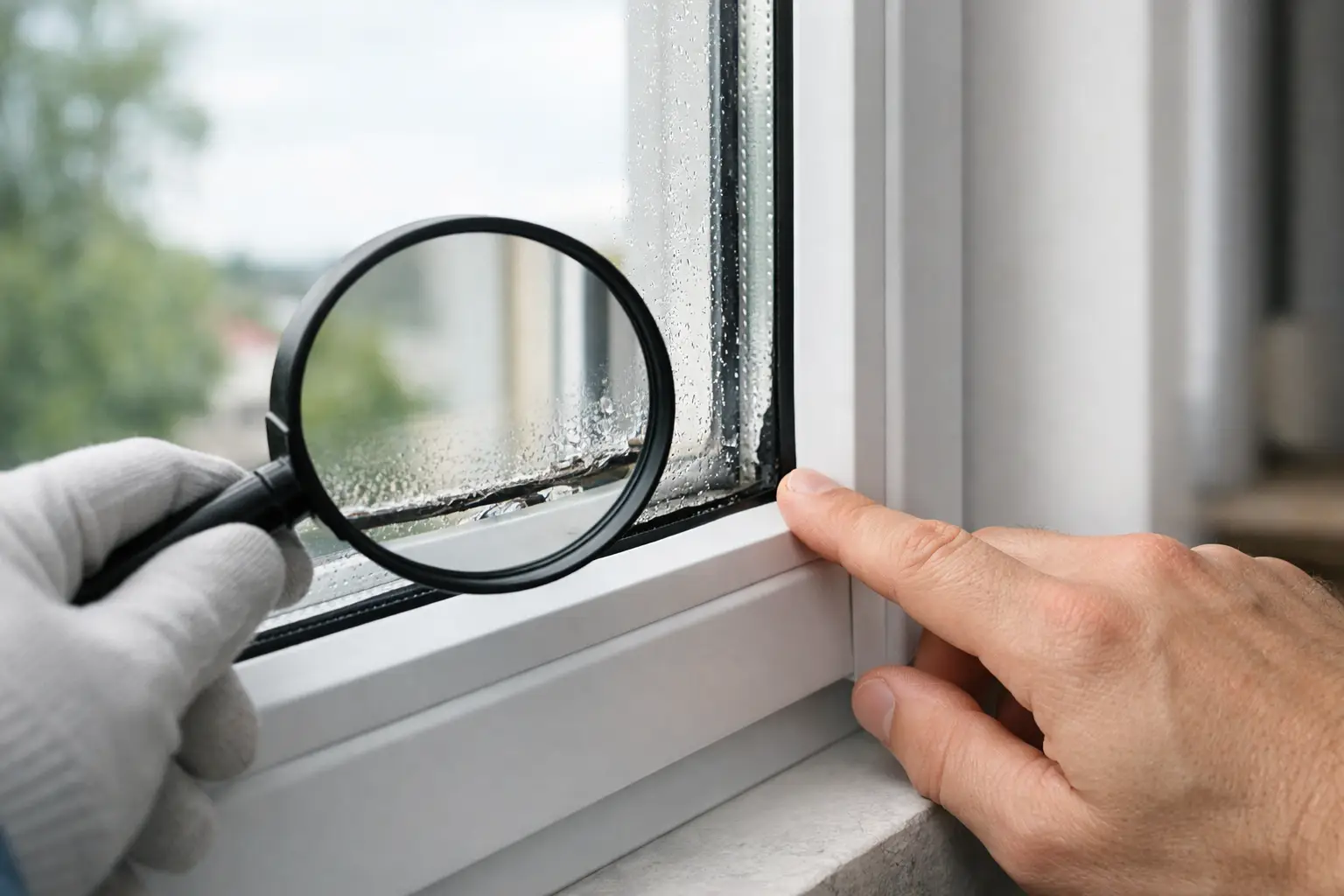
| Leak below a window | Check perimeter seals, drainage openings, frame joints and wall interfaces |
| Staining after wind-driven rain | Review joints, cracks, flashings and elevation exposure |
| Recurring damp patch | Compare weather timing and inspect concealed water paths |
| Peeling exterior coating | Assess substrate moisture and adhesion before recoating |
Frequently asked questions
Will exterior coating stop every facade leak?
No. A coating may help a compatible porous surface, but it will not correct failed joints, open cracks, drainage defects or unsuitable interfaces.
Why do leaks sometimes appear far from the entry point?
Water can travel behind cladding, along frames or through cavities before becoming visible indoors. Investigation should follow the complete assembly.
Arrange a waterproofing assessment
Read how to prevent water ingress through facade maintenance, or request a site assessment.
Malaysia’s facade maintenance conditions are shaped by persistent humidity and frequent rain. METMalaysia’s explanation of Malaysia’s climate provides useful context for setting realistic inspection intervals.

Leave a Reply