
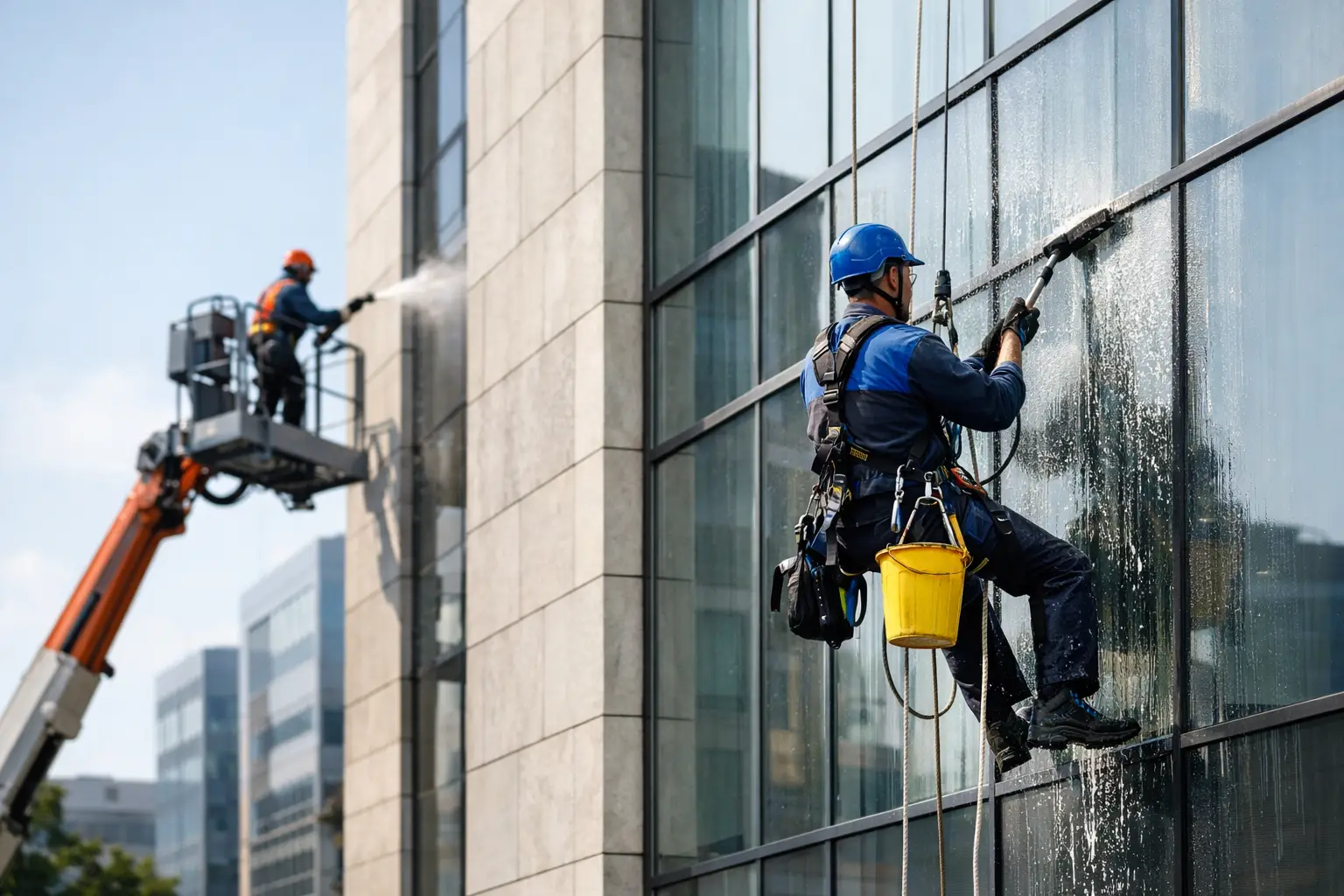
A stained facade rarely starts as a cosmetic issue alone. On a high-rise office tower, residential block, or heritage property, surface buildup often signals a broader maintenance concern – one tied to moisture retention, material wear, and long-term asset performance. That is why facade cleaning services should be treated as part of a building care strategy, not an occasional visual touch-up.
For owners and managers responsible for exterior condition, the real question is not whether a building needs cleaning. It is how cleaning should be carried out, how often it makes sense, and what method protects the facade system instead of stressing it. In Malaysia’s urban and tropical environment, those details matter.
What facade cleaning services actually involve
Professional facade cleaning goes well beyond washing visible dirt off the exterior. A proper scope begins with understanding the building envelope – the materials used, the height and access constraints, the type of staining present, and any signs of deterioration that need attention before cleaning begins.
On one building, the issue may be traffic film, airborne pollutants, and algae growth on painted concrete. On another, it may involve mineral streaking on glass, trapped grime around joints, or organic buildup on shaded elevations that stay damp after rain. Each condition responds differently to water pressure, agitation, chemical treatment, and access planning.
That is why specialized providers assess substrate sensitivity before work starts. Glass, stone, aluminum, coated panels, sealant lines, and decorative finishes all have different tolerances. Using the wrong method can leave etching, discoloration, water intrusion risk, or premature coating failure.
Why facade cleaning matters beyond appearance
A clean exterior supports image, but that is only part of the value. Building facades are constantly exposed to heat, humidity, rain, dust, biological growth, and pollution. Over time, these contaminants do more than reduce curb appeal. They can hold moisture against surfaces, accelerate staining, and make early defects harder to detect.
When dirt and organic matter accumulate around joints, ledges, corners, and facade transitions, inspections become less reliable. Small cracks, failed sealant, localized corrosion, and coating breakdown may remain hidden until they develop into more disruptive maintenance issues. Regular cleaning improves visibility, which supports better maintenance decisions.
There is also an operational benefit. Properties with well-maintained exteriors tend to present more consistently to tenants, visitors, investors, and purchasers. For commercial and residential assets alike, facade condition influences perceived management standards. A neglected exterior can suggest broader neglect, even when interior systems are well maintained.
Facade cleaning services and Malaysia’s climate
In Malaysia, facade care is shaped by climate as much as by architecture. High humidity, frequent rainfall, and intense sunlight create conditions where organic growth and surface weathering can develop quickly. Urban buildings also collect airborne particulates and pollutants that cling to exterior materials, especially on facades facing heavy traffic corridors.
This combination affects cleaning frequency and method. A shaded elevation may show algae or mold faster than a sun-exposed face. Coastal exposure may increase salt-related residue. Tall buildings can also experience uneven soiling patterns due to wind flow, water runoff, and facade geometry.
For building managers in Kuala Lumpur, Selangor, Johor, and Penang, this means cleaning plans should be based on actual exposure conditions rather than a generic calendar. Two buildings of similar age may need very different cleaning intervals depending on orientation, material selection, and surrounding environment.
Choosing the right cleaning method
Not every facade should be cleaned the same way. The best approach depends on material type, contamination level, and access conditions.
Low-pressure washing is often suitable for removing loose dirt and light environmental buildup on durable surfaces, but pressure alone is rarely the answer for stubborn staining. Excessive force can damage coatings, drive water into weak points, or disturb sealants. For more sensitive finishes, soft washing or controlled chemical cleaning may be safer and more effective.
Glass facades often require specialized techniques to address watermarks, pollution film, and residue without scratching the surface. Stone and masonry need even more care because aggressive cleaning can alter texture or open the material to further staining. Painted surfaces must be handled with attention to coating condition, especially where age or weathering has already reduced adhesion.
The key is not choosing the strongest method. It is choosing the most appropriate one. Effective facade cleaning services are based on controlled treatment, testing where necessary, and an understanding of how the facade system behaves under cleaning conditions.
Access is part of the service, not a side issue
On mid-rise and high-rise buildings, access planning is inseparable from cleaning quality. If a contractor cannot safely and efficiently reach the full facade, the result is usually inconsistent work, missed problem areas, or avoidable disruption to building operations.
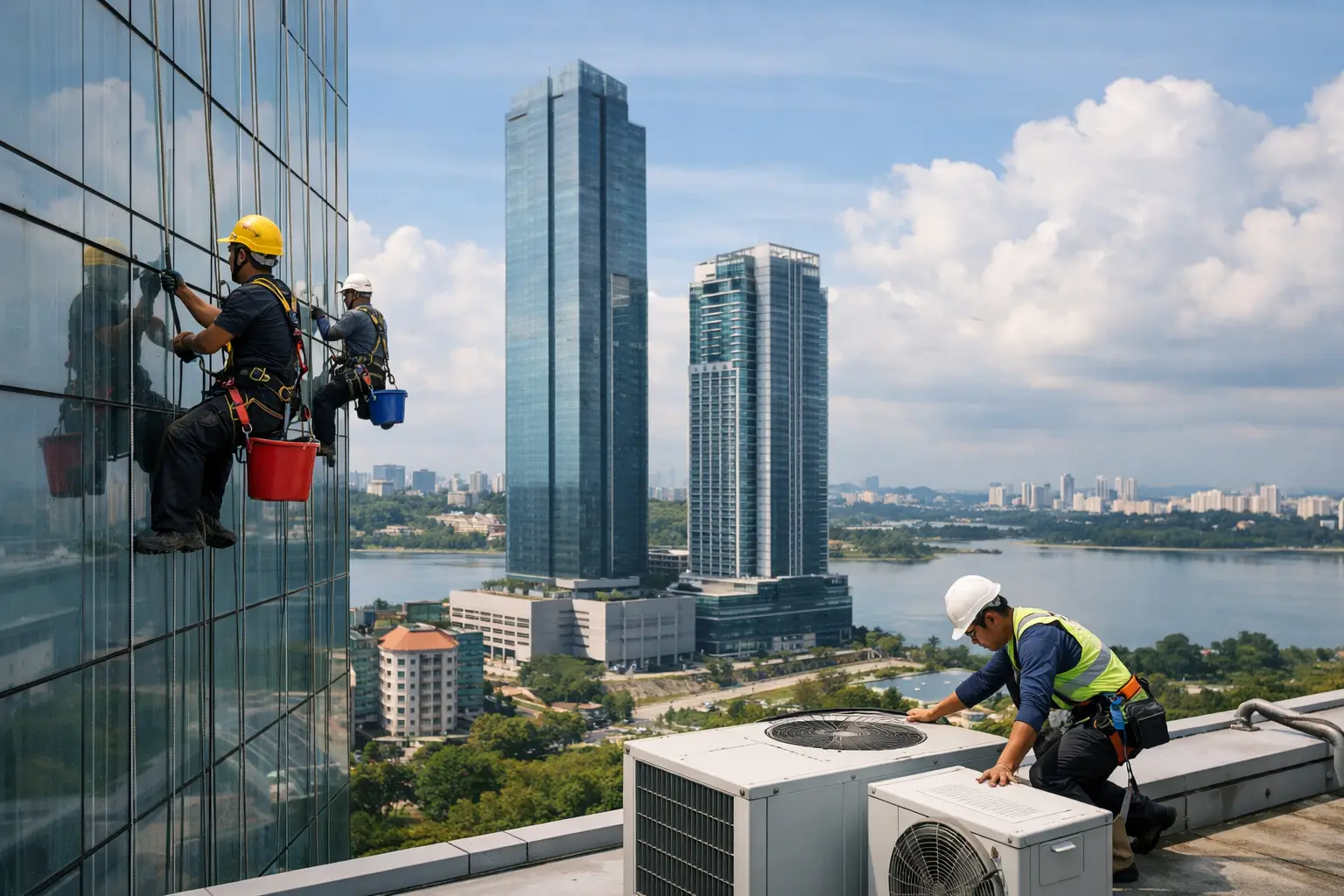
This is where rope access, suspended platforms, and other work-at-height systems become critical. The right access solution depends on building design, roof configuration, obstruction points, and the extent of the cleaning scope. Rope access is often especially useful where architectural features make conventional access difficult or where targeted exterior work is needed with minimal footprint at ground level.
For property stakeholders, this is not just a safety matter, though safety is fundamental. It also affects program efficiency, inspection quality, and the ability to clean difficult details such as recesses, fins, facade edges, and localized staining zones.
When a building needs cleaning – and when it needs more than cleaning
One of the most common mistakes in facade maintenance is assuming every visible problem can be solved by cleaning alone. In reality, surface discoloration may reflect deeper issues such as failing sealant, poor drainage paths, coating breakdown, cracks, or corrosion-related staining.
If marks reappear quickly after washing, the cause may be ongoing water movement rather than simple dirt. If facade panels show patchy discoloration, the problem may involve weathered finishes rather than removable contamination. If biological growth keeps returning, trapped moisture or drainage design may need review.
This is why cleaning should be linked to inspection. An experienced facade specialist can distinguish between contamination that should be removed and deterioration that requires repair or restoration. That distinction protects both the facade and the maintenance budget because it prevents repeated cleaning cycles that do not solve the underlying issue.
How to evaluate facade cleaning services
For building owners and managers, selecting a provider should come down to technical fit, not just service availability. A general cleaning company may handle low-level exterior washing adequately, but high-rise facade work requires a more disciplined approach.
Look for a team that understands facade materials, work-at-height procedures, and condition-based cleaning methods. They should be able to explain how they assess substrate risk, how they choose cleaning agents and pressure levels, and how they coordinate access without compromising tenant movement or daily operations.
It also helps to work with a provider that sees cleaning as part of overall facade care. A specialist perspective is valuable because many buildings need more than a one-time exterior wash. They need a practical maintenance path that aligns cleaning, inspection, minor defect identification, and future restoration planning.
That is the reason many property stakeholders prefer facade-focused contractors such as Facade by Vertical Pro Sdn Bhd for complex buildings. The advantage is not only execution at height. It is the ability to connect cleaning work with the broader performance of the building exterior.
Building a smarter cleaning schedule
There is no universal schedule that suits every property. Some facades benefit from more frequent light maintenance to prevent heavy buildup. Others may require periodic deep cleaning combined with targeted spot treatment in areas exposed to runoff, algae, or concentrated pollution.
A sensible plan usually starts with facade type, environmental exposure, occupancy profile, and reputation risk. A premium office tower with a glass-heavy elevation may need closer visual standards than a back-of-house industrial block. A residential development may prioritize consistent appearance and resident satisfaction, while a heritage facade may require careful preservation techniques and slower cleaning cycles.
What matters most is consistency. Waiting until staining becomes severe often makes cleaning more difficult and may increase the risk of permanent visual impact on sensitive materials. Scheduled care gives owners more control over facade condition and supports longer-term maintenance planning.
The long view on facade care
Well-executed facade cleaning protects more than appearances. It helps preserve material condition, supports safer inspections, and keeps the building aligned with the standards expected by tenants, residents, and stakeholders. On complex properties, it also reduces the chance that minor exterior issues will stay hidden until they become harder to manage.
A facade is one of the most exposed parts of any building, and it rarely improves with neglect. Treating cleaning as a specialized maintenance function is one of the clearest ways to protect the value and performance already built into the asset.
Discuss the next step
For advice on facade cleaning services, request a site assessment or quotation from Vertical Pro.
The access method must be planned with the same care as the repair or cleaning method. DOSH Malaysia’s fall-prevention guidance sets out practical controls for preventing falls at work.




Leave a Reply