
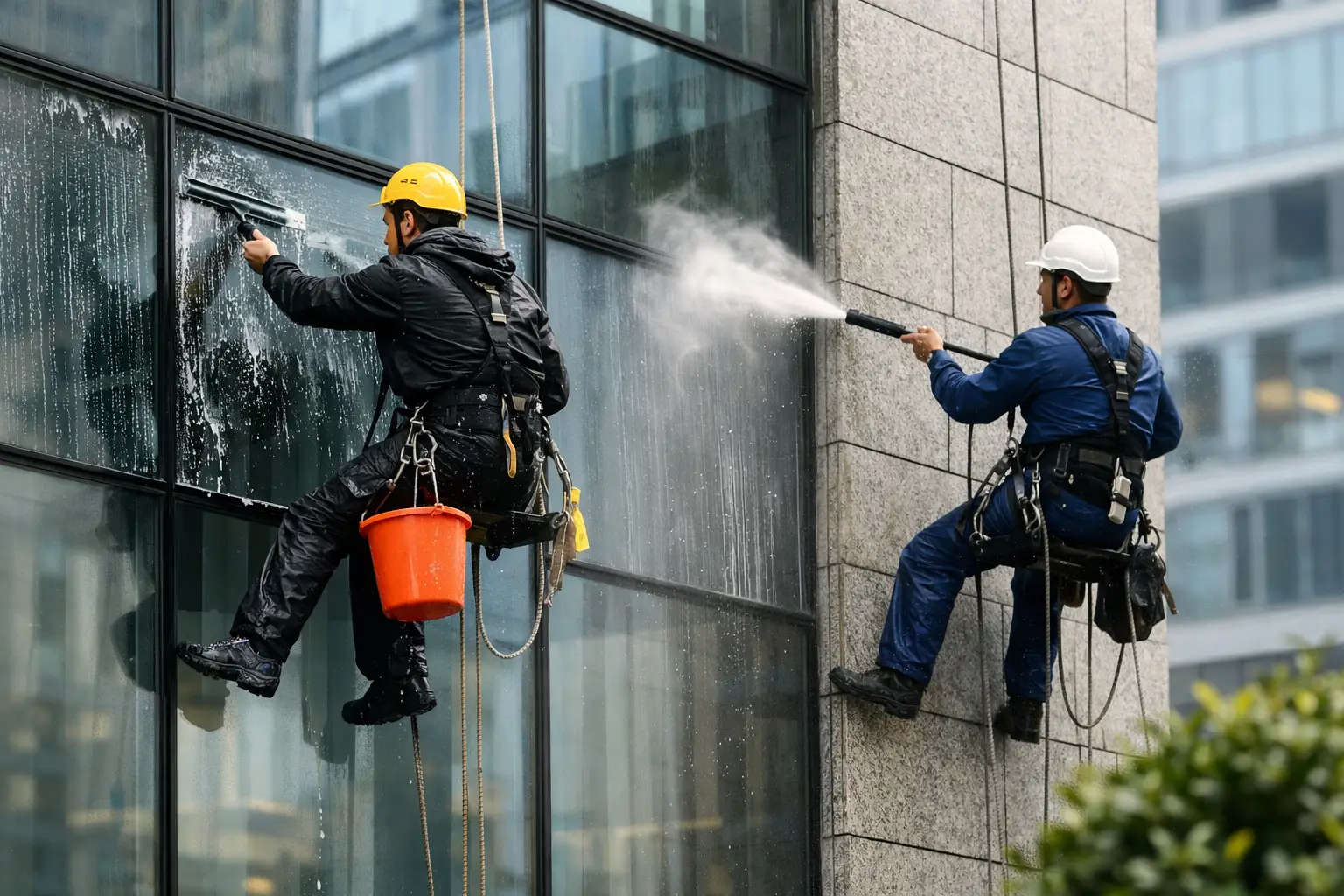
To clean a building facade properly, start with a close review of the surface, existing defects, surrounding materials and the safest way to reach the work area.
Facade deterioration often begins quietly: traffic film darkens the finish, algae takes hold in damp sections, runoff stains spread below joints, and small defects become easier to miss behind surface buildup. That is why the question of how often clean building facade surfaces should not be treated as a cosmetic decision alone. For building owners and managers, cleaning frequency affects appearance, inspection quality, material life, and the ability to plan maintenance before minor issues become larger ones.
For most buildings, there is no single universal schedule. A facade cleaning cycle depends on exposure, height, facade material, building use, and how quickly contaminants accumulate. In practice, the right answer is usually a structured range rather than a fixed number.
How often should you clean a building facade?
A practical starting point for many commercial and residential buildings is every 12 to 24 months. That interval is frequent enough to manage normal dirt buildup, support visual standards, and allow closer review of exterior conditions.
But that range changes quickly when the building sits near heavy traffic corridors, construction zones, coastal air, or shaded areas that stay damp after rain. In those cases, cleaning may be needed every 6 to 12 months. On the other hand, a lower-exposure property with durable facade materials and less environmental staining may tolerate a longer cycle, provided inspections still happen regularly.
The question is not just how often to clean a building facade, but how fast the facade is being affected by its environment.
Why cleaning frequency matters beyond appearance
A clean facade presents well, but presentation is only one part of the decision. Surface buildup can trap moisture, hide cracks, obscure failed sealant lines, and accelerate localized deterioration. When exterior surfaces stay dirty for too long, inspections become less reliable because staining and deposits conceal what is actually happening at the substrate or joint level.
This matters even more on high-rise buildings. Once access is mobilized, it makes sense to combine cleaning with close-condition review so the facade is not managed reactively. Regular cleaning supports a broader maintenance strategy – one focused on safety, asset protection, and fewer surprises.
For residential towers, this also affects resident perception. For office buildings, facade condition contributes to tenant confidence and corporate image. For heritage properties, delayed cleaning can complicate preservation by allowing contaminants to remain in contact with sensitive surfaces for too long.
What affects how often clean building facade surfaces need attention
Building location and surrounding environment
Urban buildings usually need more frequent cleaning than properties in cleaner, lower-density areas. Traffic pollution, airborne dust, and construction debris create steady buildup, especially on facade sections facing major roads. In dense city environments such as Kuala Lumpur, this can become visible much sooner than many building teams expect.
Coastal exposure is another factor. Salt-laden air does not only affect metal elements. It can also increase staining patterns and interact with moisture on the facade surface, making regular washing more important for preventive care.
Malaysia’s climate and moisture exposure
In Malaysia, frequent rain, high humidity, and year-round heat create ideal conditions for algae, mold, and biological staining, especially on shaded elevations. A building may look acceptable on one side while the less sun-exposed face develops green growth and dark runoff streaking.
This is why a uniform schedule is not always enough. Different elevations may age differently, and cleaning plans should reflect that reality.
Facade material
Glass, aluminum, painted render, natural stone, precast concrete, and composite cladding all respond differently to contamination and cleaning methods. Glass and metal often show dirt sooner because reflectivity makes streaking obvious. Porous materials may hold contaminants longer and require more careful treatment.
Some surfaces can handle routine washing well. Others need controlled cleaning to avoid damage, fading, etching, or water intrusion. Frequency should always be paired with method. Cleaning more often is not automatically better if the process is too aggressive for the facade system.
Building height and design complexity
Tall buildings experience different exposure conditions at different levels. Wind patterns, ledges, recessed areas, and architectural fins can create uneven soiling. Water may also drain from upper sections and leave concentrated staining below joints or facade projections.
Complex geometry tends to increase localized dirt retention. It also makes ad hoc cleaning less effective because problem areas are often difficult to reach without specialized access planning.
Building use and visual standards
A premium office tower, hospitality property, or landmark residential development may require a shorter cleaning cycle simply because exterior presentation is part of the asset’s operating standard. A back-of-house industrial structure may accept a different threshold before cleaning becomes necessary.
That is not just a branding issue. Buildings with higher public visibility often face greater scrutiny from tenants, visitors, and stakeholders, so facade care needs to align with operational expectations.
A practical cleaning schedule by building type
For many office towers and mixed-use developments, a 6- to 12-month review cycle with cleaning as needed is often appropriate, especially where glass and metal facades show pollution quickly. Residential high-rises may work well on a 12- to 18-month cleaning program, though podium levels, canopies, and amenity-facing elevations sometimes need more frequent attention.
Heritage buildings usually require a more cautious schedule. They may not need frequent full cleaning, but they do need regular condition reviews and selective cleaning where biological growth, staining, or pollution deposits threaten the material surface. The wrong method can do more harm than delayed cleaning, so preservation-focused judgment matters.
For lower-rise commercial properties, annual cleaning is often a reasonable baseline. If the building is close to traffic, under trees, or exposed to persistent runoff staining, shorter intervals may be justified.
Signs your facade is overdue for cleaning
The obvious signs are darkened surfaces, visible algae, streaking below joints, and patchy discoloration. But some of the more important signs are operational. If inspection teams struggle to assess sealants or cracks because of surface buildup, the facade is already too dirty from a maintenance perspective.
Another warning sign is uneven appearance after rain. When contaminants have accumulated heavily, water can highlight drainage paths, trapped dirt, and biological growth patterns that remain less visible during dry periods. Complaints from tenants or residents about building appearance are also worth taking seriously. By that point, the issue is already public-facing.
Why inspection and cleaning should work together
Cleaning should not be treated as a standalone housekeeping task. For high-rise buildings in particular, access is one of the most valuable parts of the operation. When trained teams are already on the facade, that is the right time to observe sealant condition, coating wear, cracks, loose elements, staining sources, and water-entry indicators.
This approach turns cleaning into a maintenance checkpoint rather than a visual reset. It also helps building managers identify patterns, such as recurring runoff marks that point to failed sealant or drainage issues. Without that link between cleaning and facade review, the same defects can remain in service longer than they should.
Choosing the right frequency instead of the fastest one
There is a temptation to set a rigid annual cleaning schedule and leave it there. Sometimes that works. Often, it does not. A better approach is to define a baseline cycle, then adjust based on facade performance, environmental exposure, and inspection findings.
That means some buildings benefit from partial or targeted cleaning between full facade programs. High-visibility elevations, entrance-facing surfaces, and moisture-prone zones may need attention sooner than the entire building envelope. This is often a more disciplined approach than waiting until every side looks equally neglected.
For asset owners and facility teams, the best schedule is the one that preserves both the facade and the maintenance budget over time by avoiding unnecessary delay and unnecessary intervention.
What building managers should do next
If your current facade cleaning schedule was set years ago and has not been reviewed against actual site conditions, it is worth reassessing. Look at how quickly dirt returns, which elevations stain first, whether facade inspections are being hindered, and how the building is expected to present itself to tenants, residents, or the public.
A dependable facade program is not based on guesswork. It is based on material behavior, environmental exposure, safe access planning, and regular observation. When those factors are aligned, cleaning happens at the right time for the building – not too early, not too late, and not just when the stains become impossible to ignore.
The best facade maintenance plans usually start with a simple shift in mindset: treat cleaning as part of building preservation, and the schedule becomes much easier to get right.
Practical cleaning-frequency guide
| Building condition | Typical review cycle | What to monitor |
|---|---|---|
| Normal urban exposure | 12–24 months | Traffic film, runoff marks and joint condition |
| Heavy traffic or nearby construction | 6–12 months | Dust, soot and abrasive deposits |
| Damp, shaded or algae-prone areas | 6–12 months | Biological growth and retained moisture |
| Prestige retail, hotel or corporate frontage | Based on appearance standard | Glass clarity, staining and brand presentation |
These are planning ranges, not fixed rules. Confirm the final interval through inspection and test cleaning.
Frequently asked questions
Can a facade be cleaned too often?
Yes. Repeated aggressive cleaning can damage coatings, sealants and sensitive stone. Use the mildest effective method and match the frequency to actual exposure.
Should inspection and cleaning happen together?
They can complement each other. Cleaning improves visibility, while an inspection helps identify areas that need repair before or after the cleaning work.
Plan the next cleaning cycle
Ask Vertical Pro to assess the building and recommend a practical cleaning and inspection schedule.
Where inspection or maintenance involves work at height, access planning should follow a documented risk-control process. DOSH Malaysia’s fall-prevention guidance is a useful reference for that planning.




Leave a Reply