
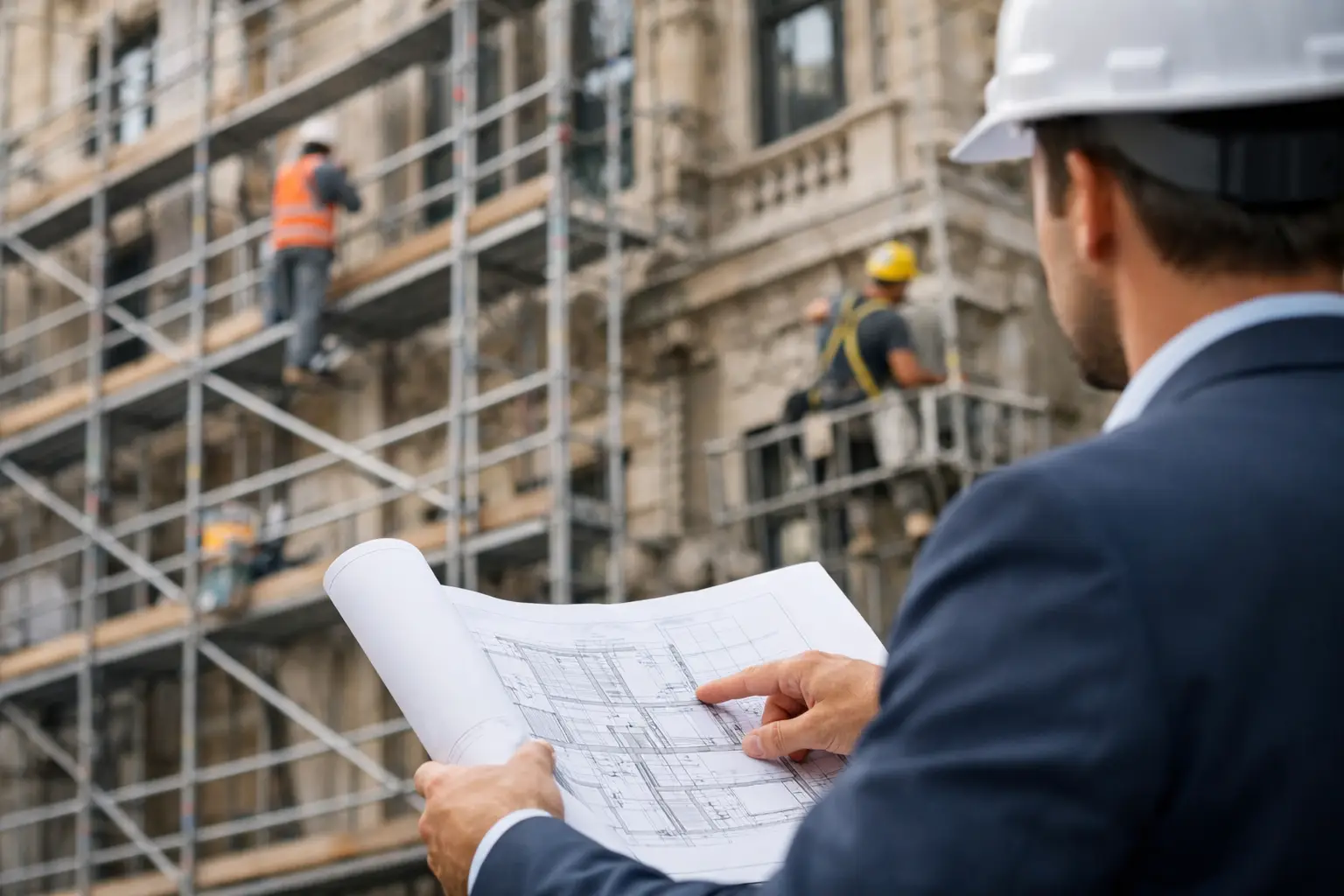
Good facade restoration contractor planning is site-specific. It should reflect facade condition, recurring defects, weather exposure and safe access requirements.
Facade Restoration Contractor: What to Check on Site
Document what can be seen from ground level, then confirm inaccessible areas with the appropriate close-access inspection before finalising the work scope.
A stained exterior is easy to spot. Hidden facade failure is not. By the time cracking, loose materials, water ingress, or sealant breakdown becomes obvious from ground level, the building may already be carrying higher risk and higher future repair scope. That is why choosing the right façade restoration contractor matters. For building owners, facility teams, and management corporations, this is not simply a maintenance purchase. It is a decision that affects safety, appearance, compliance, and the service life of the asset.
What a façade restoration contractor actually does
A façade restoration contractor is not the same as a general maintenance vendor. Facade restoration work requires focused knowledge of exterior wall systems, aging patterns, water pathways, material compatibility, and safe access methods for elevated areas. On a high-rise building, even basic inspection can be complex if the exterior includes curtain wall elements, precast panels, masonry, painted render, stone cladding, or decorative architectural features.
Restoration work usually begins with condition assessment. The contractor identifies visible and concealed defects, tracks likely causes, and separates cosmetic issues from performance failures. That distinction matters. Surface staining may be resolved through cleaning, but recurring cracks, failed joints, delamination, or substrate movement require a different response.
A capable specialist also understands that facade deterioration is rarely caused by one factor alone. In Malaysia, heavy rainfall, humidity, heat, UV exposure, and urban pollution can all accelerate wear. On taller buildings, wind exposure and water penetration at height often create defect patterns that are missed during routine ground-based checks.
Why specialization matters more than broad contracting experience
Many contractors can repaint a wall. Far fewer can assess whether repainting is appropriate, whether the substrate is sound, or whether the real problem sits behind the finish. That is the difference between surface treatment and restoration.
A specialized façade restoration contractor should be able to explain how different facade systems behave over time and what interventions are suitable for each one. Concrete repair, sealant replacement, protective coating renewal, crack treatment, localized replacement of damaged elements, and targeted waterproofing all depend on material condition and exposure history.
This is especially important for occupied buildings. Office towers, residential developments, and mixed-use properties need work that is planned around operational continuity. The contractor should be able to restore facade performance while minimizing disruption to tenants, access routes, and daily building use.
For heritage or architecturally sensitive buildings, specialization matters even more. The wrong cleaning method or incompatible repair material can damage original finishes and create long-term aesthetic inconsistency. In that setting, restoration should protect character as well as function.
How to evaluate a façade restoration contractor
The best evaluation process starts with questions, not assumptions. A dependable contractor should be able to discuss facade defects in plain language, explain the likely cause, and describe the logic behind the proposed repair approach.
Look for system-level thinking
A strong contractor does not treat each defect as an isolated patch job. They look at how water moves across the exterior, where thermal stress appears, how movement affects joints, and whether one failure is triggering another. For example, staining below a facade joint may point to failed sealant, but it may also suggest deeper moisture entry that has begun affecting adjacent finishes.
This broader view helps prevent repeat work. It also supports better maintenance planning, because the building team can prioritize critical risk areas instead of reacting only to visible complaints.
Confirm access capability for high-rise work
Facade restoration is only as effective as the contractor’s ability to reach and inspect the full envelope safely. On mid-rise and high-rise buildings, access strategy is not a side issue. It is central to scope accuracy, safety control, and execution quality.
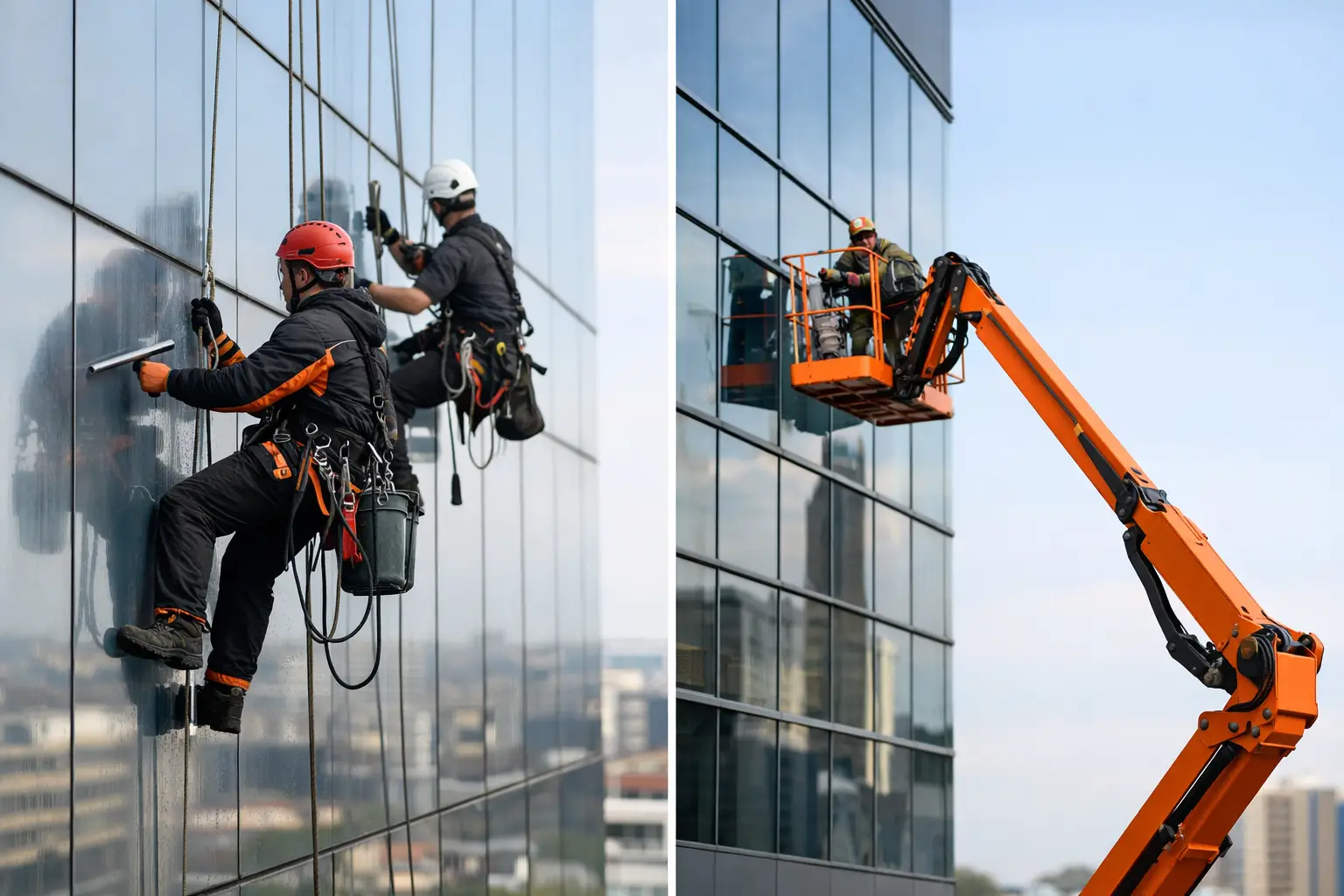
A contractor with rope access capability can often inspect and restore difficult elevations more efficiently than teams relying only on conventional access methods. That does not mean one method suits every building. Some projects require suspended platforms or other access arrangements depending on facade geometry and work type. What matters is that the contractor understands which access method supports safe and effective restoration.
Assess defect diagnosis, not just repair promises
A proposal that jumps straight to treatment without clear diagnosis should raise concern. The contractor should be able to identify whether the issue is related to aging materials, water ingress, poor past repairs, environmental exposure, movement, or deferred maintenance.
That level of diagnosis is what separates a lasting restoration program from a short cosmetic fix. It also helps building owners avoid unnecessary work in areas that do not require intervention yet.
Safety is not a box to check
On facade projects, safety performance directly affects building risk. Working at height, handling deteriorated exterior materials, and operating on occupied sites require strict planning and disciplined execution.
A qualified façade restoration contractor should be able to explain how site risk is managed, how access teams are controlled, how public-facing areas are protected, and how work zones are coordinated with building operations. This is particularly relevant in dense urban properties where pedestrian movement, vehicle access, and tenant activity continue throughout the maintenance period.
Safety also links back to quality. Poor access planning can lead to incomplete repairs, rushed workmanship, or missed defects. A contractor that treats safety as part of technical execution, rather than paperwork alone, is usually better positioned to deliver consistent outcomes.
The role of inspections and documentation
Good restoration decisions depend on evidence. Before major work begins, the contractor should be able to document observed conditions, defect locations, severity levels, and recommended next steps. For building managers, this creates a clearer basis for internal approval, maintenance scheduling, and stakeholder reporting.
Documentation is also valuable after the work is complete. It creates a record of what was repaired, where it was done, and what areas should be monitored next. On larger assets or portfolios, this helps shift facade care from reactive maintenance to managed asset protection.
In markets such as Kuala Lumpur, Selangor, Johor, and Penang, where high-rise density and exposure conditions vary by site, documented facade history becomes even more useful over time. Buildings near busy roads, coastal influence, or intense rainfall patterns may age differently and require different inspection intervals.
Common mistakes when appointing a facade specialist
One common mistake is choosing based only on the most visible symptom. A building that looks dirty may also have sealant fatigue, coating failure, or early substrate deterioration. Cleaning alone improves appearance, but it does not resolve underlying failure if the facade system is already compromised.
Another mistake is treating all exterior contractors as interchangeable. Exterior painting, cleaning, waterproofing, and restoration may overlap, but they are not identical disciplines. Facade restoration requires the contractor to understand the relationship between finish layers, structural substrates, access constraints, and environmental exposure.
A third mistake is delaying intervention until defects become obvious at street level. By then, repair scope is often wider, tenant concerns may be growing, and risk management becomes more urgent. Early restoration planning usually gives building teams more control over scheduling and technical options.
What a good contractor relationship should look like
The best contractor relationships are consultative, not transactional. You should expect clear communication, realistic assessment, and recommendations that fit the building’s actual condition rather than a standard package.
That includes honest discussion of trade-offs. Some buildings need immediate targeted repairs in critical zones while broader restoration is phased over time. Others may benefit from combining cleaning, localized repair, and preventive maintenance planning instead of treating each issue separately. The right path depends on facade type, defect severity, occupancy, and long-term asset goals.
A specialist such as Facade by Vertical Pro Sdn Bhd approaches facade work from that practical standpoint – not just how to treat what is visible, but how to preserve exterior performance over time.
Choosing for the long term, not the next complaint
A facade is not only the face of the building. It is part of the building’s protective system, and when it begins to fail, the effects spread beyond appearance. Water ingress, material degradation, tenant dissatisfaction, and avoidable maintenance escalation usually begin with issues that looked minor at first.
Choosing a façade restoration contractor should therefore be a technical decision grounded in specialization, safe access capability, clear diagnosis, and building-specific planning. When the contractor understands facade behavior, not just facade finishes, you are in a better position to protect the asset properly.
The right time to ask hard questions is before defects force the answer. A well-maintained facade rarely draws attention, and that is often the best sign that the building is being managed well.
Discuss the next step
For advice on facade restoration contractor, request a site assessment or quotation from Vertical Pro.
The access method must be planned with the same care as the repair or cleaning method. DOSH Malaysia’s fall-prevention guidance sets out practical controls for preventing falls at work.




Leave a Reply