

For facade defects Malaysia, the practical starting point is a condition review that records materials, defects, exposure and access before the scope is fixed.
Facade Defects Malaysia: What to Check on Site
Review earlier leak reports and repair records alongside the current condition; recurring defects often reveal a source that a surface treatment will not solve.
Early facade warning signs are often easy to overlook: a hairline crack near a window head, staining below a joint, a loose sealant edge, or tiles that no longer sit flush with the wall. For asset owners and facility teams, understanding the top facade defects in Malaysia is not just about appearance. It is about preventing water ingress, reducing safety risk, and protecting the service life of the building envelope.
Malaysia’s climate is especially demanding on exterior surfaces. High rainfall, intense UV exposure, heat, humidity, urban pollution, and biological growth all accelerate facade wear. On taller buildings, wind-driven rain and thermal movement add another layer of stress. That means defects that may look cosmetic at first can quickly become operational and structural maintenance issues if left unattended.
Why facade defects develop so quickly in Malaysia
Exterior systems are expected to do several jobs at once. They must resist water penetration, accommodate movement, preserve thermal performance, maintain visual quality, and remain secure under weather exposure. In tropical conditions, those demands are constant rather than seasonal.
The challenge is not only moisture. Repeated expansion and contraction from daily temperature changes can open joints, weaken sealants, and stress finishes over time. Add airborne dirt, traffic pollutants, algae, and inconsistent maintenance histories, and facades begin to show deterioration earlier than many stakeholders expect.
Not every defect has the same level of urgency. Some are primarily aesthetic in the early stages, while others indicate active failure in waterproofing, adhesion, anchorage, or material integrity. The key is knowing which signs require close monitoring and which require immediate corrective action.
Top facade defects in Malaysia building owners see most often
Cracking in render, plaster, and facade finishes
Cracking is one of the most common and most misunderstood facade defects. Fine surface cracks may result from shrinkage, aging finishes, or minor movement. Wider or recurring cracks can point to substrate movement, thermal stress, moisture-related deterioration, or detailing issues around openings and joints.
The location of the crack matters. Cracks at beam-column interfaces, wall corners, window perimeters, and parapets often suggest movement-related stress. If water begins entering through those openings, the problem can extend behind the visible surface and affect internal finishes, reinforcement, and adjacent materials.
Hairline cracking does not always mean immediate danger, but it should never be dismissed without context. A proper inspection helps determine whether the issue is superficial, progressive, or linked to deeper envelope failure.
Sealant joint failure
Sealant is often the first line of defense at movement joints, window perimeters, cladding interfaces, and panel connections. In Malaysia’s climate, sealants can harden, split, detach from the substrate, or lose elasticity faster than expected if the product selection or installation was not suited to the exposure conditions.
When sealant fails, water usually follows. Leaks may appear indoors long after the exterior joint has already broken down. In some cases, failed sealant also allows dirt accumulation and biological growth, which makes the facade appear older and poorly maintained.
This defect is easy to underestimate because the damaged area can look narrow and isolated. In practice, widespread joint failure across elevations can create a broad moisture management problem.
Water staining and efflorescence
Staining is often the visible symptom that prompts closer investigation. Brown streaks, dark runoff marks, and white crystalline deposits usually indicate repeated moisture movement across or through facade materials.
Efflorescence forms when water dissolves salts within masonry, concrete, or mortar and carries them to the surface. Once the water evaporates, the salts remain behind. The deposit itself is not always the main issue. What matters is the moisture path that made it possible.
Staining below coping lines, slab edges, window heads, and facade joints may reveal poor drainage detailing or water ingress at specific transition points. If the root cause is not corrected, cleaning alone will not solve the problem for long.
Tile debonding and hollow tiles
On tiled facades, debonding is a serious maintenance concern. Tiles may lose adhesion because of thermal movement, moisture intrusion, poor substrate preparation, adhesive failure, or age-related deterioration. Early signs often include drummy or hollow sounds during tapping inspections, cracked grout lines, and isolated tile movement.
The risk here is not limited to appearance. Detached tiles can become a public safety hazard, especially on occupied properties and high-traffic urban sites. Once one section begins to fail, surrounding areas may also be compromised even if they still appear stable from ground level.
This is why facade assessments should look beyond the visibly loose tile. The broader system condition matters, including bond integrity, movement accommodation, and moisture exposure.
Spalling concrete
Concrete spalling occurs when sections of concrete crack, delaminate, and break away, often exposing reinforcement beneath. In facade and balcony edges, this is commonly associated with reinforcement corrosion. Moisture and contaminants penetrate the concrete, steel begins to corrode, and the resulting expansion forces the concrete cover to crack and detach.
Spalling is more than a cosmetic defect. It indicates active material distress and can create falling object hazards. It may also reduce long-term durability if corrosion continues unchecked.
Buildings near coastal environments or exposed to persistent wetting cycles may face elevated risk, but inland urban properties are not exempt. Once cracking and rust staining appear around concrete edges, early intervention becomes much more effective than delayed patchwork.
Biological growth and persistent surface contamination
Algae, mold, mildew, and moss are common on facades that remain damp, shaded, or poorly drained. In Malaysia, these conditions are not unusual. Biological growth often appears on textured finishes, painted walls, stone surfaces, and areas with runoff concentration.
Some stakeholders treat this as a cleaning issue only, but recurring growth often points to an underlying moisture pattern. Leaking joints, clogged drainage paths, condensation-prone areas, or facade geometry that traps water can all contribute.
Pollution buildup adds another layer. On urban buildings, dirt films and particulate deposits can bond to the surface and accelerate finish degradation. Cleaning helps restore presentation, but if the facade remains wet or contaminated, the problem returns quickly.
Paint blistering, peeling, and coating breakdown
Coating failure is common where moisture is trapped beneath the painted surface or where the coating system is no longer suitable for the substrate and exposure conditions. Blistering, flaking, chalking, and uneven fading are typical signs.
This often starts as an aesthetic complaint, especially on residential towers and commercial buildings where presentation matters. But coating breakdown can also indicate poor surface preparation, substrate dampness, cracks allowing water entry, or incompatible repair history.
Repainting without addressing the moisture source usually leads to repeat failure. The coating is the visible layer, not always the root problem.
What makes one defect more serious than another
A facade defect becomes more urgent when it involves active water ingress, loose materials, exposed reinforcement, failed movement joints, or anything that can create a falling hazard. The speed of progression also matters. A small recurring leak at a joint can cause extensive hidden damage over time, even if the visible opening appears minor.
By contrast, some defects remain stable for a period if they are superficial and dry. The difficulty is that this distinction is hard to make reliably from ground-level observation alone. Access constraints on high-rise buildings often hide the true condition until deterioration is more advanced.
That is why inspection quality matters as much as repair quality. A building team needs to know whether it is dealing with a localized defect, a pattern across elevations, or a system-wide maintenance issue tied to age, detailing, or material selection.
How to respond before defects become major failures
The best response is not always a full restoration program. It depends on defect type, extent, access conditions, occupancy demands, and the current life stage of the facade system. Still, there are a few principles that apply consistently.
First, document changes early. If stains are spreading, cracks are widening, or tiles are sounding hollow in more than one area, that trend matters. Second, investigate causes rather than symptoms. Cleaning, patching, or repainting may improve appearance temporarily, but recurring defects usually indicate unresolved moisture or movement.
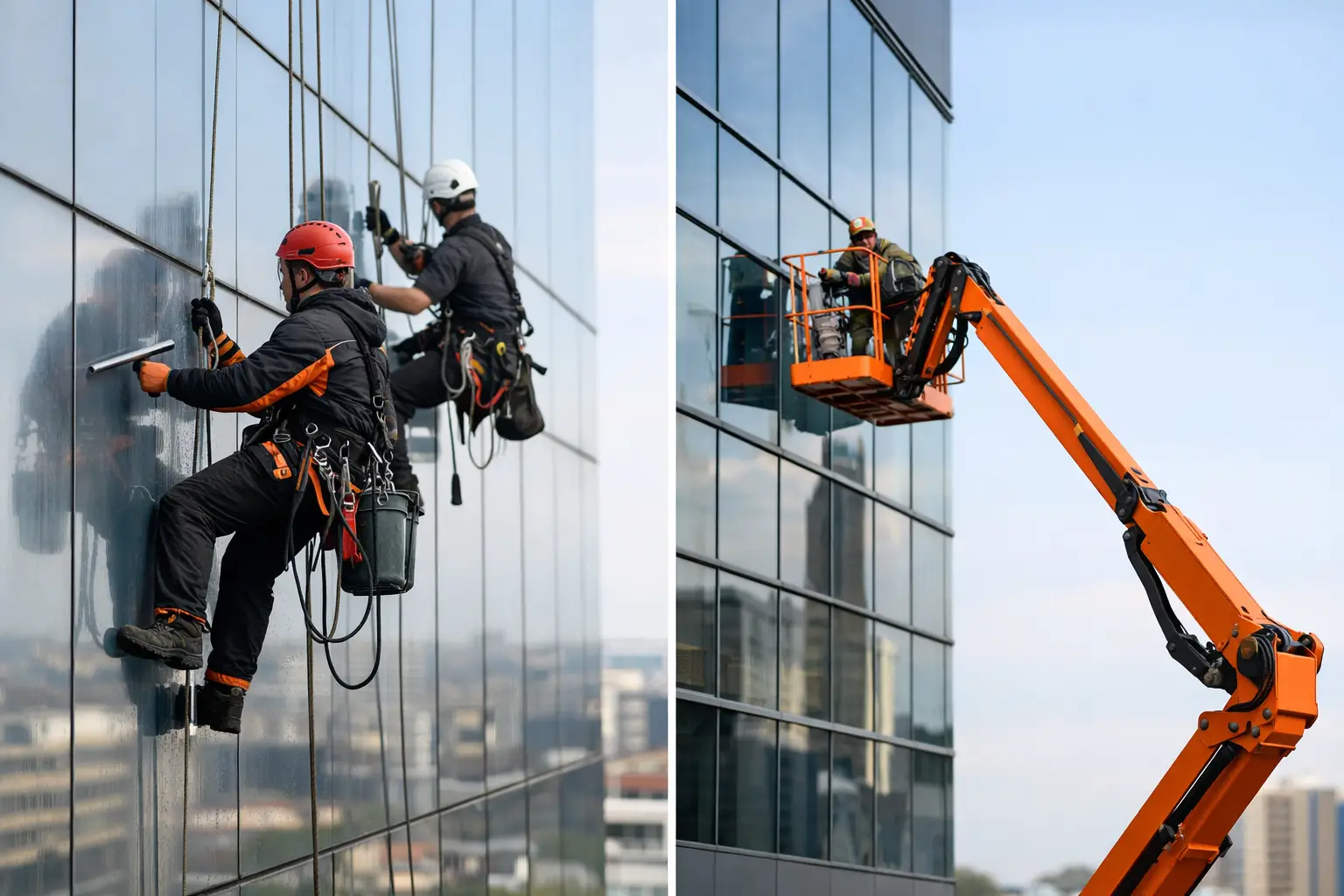
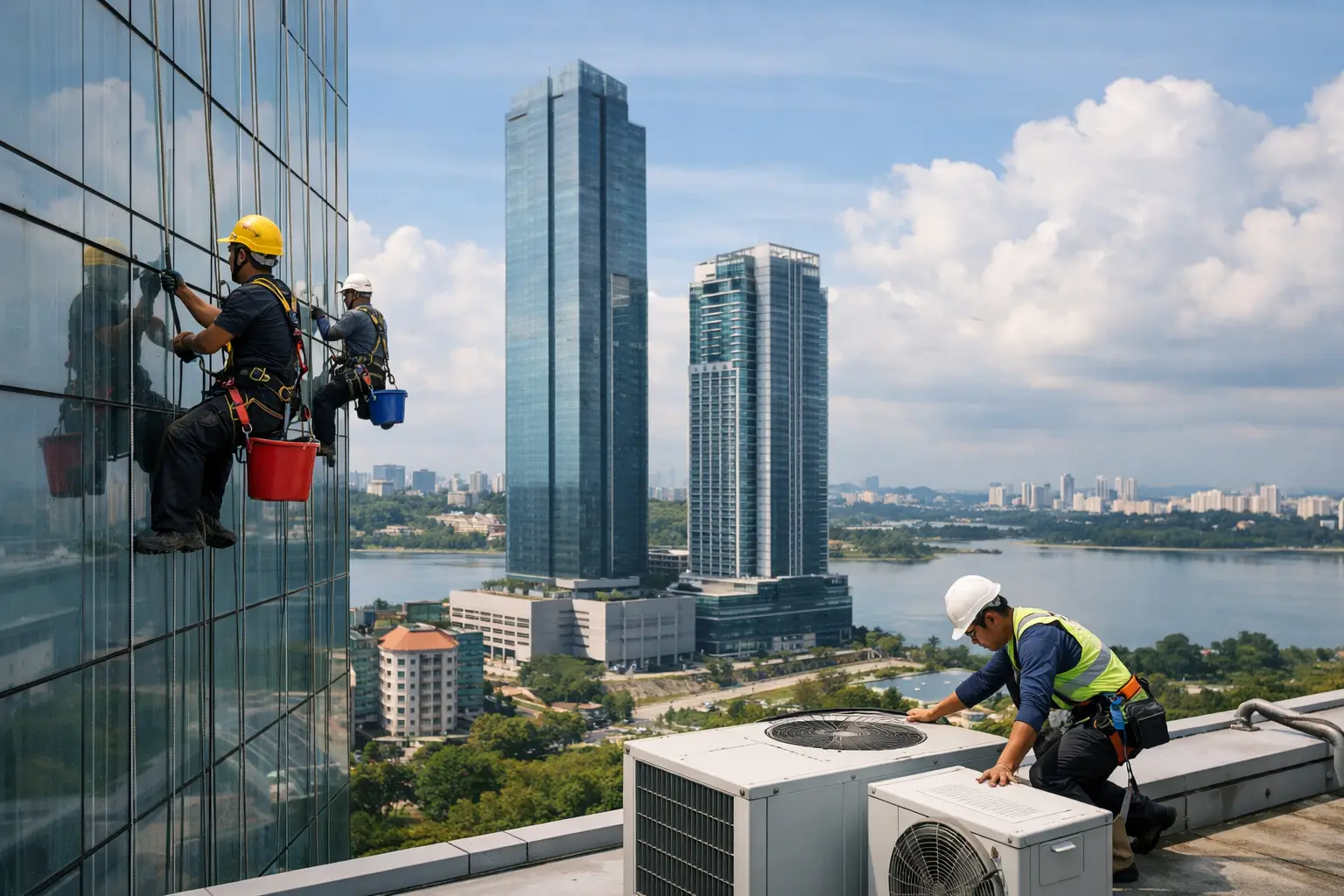
Third, use facade-specific inspection methods and qualified access planning. On mid-rise and high-rise buildings, safe close-up assessment is often the only way to understand joint condition, adhesion failure, substrate deterioration, and hidden defects. This is where specialist facade teams add real value. Facade by Vertical Pro Sdn Bhd, for example, focuses on the practical reality many property teams face – defects on difficult-to-access exteriors that still need accurate diagnosis and safe intervention.
Finally, think in terms of maintenance cycles, not one-off reactions. Buildings that are cleaned, inspected, and repaired in a planned way generally experience fewer disruptive facade failures than buildings managed only when visible damage becomes unavoidable.
The cost of waiting is rarely visible at first
Most facade defects start quietly. The real damage often happens behind the finish, inside joints, or at interfaces where water and movement gradually weaken the system. By the time occupants report leaks or the public notices falling debris barriers, the issue has usually been developing for much longer.
For building owners and managers, the practical question is not whether defects will appear, but how early they will be recognized and how decisively they will be addressed. A disciplined facade maintenance approach protects appearance, supports safety, and helps the building perform the way it was meant to. The sooner a defect is understood in context, the more options you usually have.
Discuss the next step
For advice on facade defects Malaysia, request a site assessment or quotation from Vertical Pro.
Facade work should not begin until access, exclusion zones, supervision and rescue arrangements are clear. These controls are covered in DOSH Malaysia’s fall-prevention guidance.



Leave a Reply