
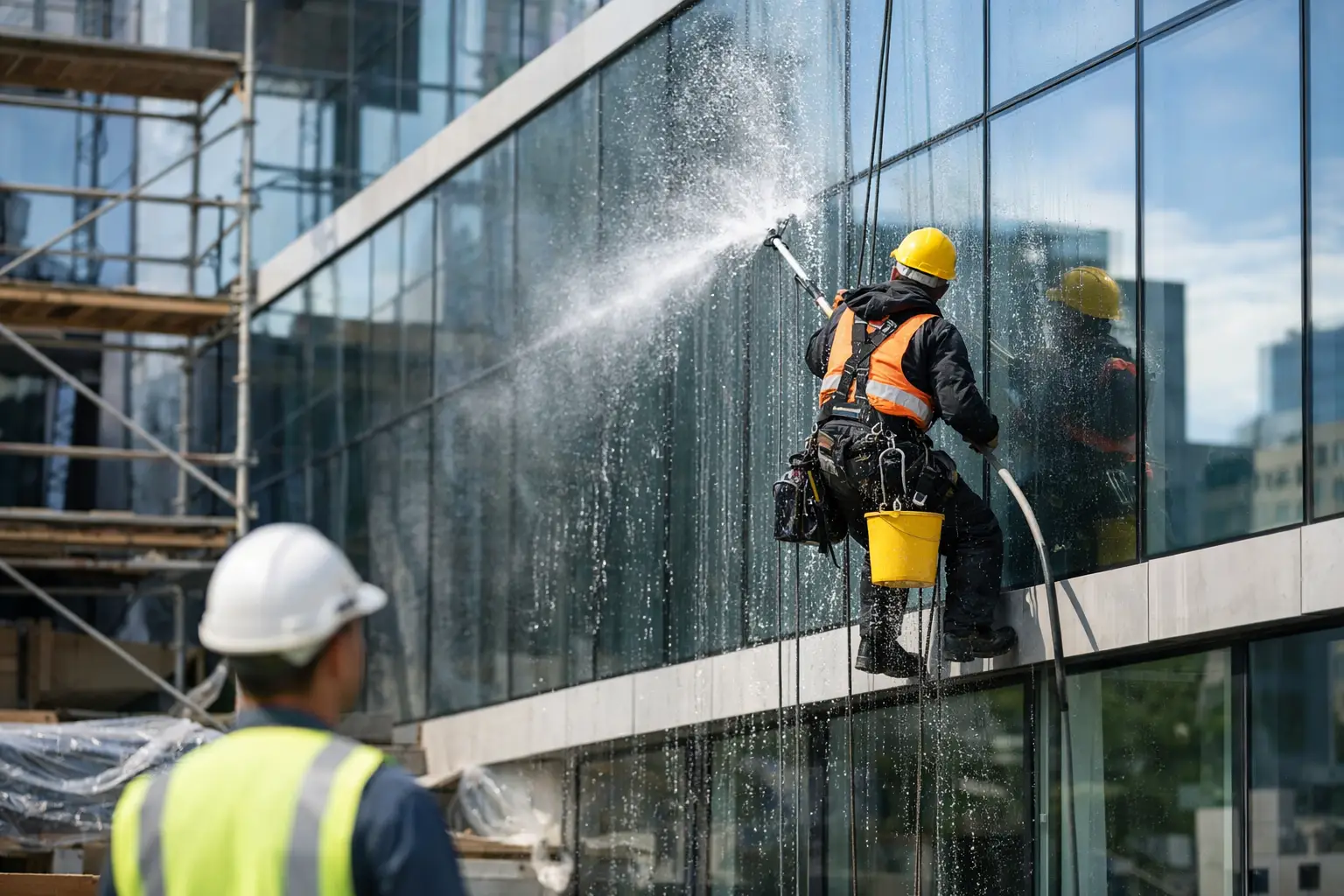
A new building can look finished from the street while the facade still carries the last signs of construction. Fine cement dust clings to glass, sealant smears catch the light, metal panels show handling marks, and debris collects in joints and ledges. Post construction facade cleaning is the stage that turns a completed exterior into a presentable, inspectable, and maintainable asset.
For property owners, developers, and facility teams, this is not a cosmetic extra. It is part of handover quality, early defect visibility, and long-term facade care. If residue is left in place, the building may open with a compromised appearance and hidden material issues that become harder to address later.
What post construction facade cleaning actually includes
Post construction facade cleaning is the controlled removal of construction-related residue from exterior building surfaces after major works are completed. That sounds straightforward, but the facade usually includes multiple materials with very different cleaning requirements. Glass, aluminum, stone, coated panels, louvers, fins, and sealant lines do not respond well to the same method.
The work often involves removing cement splatter, paint mist, silicone residue, adhesive marks, sticker backing, grout haze, dirt from scaffolding or handling, and general site dust. In high-rise environments, the challenge is not only what needs to be removed, but how to access each area safely without causing scratches, staining, or water intrusion.
A proper post-construction clean also supports inspection. Once the residue is gone, teams can more clearly identify scratches, failed sealant, coating defects, chipped edges, drainage issues, and other items that may need to be recorded before final acceptance.
Why facade cleaning after construction matters
The first reason is appearance. A newly completed tower or residential development is expected to project quality from day one. Smearing, streaking, and residue undermine that immediately. For commercial buildings, that affects brand perception. For residential properties, it affects purchaser confidence and the overall standard of handover.
The second reason is material protection. Construction debris is not always harmless. Alkaline residue from cement-based products can mark glass and metal finishes. If left too long under heat and rain exposure, some contaminants bond more firmly to the surface and become much harder to remove without aggressive treatment.
The third reason is operational readiness. Building managers do not want to inherit a facade that already needs corrective work. A clean exterior makes it easier to establish a proper maintenance baseline and plan the next cycle of routine cleaning, inspection, and facade care.
The biggest risk – using the wrong cleaning method
The most common mistake in post construction facade cleaning is treating all residue as if it can be scrubbed away. That approach creates avoidable damage. Coated glass can be scratched by the wrong tools. Natural stone can absorb staining if harsh chemicals are used. Aluminum finishes may discolor. Sealants can be weakened if cleaners are incompatible.
This is why facade-specific knowledge matters. The right process depends on the material, the age of the residue, exposure conditions, and the elevation involved. What works on one area of the building may be unsuitable for the next elevation.
In Malaysia’s urban climate, this becomes even more relevant. Heat, humidity, and frequent rain can accelerate bonding between contaminants and exterior surfaces. Residue that seems minor during final construction can become far more stubborn after even a short period of exposure.
How a professional cleaning process is planned
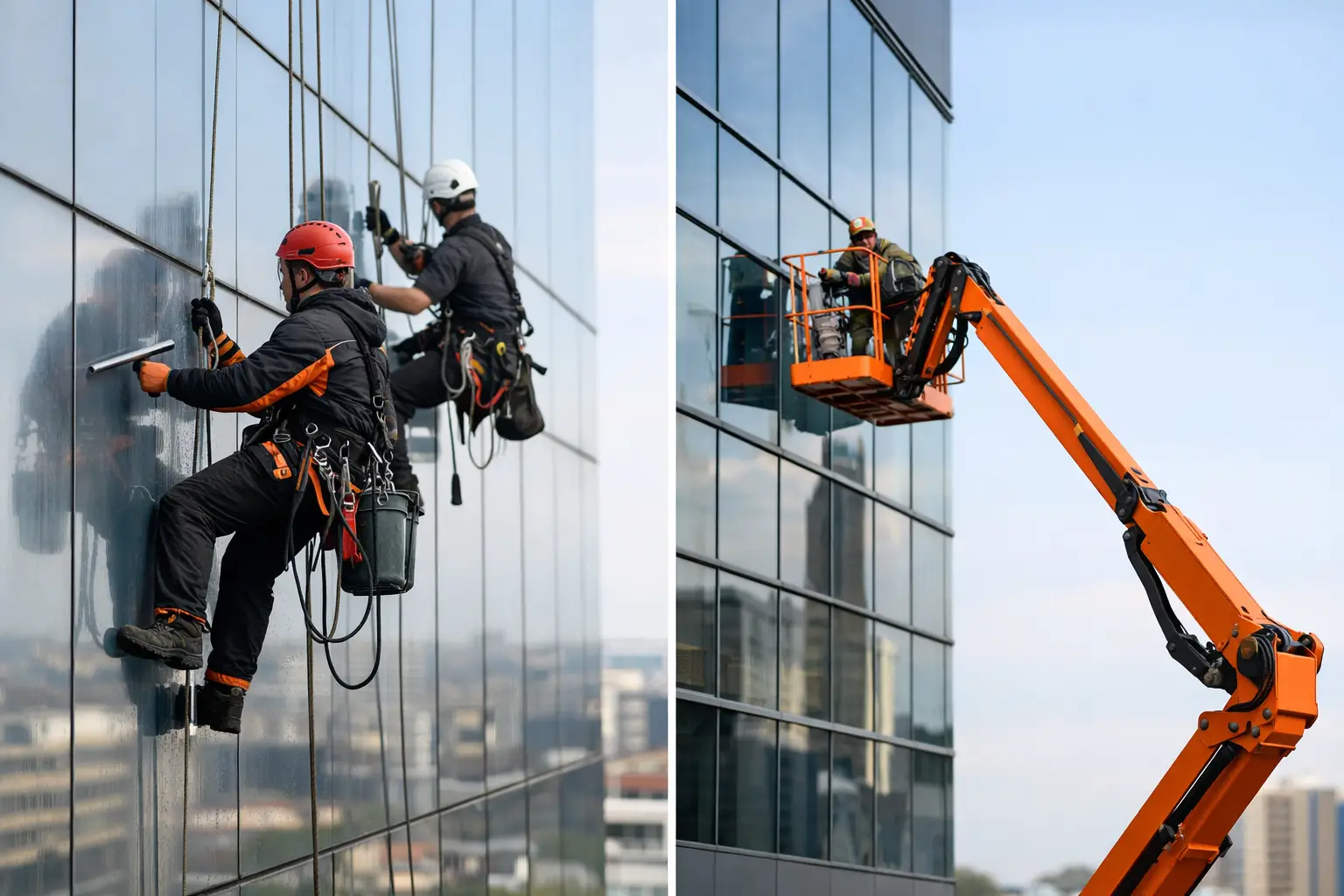
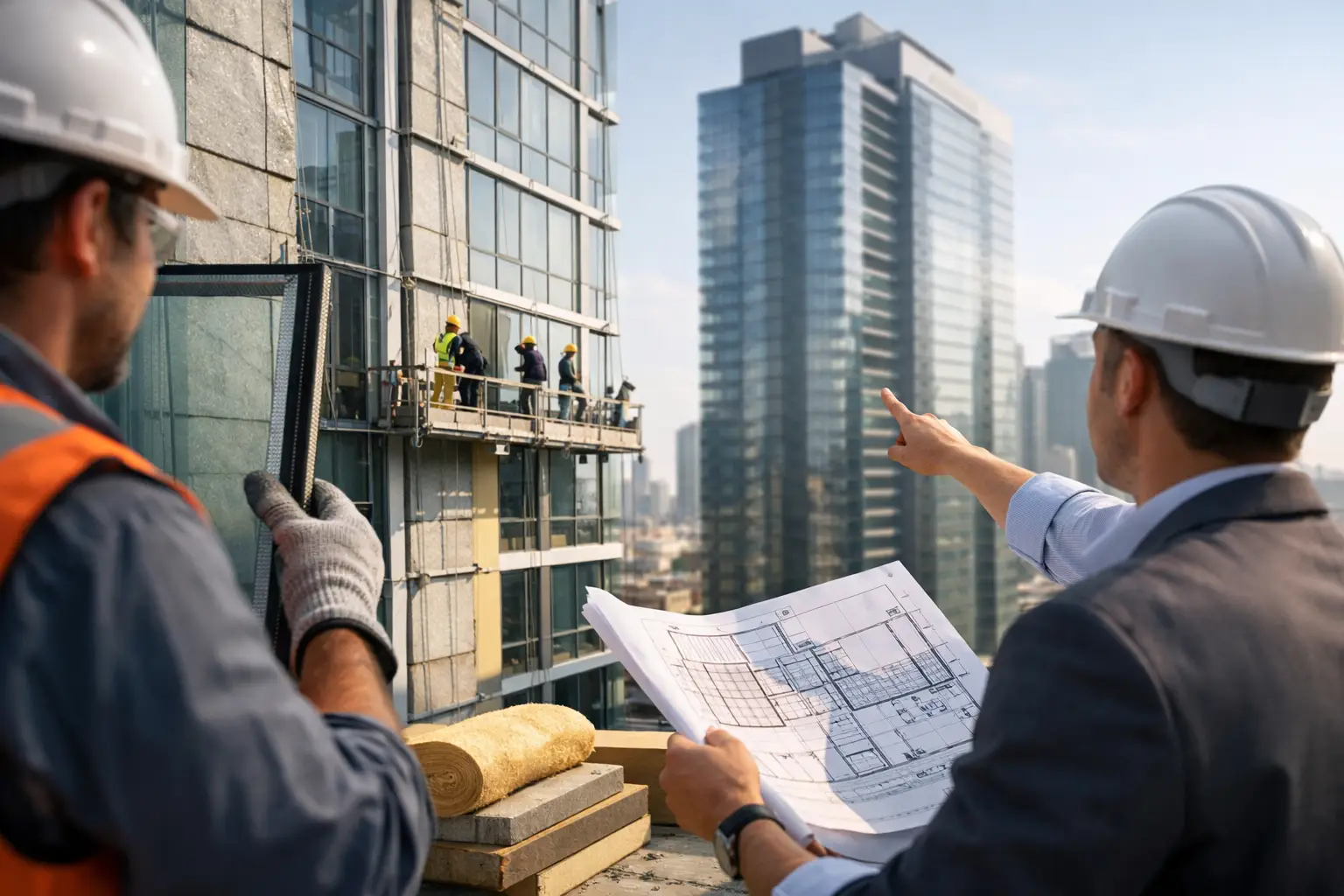
A reliable process begins with assessment, not immediate action. The facade should be reviewed by elevation, material type, access requirement, and contamination type. This helps determine whether the building needs rope access, suspended access, boom lift support, or a combination of methods.
Surface identification comes first
Before cleaning starts, each facade material should be identified and checked against appropriate cleaning methods. Glass may require different tools depending on coating type. Metal panels may need pH-controlled products. Stone and textured finishes often require gentler treatment and more controlled rinsing.
This step reduces guesswork. It also protects warranties and finish performance where manufacturer guidance applies.
Testing prevents large-scale damage
Small test areas are essential, especially when adhesive residue, mortar marks, or paint overspray are present. Testing confirms whether a method removes the contaminant effectively without leaving haze, scratches, or chemical reaction marks.
For building managers, this is one of the clearest signs that the contractor understands facade care. Large buildings should not be cleaned on assumption.
Access strategy affects quality and safety
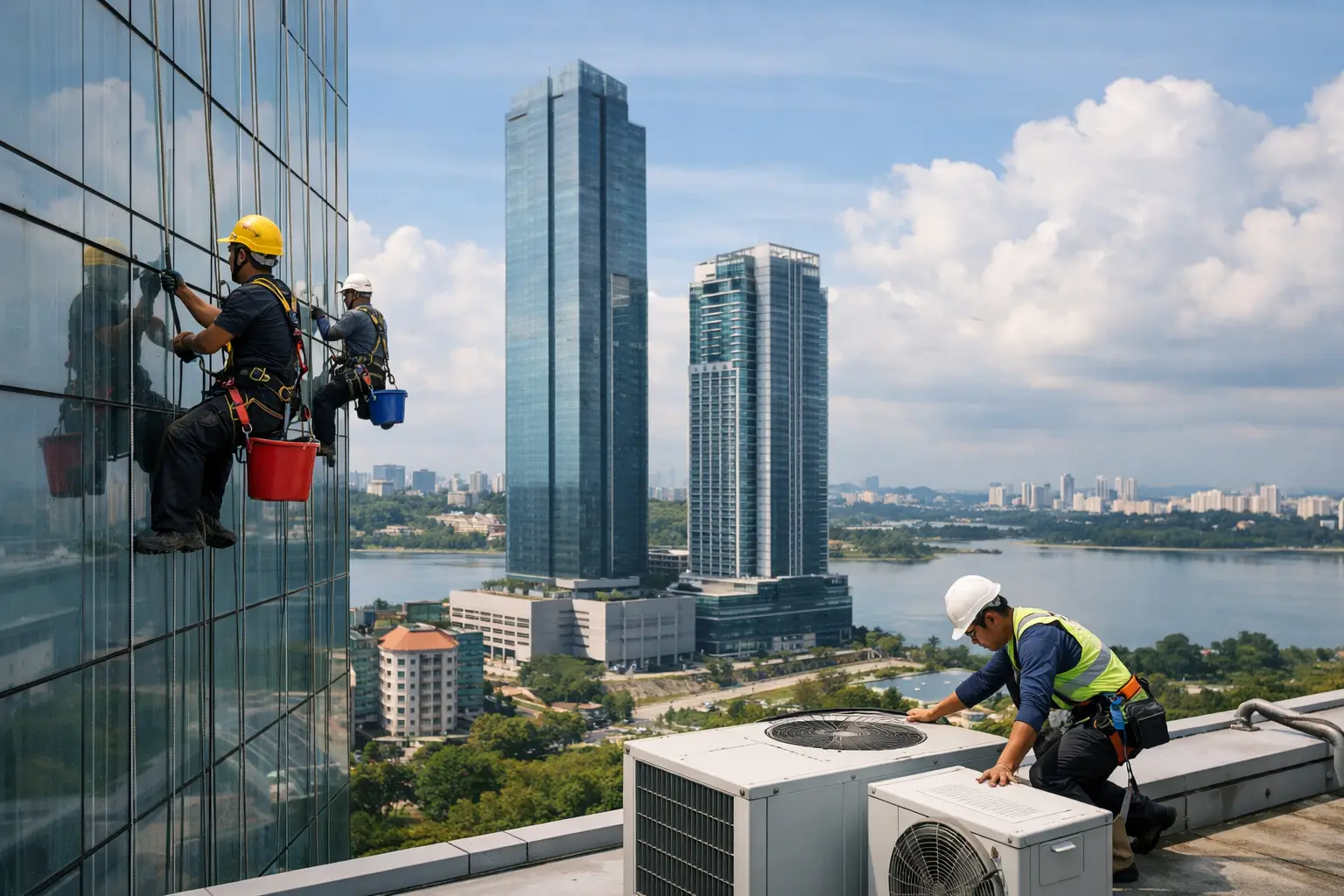
Access is not just a logistics issue. It affects the consistency of cleaning and the ability to reach edges, corners, recessed sections, and difficult transitions. High-rise facades often require rope access because it allows precise movement across vertical surfaces without the limitations of ground-based equipment.
For complex elevations, professional access planning also reduces disruption to occupants and surrounding operations. That matters on occupied commercial sites and mixed-use developments where public safety and traffic flow must be managed carefully.
Areas that often get missed in post construction facade cleaning
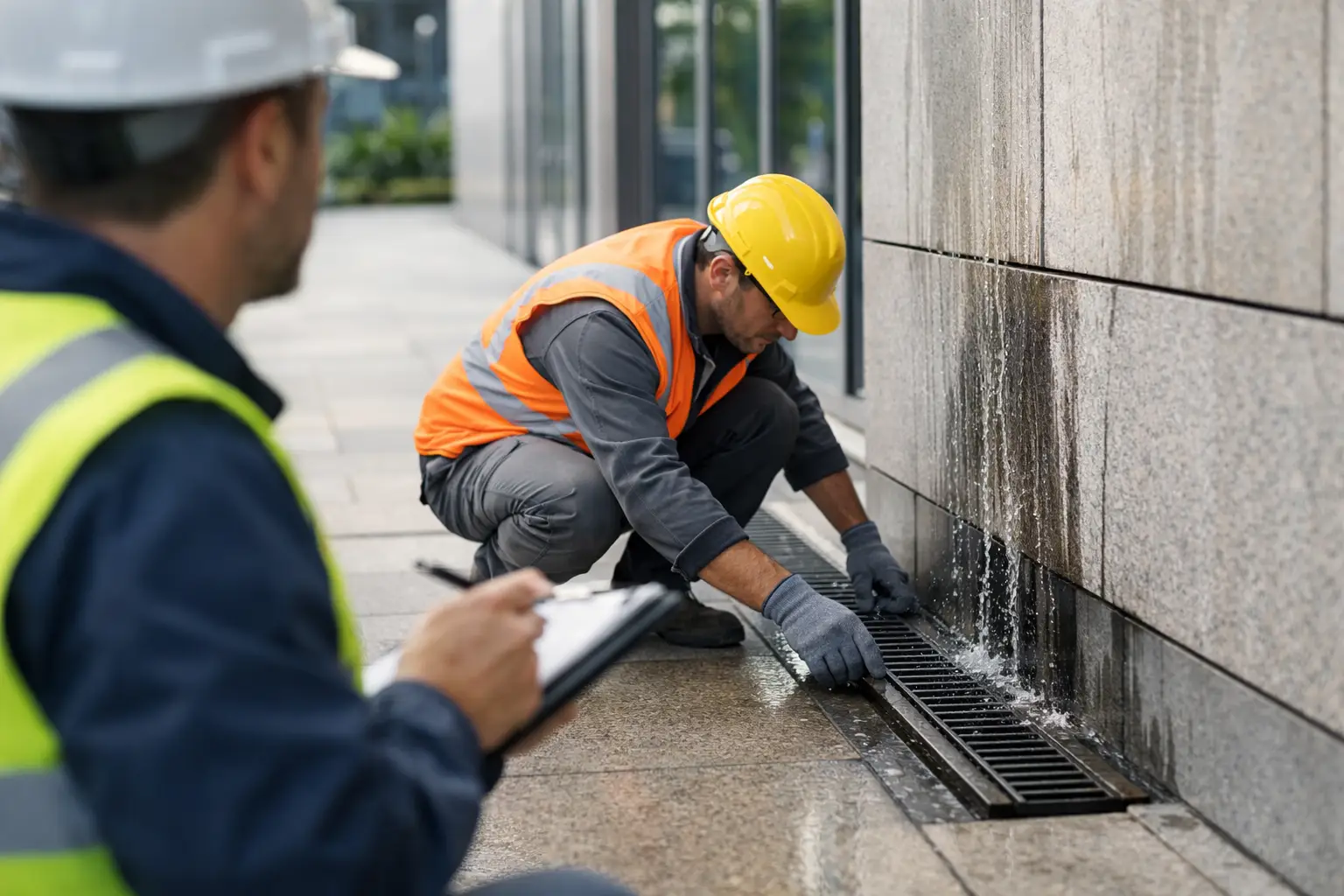
Even when main elevations are cleaned, problem areas are frequently overlooked. Perimeter frames, shadow lines, expansion joints, parapet edges, canopy undersides, and recessed corners tend to retain dust and residue. Drainage paths can also hold debris that later causes staining during rain.
Lower levels deserve particular attention because they shape first impressions. Entrance glass, cladding near drop-off areas, and podium facades often show the heaviest combination of dust, adhesive residue, and handling marks. If these areas are inconsistent, the entire building can still appear unfinished.
Cleaning is also a chance to catch defects early
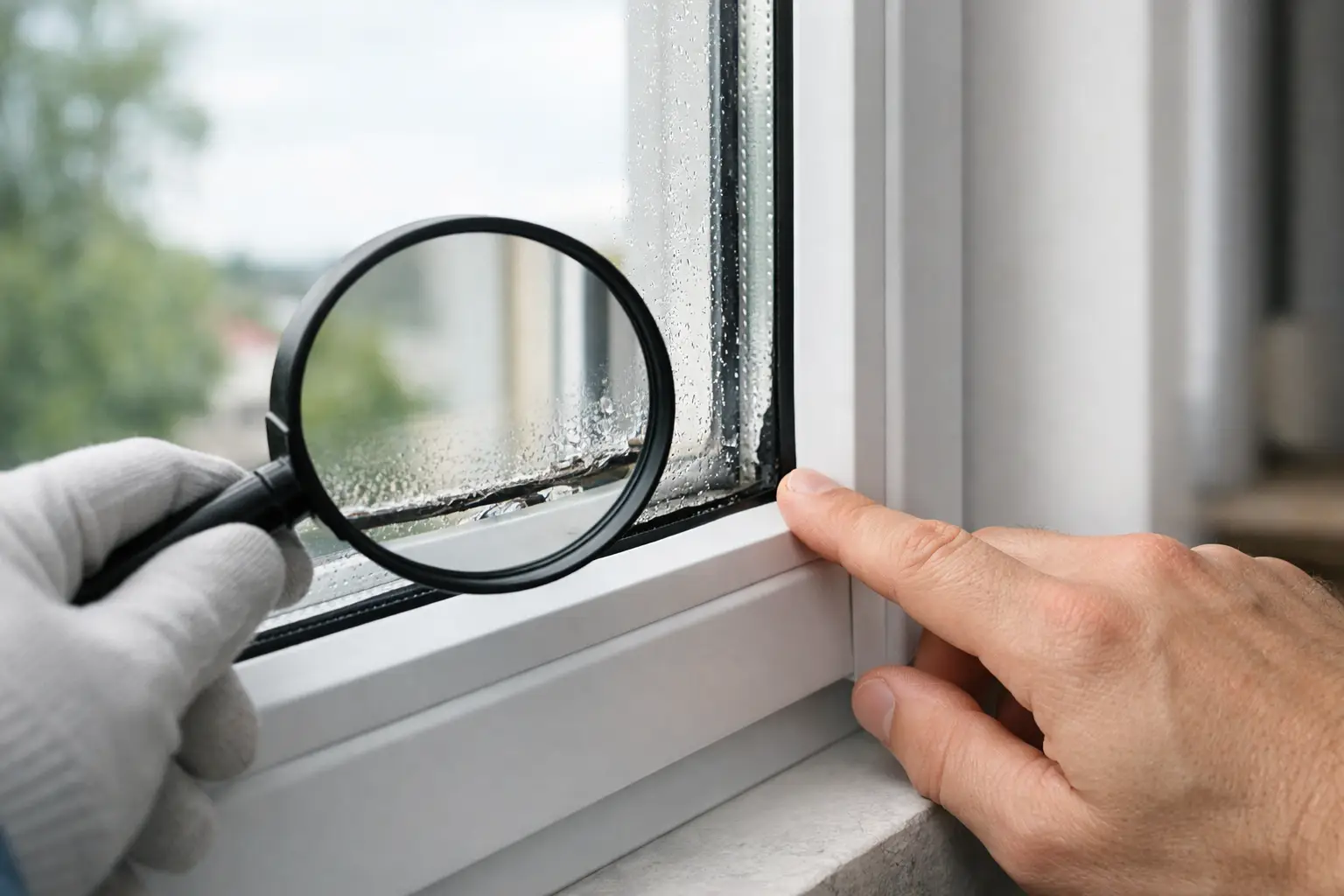
One of the practical benefits of post construction facade cleaning is visibility. Dirt hides defects. Once surfaces are properly cleaned, quality issues become easier to identify and document. That includes glass scratches, sealant gaps, panel alignment concerns, chipped stone, failed coatings, and water marks from poor drainage detailing.
This matters during project closeout. Developers, consultants, and asset owners need a clear view of the finished facade before responsibility shifts into operations. Cleaning should support that transition, not happen as a rushed visual touch-up at the end.
When timing makes a difference
There is no single perfect point for post construction facade cleaning because sequencing depends on site conditions. Clean too early and ongoing works may re-contaminate the exterior. Leave it too late and residue may cure, stain, or become harder to remove.
In most cases, the best timing is after major facade works and surrounding construction activity are substantially complete, but before final inspections and handover are locked in. Some projects also benefit from phased cleaning, especially where podiums, towers, and public-facing areas are completed at different times.
The right timing depends on exposure, material sensitivity, and remaining site activity. That is why coordination between the cleaning team, main contractor, and facility stakeholders is so important.
What building stakeholders should look for
Not every cleaning contractor is equipped for facade-focused work. On a high-rise or architecturally sensitive building, experience with exterior systems, material behavior, and work-at-height operations matters more than general cleaning capability.
A capable provider should be able to explain how they will assess surface types, test cleaning methods, manage elevated access, protect adjacent elements, and flag visible defects. They should also understand how facade contamination behaves in local conditions, including pollution, rain exposure, and tropical heat.
For owners and managers in Kuala Lumpur, Selangor, Johor, and Penang, that local understanding can make a real difference. Urban dust, rain streaking, and construction residue do not behave the same way on every facade system, and response methods need to reflect actual site conditions rather than a generic cleaning checklist.
Post construction facade cleaning and long-term maintenance
A final construction clean should not be treated as a one-off event with no connection to future maintenance. It creates the starting point for the facade’s service life. Once the exterior is clean and defects are visible, building teams can establish realistic maintenance intervals, inspection priorities, and access planning.
That baseline is valuable. It helps separate new contamination from construction residue, supports accountability at handover, and makes future deterioration easier to track. For high-rise assets, that clarity improves decision-making well beyond the project completion stage.
Facade by Vertical Pro Sdn Bhd approaches this work with the understanding that a clean exterior is only part of the objective. The larger goal is to help building stakeholders protect appearance, verify condition, and move into operations with confidence.
A building may be structurally complete before the facade is truly ready. The difference is often in the details left behind – and in whether they are cleaned with the care the exterior system actually requires.
Discuss the next step
For advice on post construction facade cleaning, request a site assessment or quotation from Vertical Pro.
Where inspection or maintenance involves work at height, access planning should follow a documented risk-control process. DOSH Malaysia’s fall-prevention guidance is a useful reference for that planning.
Leave a Reply