
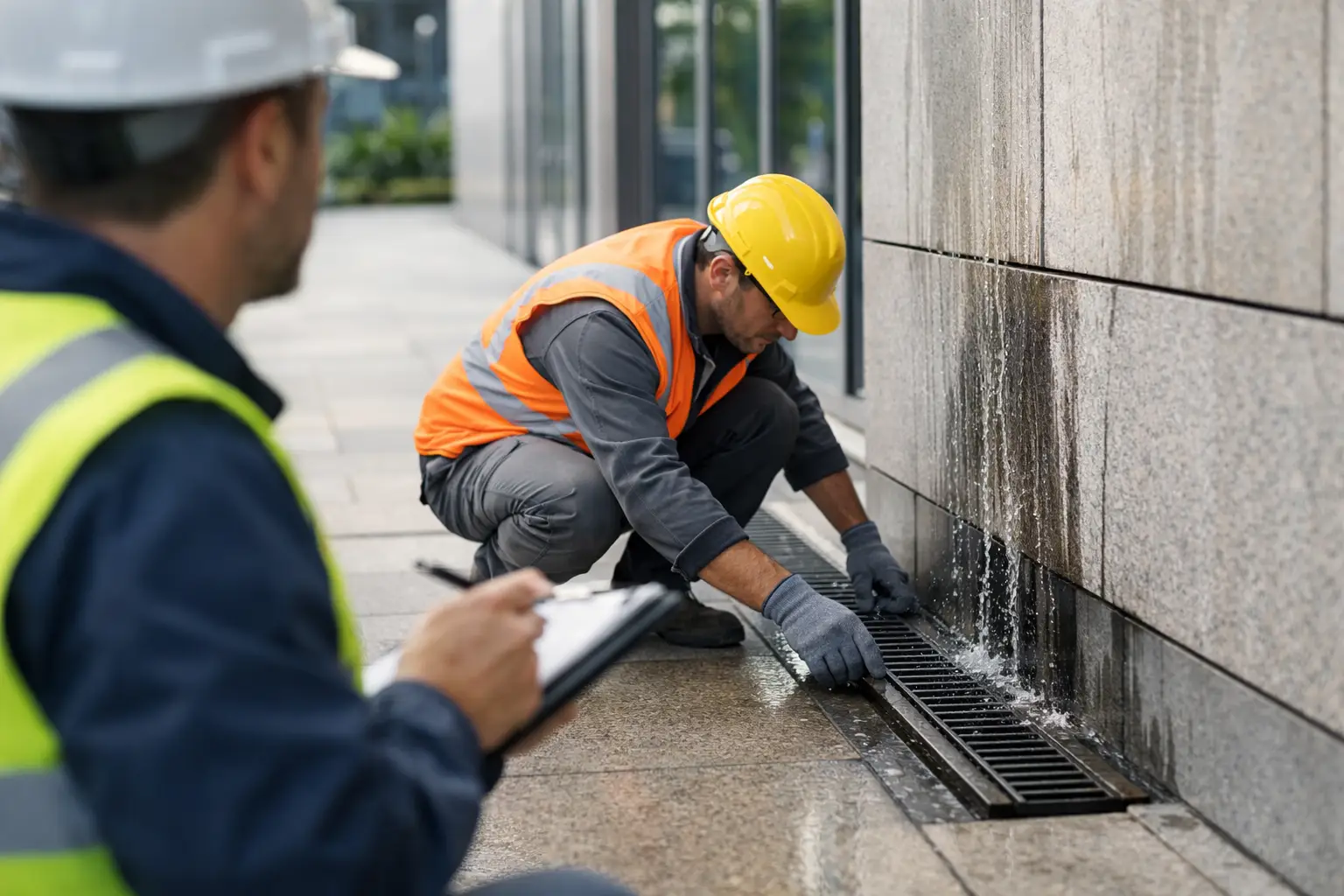
When a facade starts showing water stains, algae growth, traffic film, or patchy discoloration, the real question is not just how to clean it. For most high-rise properties, the decision quickly becomes rope access vs gondola cleaning, and that choice affects safety planning, access quality, building disruption, and the standard of the final result.
For building managers and asset owners, this is rarely a theoretical discussion. The wrong access method can slow down maintenance, leave difficult sections untreated, or create unnecessary operational constraints. The right method supports safer execution and more complete facade care, especially on buildings exposed to heavy rainfall, humidity, pollution, and heat cycling.
Rope access vs gondola cleaning: what changes in practice?
Both methods are used to clean and maintain exterior building surfaces at height, but they work very differently.
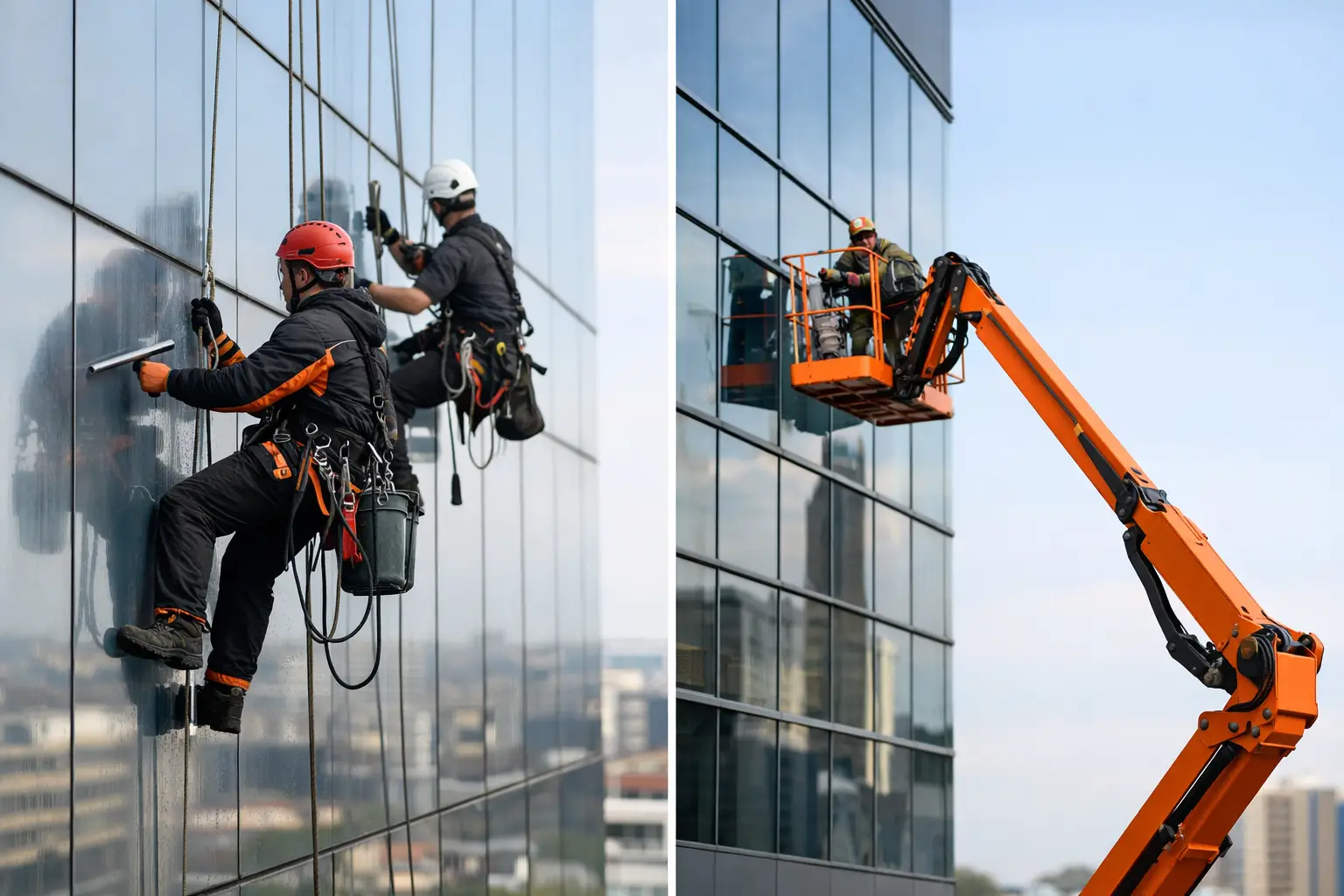
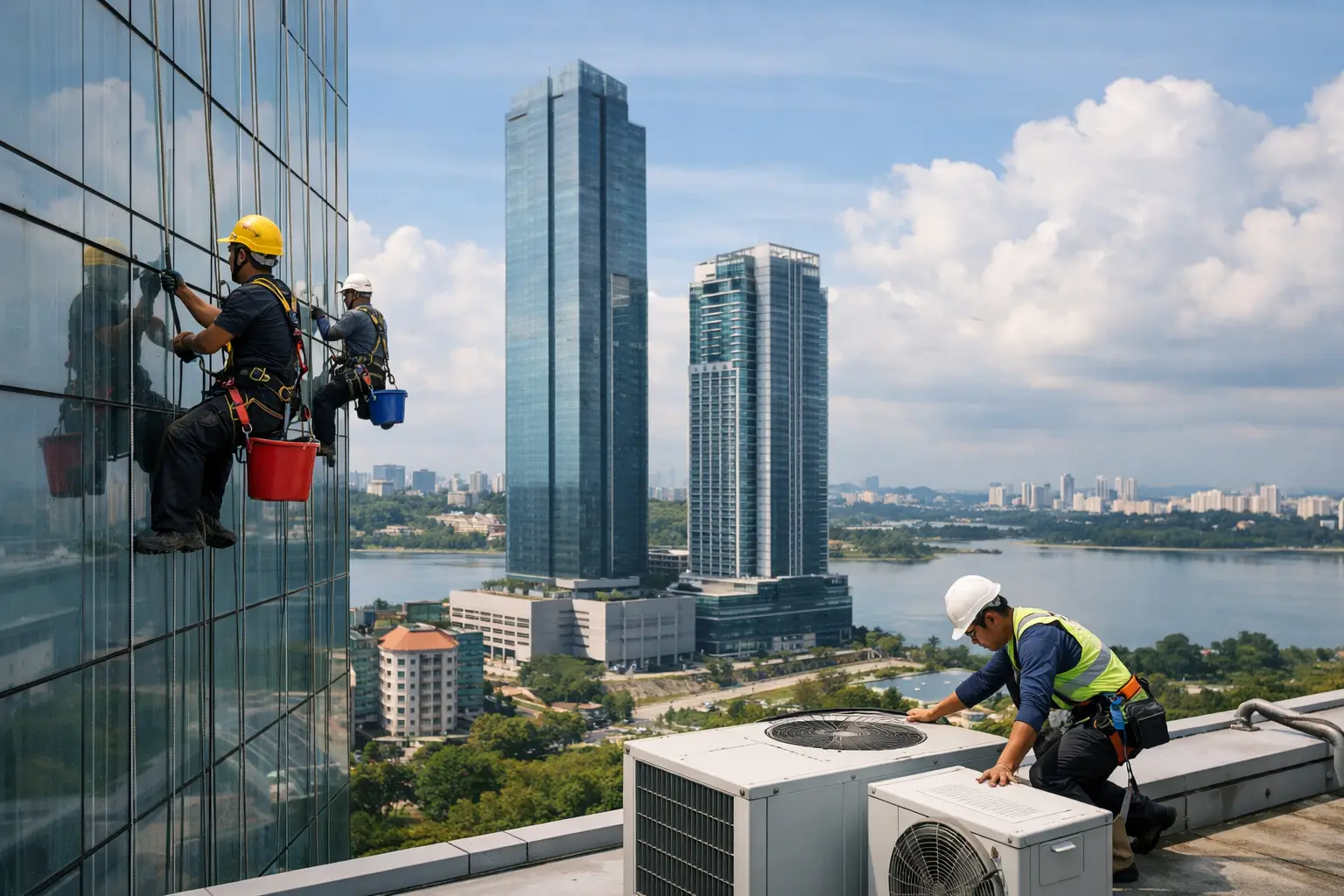
Rope access relies on trained technicians descending or positioning themselves on ropes from certified anchor points. This gives crews direct mobility across vertical surfaces and around complex architectural features. Gondola cleaning uses a suspended platform, typically operated from a roof-mounted building maintenance unit or davit system, to move workers up and down the facade.
The difference is not only equipment. It is really about how each method interacts with the building envelope. A flat tower with long, uninterrupted elevations may be well suited to gondola access. A facade with recesses, fins, crown features, canopies, stepped profiles, or irregular geometry often favors rope access because technicians can move more precisely around obstacles.
When rope access is the better choice
Rope access is often the more practical solution when access is restricted, facade geometry is complex, or the work area is targeted rather than uniform.
A key advantage is flexibility. Technicians can reach narrow sections, curved elevations, facade setbacks, and difficult transition zones that a gondola may not align with easily. This matters on modern towers with decorative projections, mixed materials, or architectural elements that interrupt a straight vertical drop.
Rope access is also useful when the cleaning scope is selective. If a building needs spot treatment for staining, post-construction facade cleaning, sealant inspection support, or localized maintenance on upper elevations, a rope team can often access the affected area directly without relying on a full suspended platform setup.
Another practical benefit is reduced dependence on permanent facade access infrastructure. Not every property has a well-maintained gondola system, and some older buildings were not designed for modern facade maintenance demands. In those cases, rope access can provide a controlled and effective alternative, provided the structure allows for safe anchorage and the method is supported by proper planning.
That said, rope access is not automatically the better option for every building. It depends on surface type, work scope, drop lines, wind exposure, and how much horizontal repositioning is required across the facade.
Best-fit buildings for rope access
Rope access tends to perform well on buildings with complex architecture, partial access constraints, and areas that require close technician control. This includes towers with setbacks, podium transitions, facade fins, deep framing, and hard-to-reach corners.
It is also valuable for heritage or sensitive exterior surfaces where a more controlled, technician-led approach is needed. In these cases, direct access can support careful cleaning methods that protect coatings, stonework, joints, and ornamental features.
When gondola cleaning makes more sense
Gondola cleaning remains a strong solution for many high-rise buildings, especially those designed with permanent suspended access systems in mind.
If a property has broad, regular elevations and a roof-mounted system that is properly maintained, a gondola can support stable, methodical cleaning over large surface areas. Workers have a platform to carry tools, water-fed equipment, and materials more easily, which can make repeated cleaning cycles more straightforward on certain facade layouts.
Gondolas can be particularly suitable for buildings with repetitive vertical zones such as office towers with continuous curtain wall sections. Where the facade is relatively flat and access routes are predictable, the platform format can support consistent coverage.
There is also an operational advantage in some maintenance programs. If a building already relies on a permanent access system for facade inspections, sealant work, and glass cleaning, using the same infrastructure for cleaning may fit neatly into the maintenance routine.
Still, gondolas have limitations. They depend heavily on the building’s installed access equipment, roof logistics, and facade design. If the platform cannot reach behind projecting features or align with recessed areas, some sections may remain difficult to clean thoroughly.
Best-fit buildings for gondola cleaning
Gondola systems are often better suited to towers with simple vertical lines, accessible roof-level machinery, and large facade expanses that benefit from a platform-based workflow. Commercial office buildings with repetitive glazing patterns are a common example.
They are less effective when the building has frequent obstructions, variable setbacks, or facade details that interfere with platform travel.
Safety is not just about the method
In discussions about rope access vs gondola cleaning, safety is often framed as if one method is broadly safe and the other is not. In practice, both can be safe when properly specified, planned, and executed by competent specialists.
The real issue is suitability. A safe access strategy comes from matching the method to the building, the condition of the facade, site constraints, weather exposure, and the scope of work.
Rope access depends on certified technicians, engineered anchor planning, rescue readiness, and disciplined work-at-height procedures. Gondola cleaning depends on the integrity of the suspended platform system, inspection of mechanical components, proper operator controls, and reliable roof-level support conditions.
For building stakeholders, this means the first question should not be which method sounds more familiar. It should be which method can be carried out safely and effectively on this specific building.
Facade design usually decides the answer
Many access decisions are settled by the facade itself.
A straightforward glazed tower may allow gondola cleaning to proceed efficiently across wide sections. A building with terraced floors, recessed windows, sunshades, signage zones, or mixed cladding panels may push the decision toward rope access because technicians need to navigate around changing surfaces.
This is especially relevant in Malaysia, where facade contamination can vary from elevation to elevation. Rain exposure, shaded zones, biological growth, and urban pollution do not affect every side of a building equally. Some properties need more than a routine wash. They need targeted treatment in areas where moisture retention or dirt accumulation is more severe. In those cases, direct and adaptable access can be more valuable than broad platform coverage.
Cleaning quality depends on reach and control
The final appearance of the facade depends on whether crews can actually reach problem areas and apply the right cleaning method with proper control.
Rope access gives technicians close contact with the facade, which can improve precision on edges, corners, joints, and irregular surfaces. That is helpful when cleaning around sealant lines, facade fins, ledges, or transitions between glass and solid cladding.
Gondolas can support excellent cleaning outcomes on accessible, regular surfaces, particularly where the task is repeated glass and panel washing across large uninterrupted elevations. But if certain zones are physically awkward for the platform to approach, cleaning quality may vary from one section to another.
This is why access planning should never be separated from facade condition assessment. The method must support the cleaning result the building actually needs.
Operational impact matters too
Property teams also need to think about day-to-day building operations.
Some access methods place different demands on roof space, exclusion zones, tenant coordination, and staging. Gondola systems may require roof-level operational readiness and clear movement paths for suspended equipment. Rope access may involve smaller teams and more flexible mobilization, which can help on sites with tighter physical constraints.
Neither method is universally less disruptive. It depends on the property layout, public interface, drop zones, and how work is sequenced. On an active commercial or residential building, planning matters as much as the cleaning itself.
How to choose between rope access and gondola cleaning
A reliable decision usually comes from a building-specific review, not a preference for one system over the other.
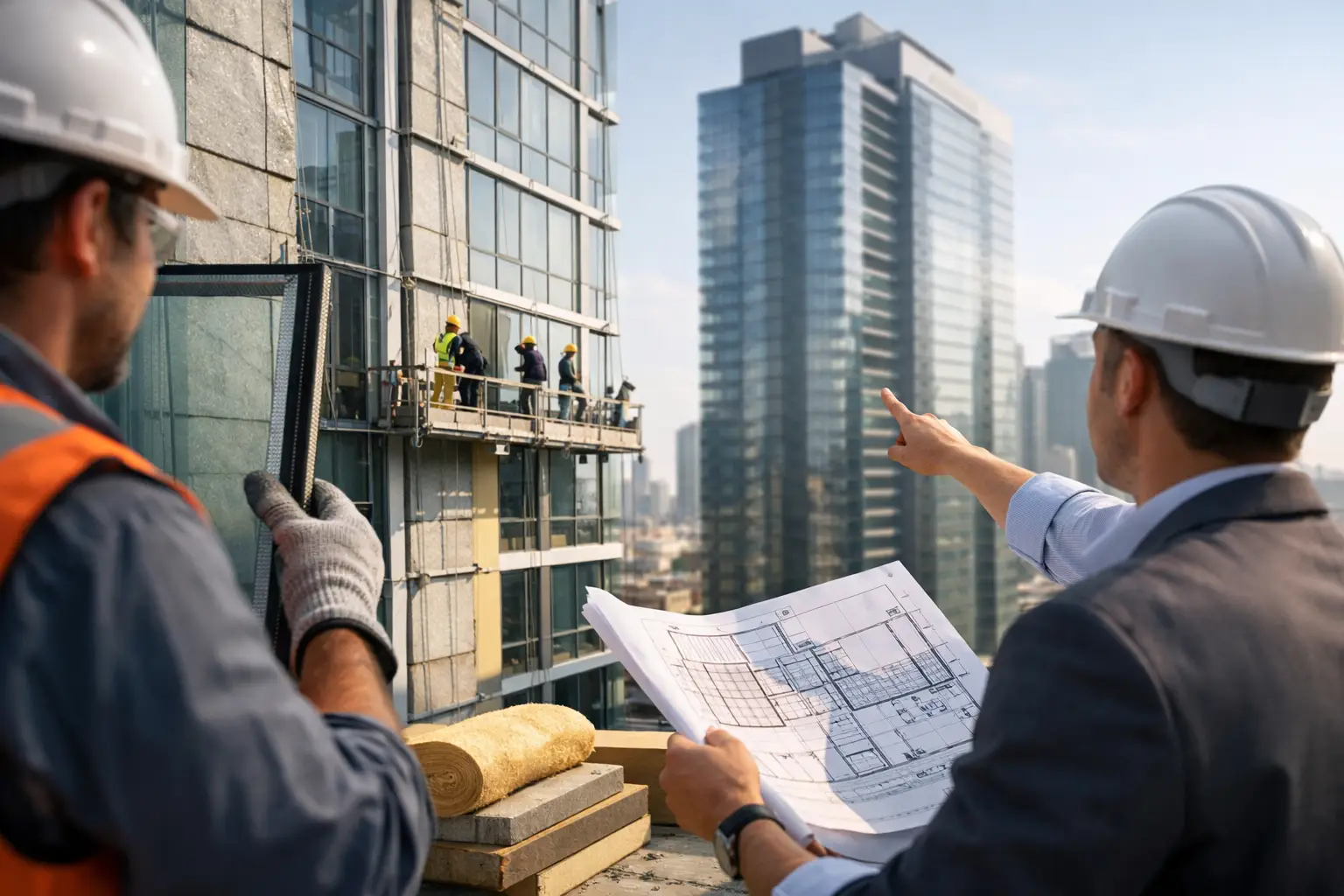
Start with the facade layout. Then consider whether the building has permanent suspended access equipment, whether difficult areas sit behind projections or recesses, and whether the cleaning scope is full elevation coverage or localized treatment. Surface material, weather exposure, and maintenance history should also shape the recommendation.
For many properties, the answer is not strictly one or the other. Some buildings benefit from a mixed strategy, where gondolas handle the main vertical elevations and rope access is used for architectural features, crown details, or hard-to-reach sections. That approach can improve overall facade coverage without forcing one method to do a job it is not well suited for.
At Facade by Vertical Pro Sdn Bhd, that building-first approach is what matters most. Access method should serve the facade, the maintenance objective, and the long-term condition of the asset.
A clean exterior is never just about appearance. It reflects how well a building is being protected, and the right access method is part of that protection from the start.
Discuss the next step
For advice on gondola facade cleaning, request a site assessment or quotation from Vertical Pro.
Rope access is more than a way to reach the facade; it is a complete work system. IRATA International’s overview of rope access outlines the role of planning, management, trained personnel and suitable equipment.
Leave a Reply