
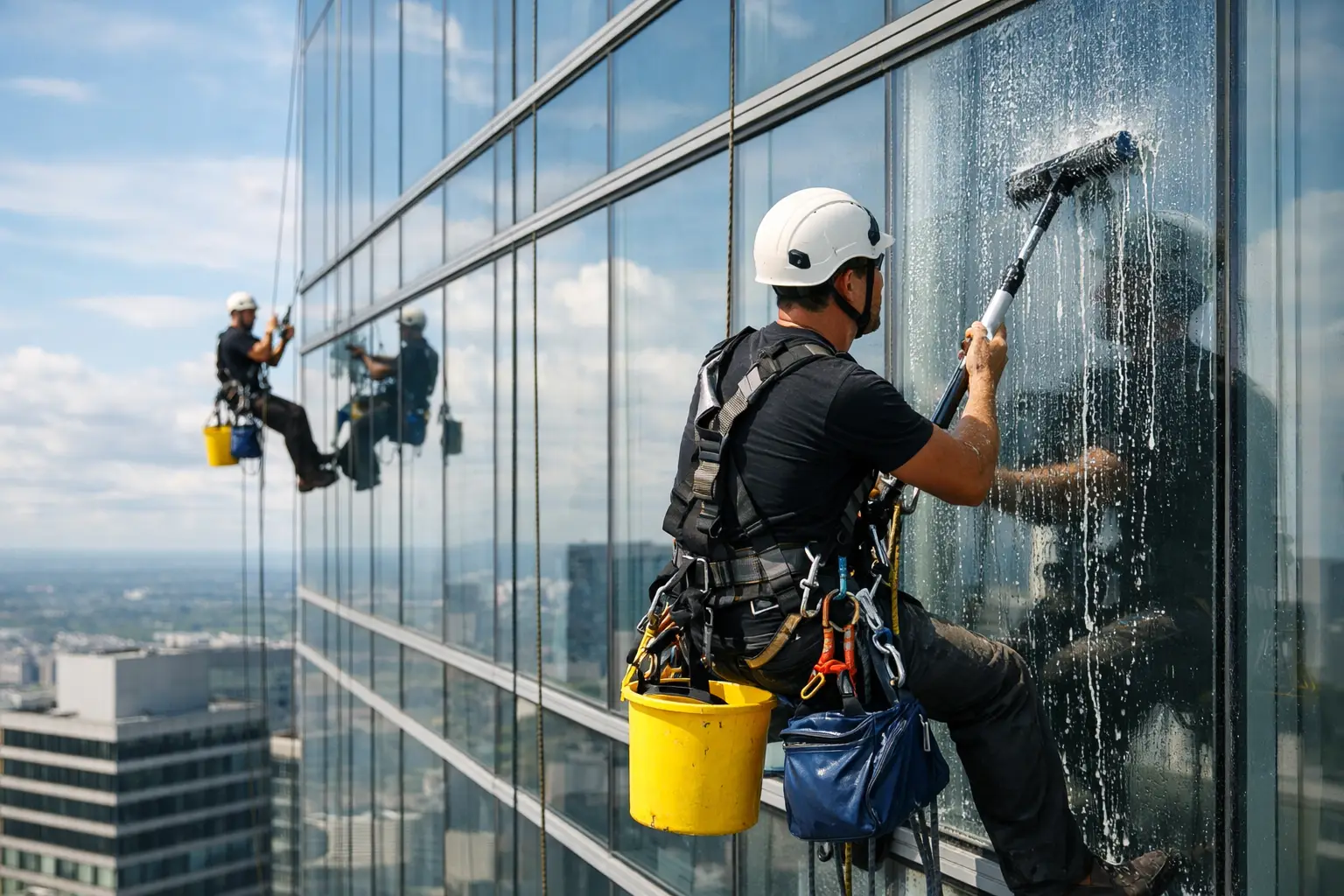
Curtain wall glass can look fine from the ground while already holding a layer of traffic film, mineral deposits, algae staining, and sealant runoff that will become much harder to remove later. That is why understanding how to clean curtain wall facades is less about making a building shine for a week and more about protecting the facade system over time.
For building owners and facility teams, this is a maintenance issue with direct impact on appearance, tenant perception, and long-term facade performance. Curtain walls are engineered assemblies. Glass, aluminum, gaskets, sealants, coatings, and anchoring details all respond differently to moisture, chemicals, heat, and abrasion. Cleaning has to respect that complexity.
How to clean curtain wall facades without causing damage
The first rule is simple. Do not treat a curtain wall like a standard exterior wall finish. A cleaning method that works on painted concrete or tile can permanently mark coated glass, oxidize metal frames, or weaken sealant edges.
A proper cleaning approach starts with identifying the facade type and its condition. Some curtain walls have clear float glass, while others use tinted, laminated, low-E, reflective, or heat-strengthened units. Frame finishes may be anodized aluminum, powder-coated aluminum, or stainless steel trim. Each surface has different tolerances for detergents, pads, and water pressure.
The second rule is to inspect before washing. This matters more than many teams expect. If seals are already failing, if gaskets are loose, or if previous repairs have left incompatible materials on the surface, aggressive cleaning can push water into weak points or pull at vulnerable details. Dirt buildup is often visible. Sealant fatigue is not.
In practice, cleaning should follow a controlled sequence: inspection, testing, debris removal, washing, spot treatment, rinsing, and post-clean review. Skipping the test patch is where many avoidable problems begin. A small trial area shows whether the chemical strength, dwell time, and agitation method are safe for that specific facade.
Start with the facade condition, not the dirt
Buildings in tropical urban environments accumulate more than simple dust. In Malaysia, curtain walls are exposed to high humidity, heavy rainfall, airborne pollutants, biological growth, and mineral-rich water runoff. A facade near heavy traffic may develop oily residue and carbon staining. A tower with poor drainage details may show streaking below mullions or anchor points. Coastal conditions can also accelerate salt deposits and metal corrosion.
These differences matter because not all dirt should be attacked the same way. Organic staining may respond to one treatment, while hard water deposits need another. If teams use a stronger general-purpose chemical to solve every stain, they often create a second problem by harming coatings or leaving residues behind.
This is why professional facade maintenance begins with diagnosis. What looks like dirt may actually be oxidation, failed sealant bleed, etched glass, or permanent staining from runoff. Cleaning can improve the first issue. It will not solve the others, and trying to scrub them away usually makes the surface worse.
Common facade contaminants on curtain walls
The most common issues are airborne dust, traffic film, bird droppings, algae or mildew growth in damp areas, hard water staining, construction residue, and sealant smears. On older buildings, oxidation on metal framing and surface dullness on neglected glass are also common.
Each of these calls for a different level of intervention. Light dust can be removed with low-residue detergent and clean water. Mineral staining may require specialized non-abrasive descaling chemistry. Construction residue, such as silicone smears or paint spots, needs careful detail work and should never be scraped without confirming surface compatibility.
The right cleaning method depends on access and facade design
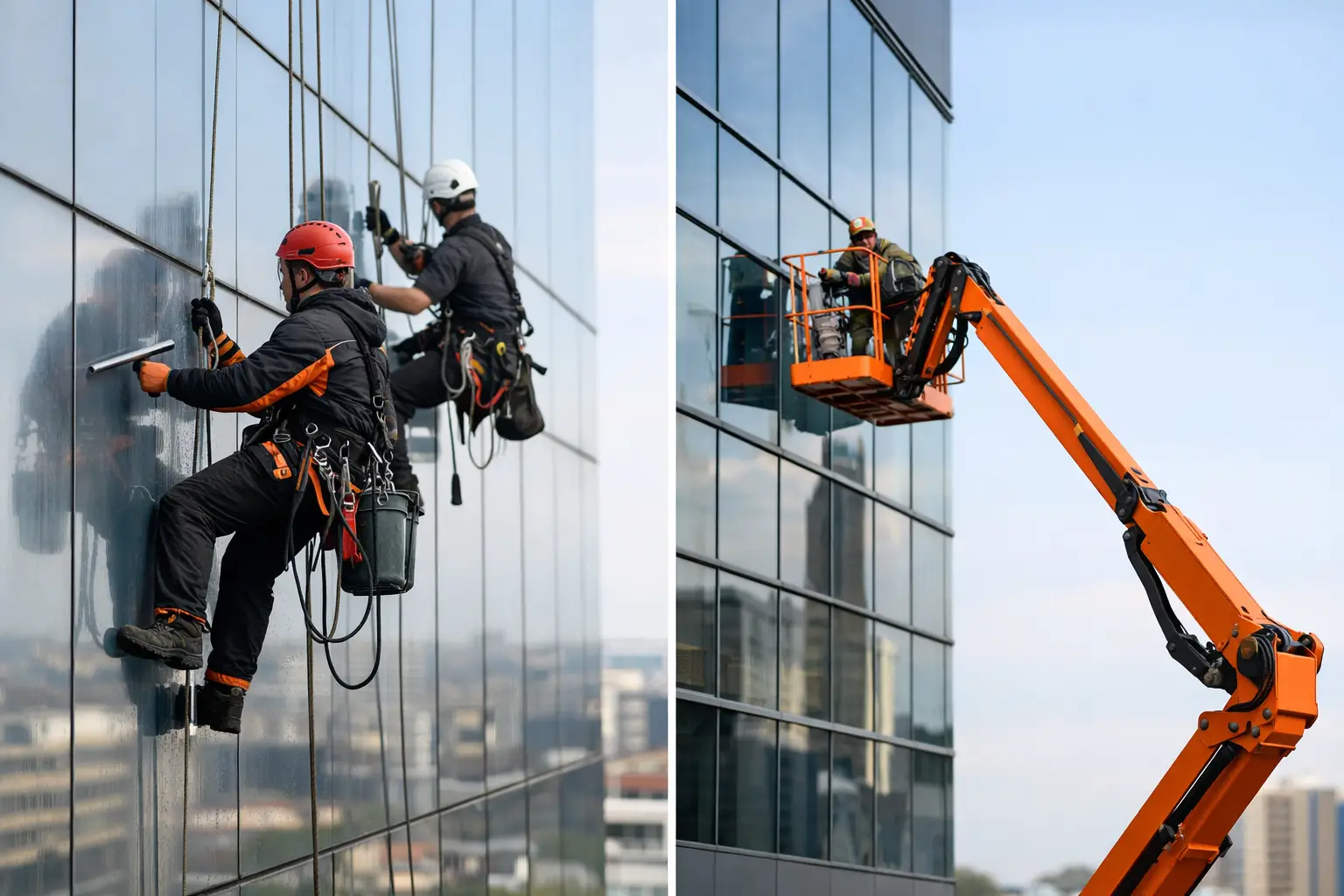
Access is not just a logistical detail. It shapes the cleaning method itself. High-rise curtain wall facades often require rope access, gondola systems, boom lifts, or other work-at-height solutions. The safest and most effective option depends on building height, facade geometry, anchor points, setback conditions, and surrounding public space.
A building with deep fins, projecting elements, or irregular glazing zones may not be suitable for one access method across the whole elevation. In those cases, the cleaning plan must adapt section by section. This is one reason experienced facade specialists are valuable. They do not only clean surfaces. They plan around the facade system and the building’s operational constraints.
Water-fed, hand-wash, and specialist spot treatment
For curtain walls, the safest standard method is often controlled hand-washing using soft applicators, approved detergent, and thorough rinsing. Water-fed systems can be useful on certain elevations, particularly where access is straightforward and the soiling level is light to moderate. But they are not automatically right for every building.
Heavily stained areas often need specialist spot treatment rather than repeated whole-surface washing. Rewashing a mineral-stained panel with the same mild soap will waste time and may still leave visible marks. On the other hand, escalating too quickly to abrasive pads or strong acids can damage glass coatings and frame finishes.
Pressure washing is where caution is essential. It may be acceptable at controlled settings on some exterior components, but it should not be treated as a default curtain wall cleaning method. Excessive pressure can force water into joints, disturb sealant lines, and spread contaminants into vulnerable interfaces.
What should never happen during curtain wall cleaning
The fastest way to shorten facade life is to confuse cleaning speed with cleaning quality. Metal scrapers, abrasive pads, harsh alkaline or acidic chemicals, and untested stain removers should not be used casually on curtain wall systems.
Another common mistake is cleaning under direct heat without adjusting the process. On hot elevations, cleaning solution can dry too quickly and leave streaks or chemical residue before proper rinsing. Glass temperature affects results. So does water quality. If rinse water is high in minerals, the cleaning process itself can leave new spotting behind.
There is also the issue of deferred maintenance. If the facade has cracked sealant, failed gaskets, loose cover caps, or damaged panels, cleaning alone is not a complete solution. In some cases, maintenance or repair should come before full-scale washing. Otherwise, the building may look cleaner while the underlying risk remains unchanged.
How often should curtain wall facades be cleaned?
There is no universal schedule because exposure conditions vary. A commercial tower in a dense city corridor may need more frequent cleaning than a sheltered residential property. Buildings near major roads, construction activity, or coastal air generally accumulate contaminants faster.
What matters is establishing a realistic maintenance cycle based on facade exposure, appearance standards, tenant expectations, and observed wear patterns. Waiting until staining becomes obvious from the street usually means the buildup has progressed enough to require more intensive cleaning.
A planned schedule is usually more effective than reactive cleaning. It helps preserve visual consistency, reduces the chance of permanent staining, and allows building teams to combine cleaning with facade inspections. That inspection value is significant. During cleaning operations, trained technicians often spot early signs of sealant deterioration, cracked glass, corrosion points, or failed drainage details that would otherwise go unnoticed.
Why safety and compliance matter as much as the cleaning result
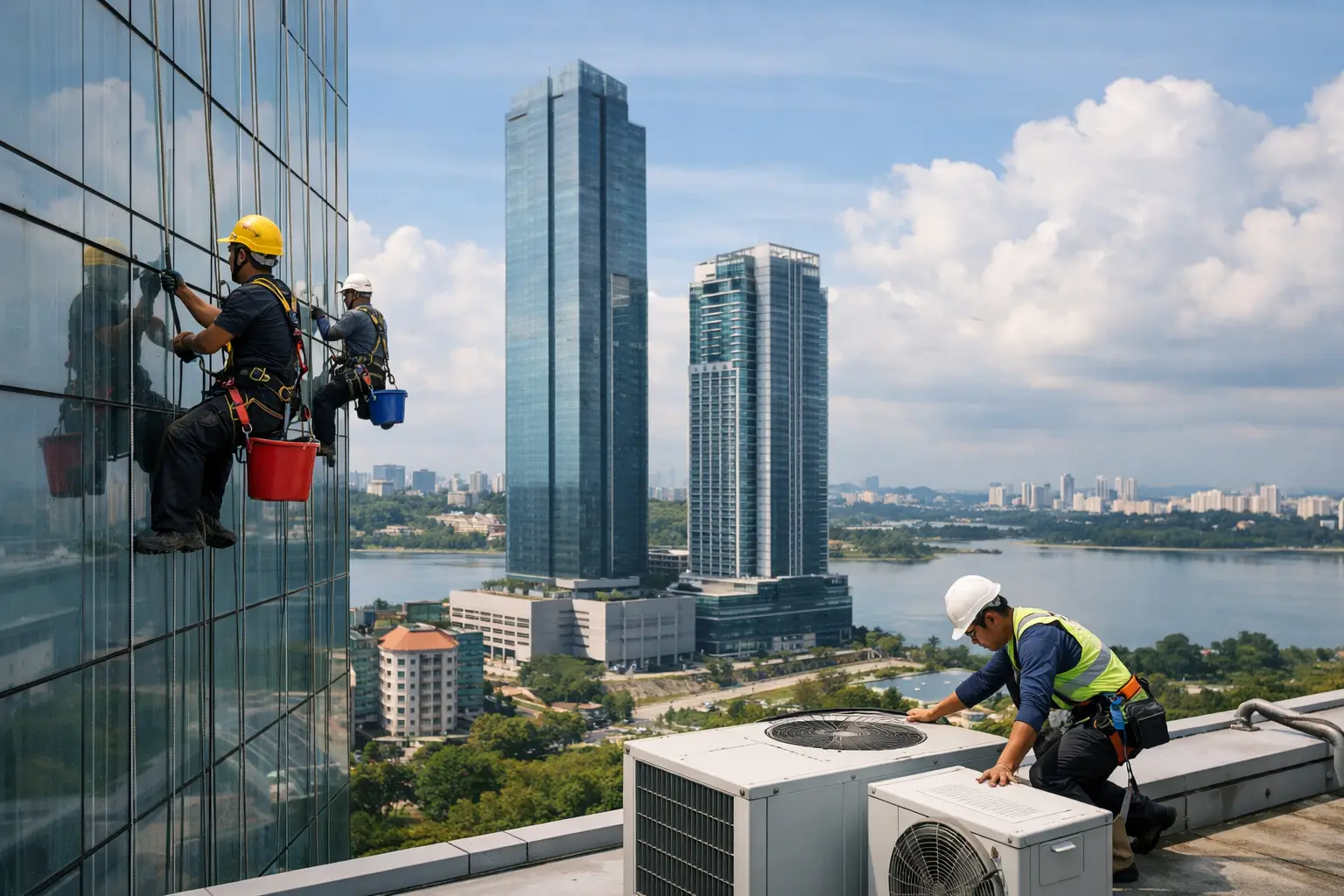
When discussing how to clean curtain wall facades, safety cannot be treated as a side note. Work at height on occupied buildings involves operational risk, public safety considerations, access system planning, and technician competence. A clean facade means very little if the work exposes people or property to avoidable hazards.
For high-rise properties, cleaning should be performed with clear method statements, equipment checks, rescue planning, and site controls suited to the building. Rope access can be highly efficient for complex elevations, but only when carried out by trained personnel using the right system design and supervision. The same applies to suspended platforms and mechanical access equipment.
Building managers should also consider how cleaning interacts with occupancy. Entry points, pedestrian zones, tenant windows, retail frontages, and vehicle circulation all need coordination. Good facade maintenance is not only about surface care. It is about executing the work with minimal disruption and full control.
A practical standard for better facade care
The best curtain wall cleaning programs are not built around guesswork. They rely on facade-specific assessment, compatible materials, proper access planning, and disciplined execution. That is the standard professional teams aim for, especially on high-rise and architecturally sensitive buildings where the margin for error is small.
If your facade is showing haze, streaking, localized staining, or recurring buildup, the right next step is not necessarily a more aggressive wash. It is a closer look at what the surface is telling you. Clean glass should improve appearance, but careful facade care should also protect the system behind it. That is what keeps a building looking credible year after year.
Discuss the next step
For advice on curtain wall cleaning methods, request a site assessment or quotation from Vertical Pro.
Where inspection or maintenance involves work at height, access planning should follow a documented risk-control process. DOSH Malaysia’s fall-prevention guidance is a useful reference for that planning.



Leave a Reply