

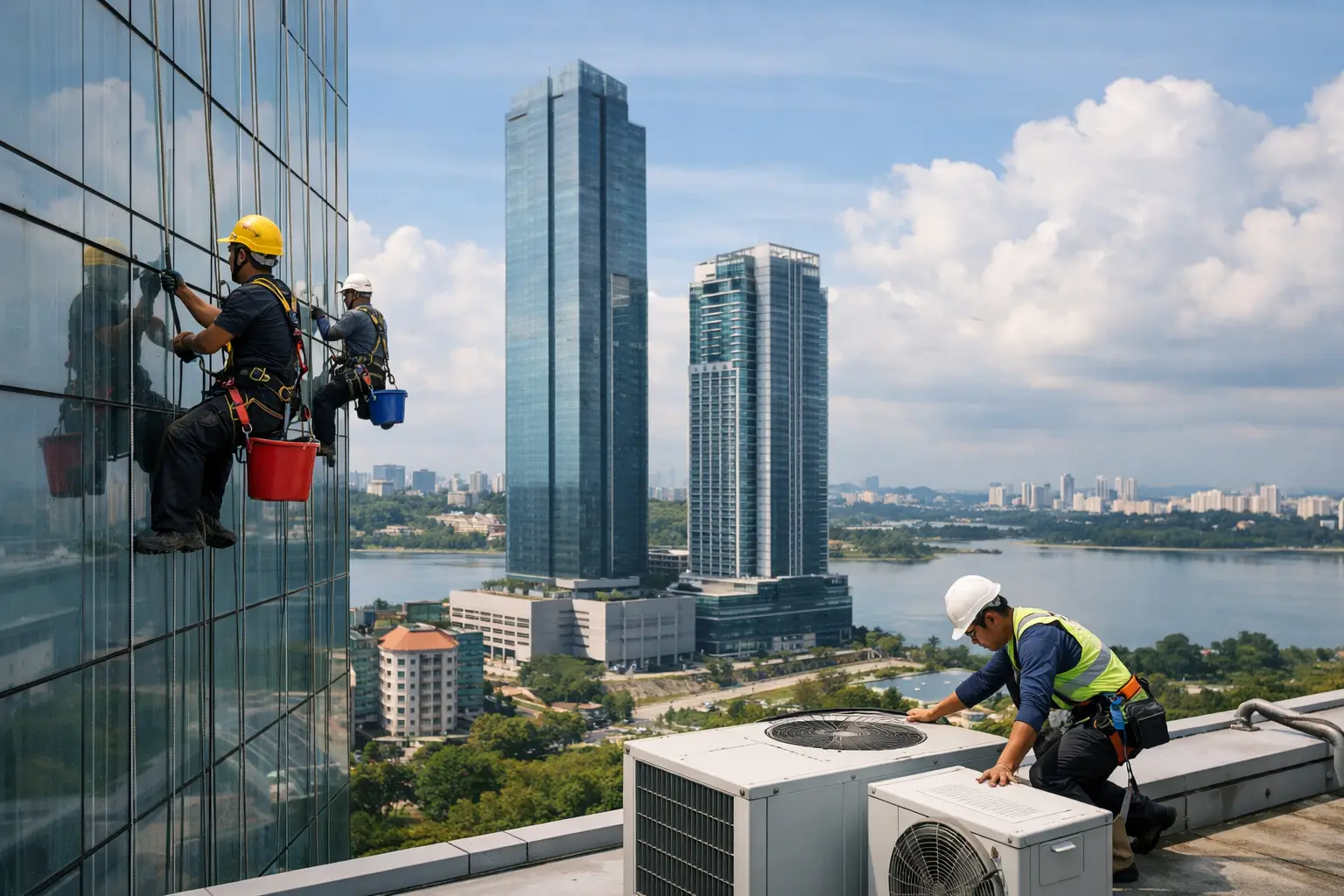
When a facade problem sits 25 stories above ground, access stops being a logistical detail and becomes the job itself. That is why rope access Malaysia has become a practical solution for property owners and facility teams responsible for high-rise exteriors. It gives maintenance specialists a controlled way to reach difficult areas without the footprint and disruption that often come with larger access systems.
Rope Access Facade Maintenance: What to Check on Site
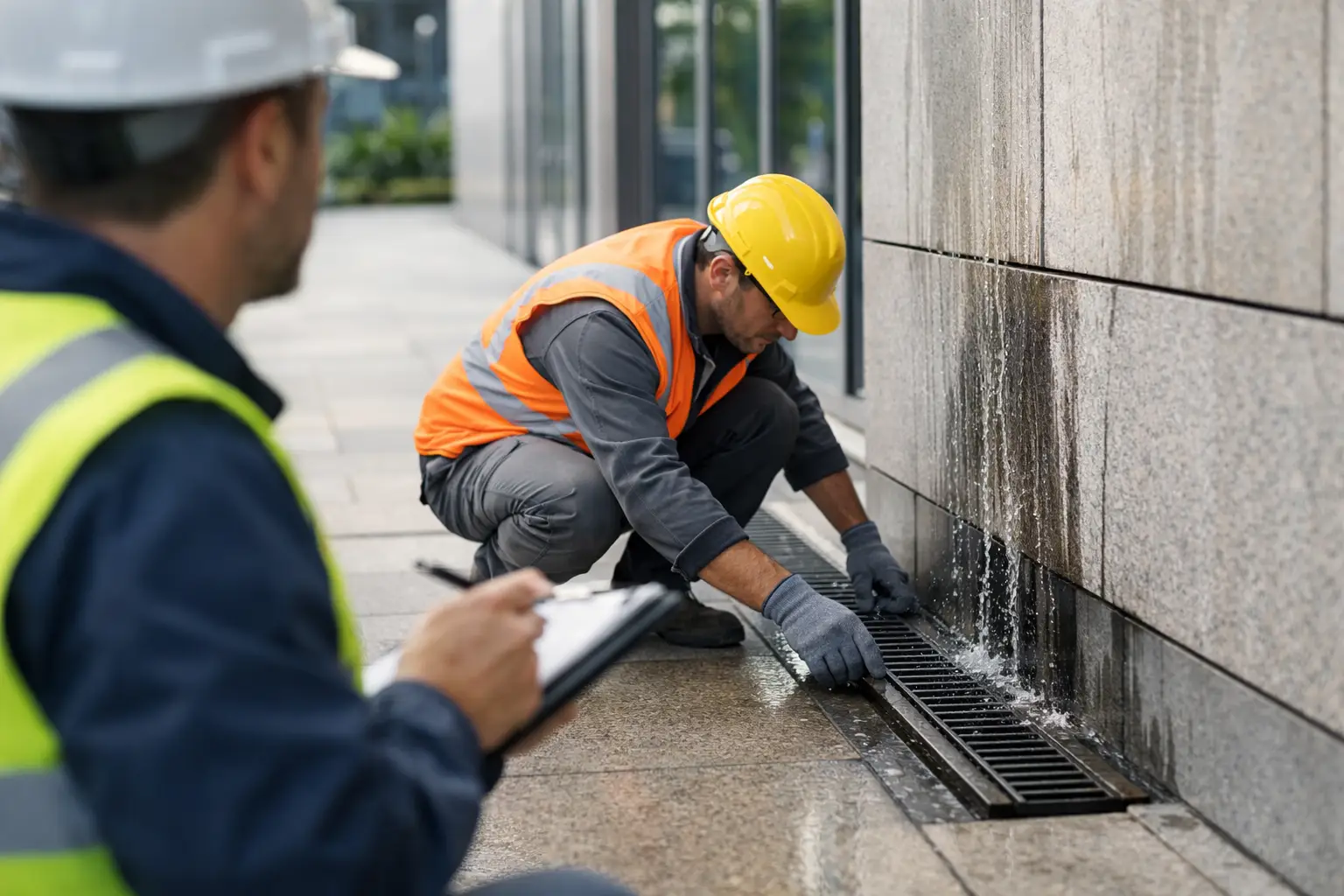
Review earlier leak reports and repair records alongside the current condition; recurring defects often reveal a source that a surface treatment will not solve.
For building managers, this matters far beyond convenience. Exterior defects rarely stay cosmetic for long in Malaysia’s climate. Dirt retention, failed sealant joints, staining, water intrusion, and localized concrete or coating issues tend to worsen when they are hard to inspect and harder to reach. Rope access makes targeted facade work possible before small issues spread across a larger elevation.
Why rope access Malaysia is increasingly used on high-rise buildings
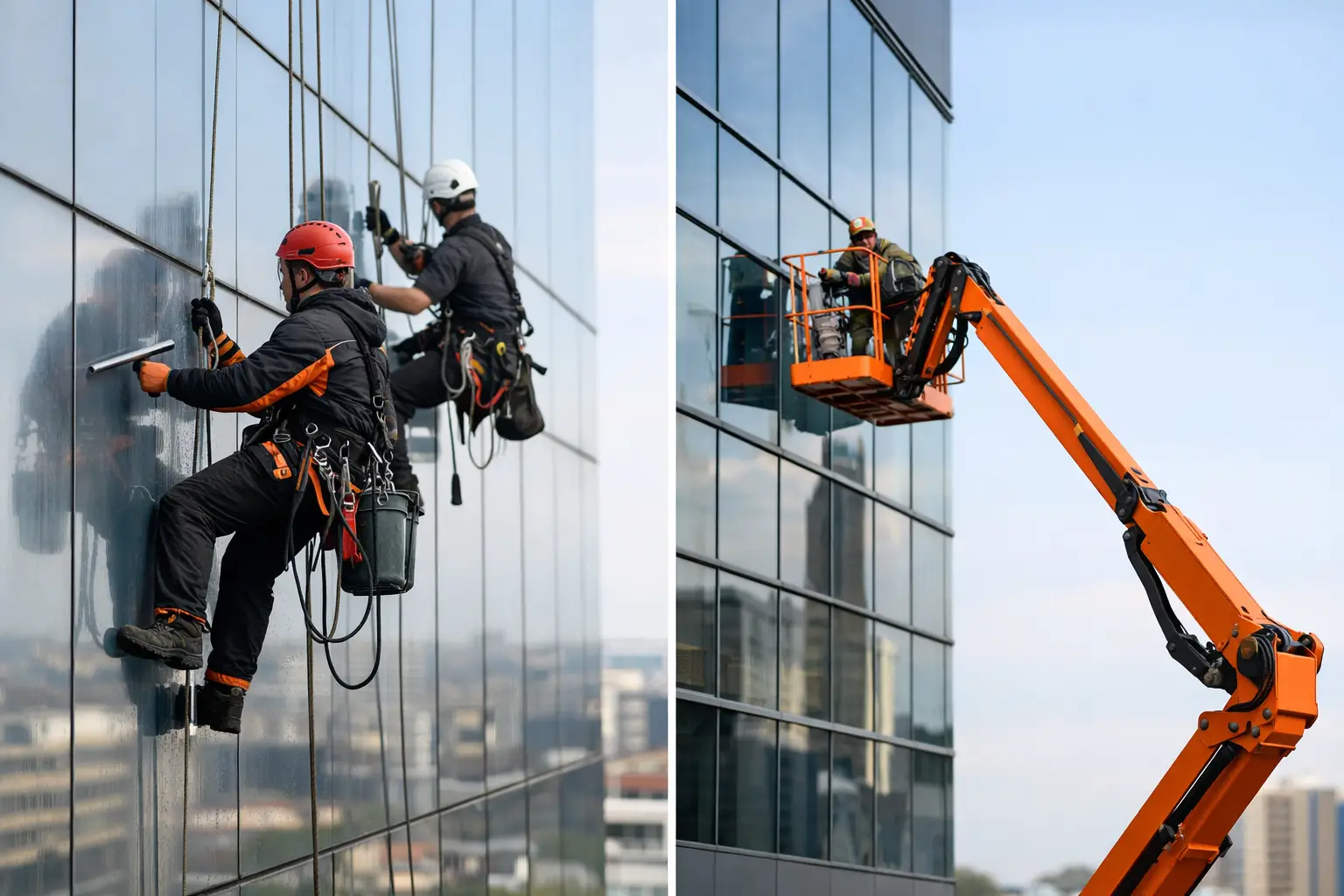
In dense urban environments, access planning can be as challenging as the repair itself. Suspended platforms and scaffolding still have their place, especially for large-scale or repetitive facade works. But they are not always the most efficient option for every building or every defect.
Rope access is especially useful when the work area is isolated, the facade geometry is irregular, or the site has limited ground space. Buildings with architectural fins, recessed elevations, stepped forms, glazed sections, or tight setbacks often benefit from a method that allows technicians to move precisely to the affected area. Instead of building access around the entire facade, teams can focus on the exact zone that needs inspection, cleaning, or restoration.
That flexibility is one reason rope access is widely used for facade cleaning, sealant replacement, crack inspection, coating touch-ups, leak investigations, and defect mapping. It is not a shortcut. It is a specialized access method that depends on planning, competent technicians, and a clear understanding of the building envelope.
What rope access actually means for facade work
Rope access is a work-at-height system where trained technicians descend or position themselves using ropes and associated safety equipment to carry out inspection or maintenance tasks. In facade maintenance, the key advantage is precision. Teams can access narrow vertical zones, isolated defects, and difficult transitions between materials without setting up broad temporary structures across the whole building.
That precision matters on facades because building exteriors are rarely uniform. A tower may combine curtain wall sections, painted concrete bands, stone cladding, movement joints, ledges, metal features, and decorative elements across one elevation. Different materials weather differently, and they fail differently too. An access system that lets specialists closely inspect these transitions often leads to better diagnosis and more accurate maintenance decisions.
This is also where facade-focused contractors differ from general access providers. Access alone does not solve the problem. The value comes from pairing safe access with technical understanding of how exterior systems age, how moisture behaves at the envelope, and how maintenance work should be performed without creating new damage.
Where rope access is the right fit
Rope access is well suited to localized repairs, investigation work, routine facade cleaning in selected zones, and maintenance on elevations that are difficult to reach from the ground. It can also be effective for condition assessments on buildings where owners need better visibility into facade performance before planning broader remedial work.
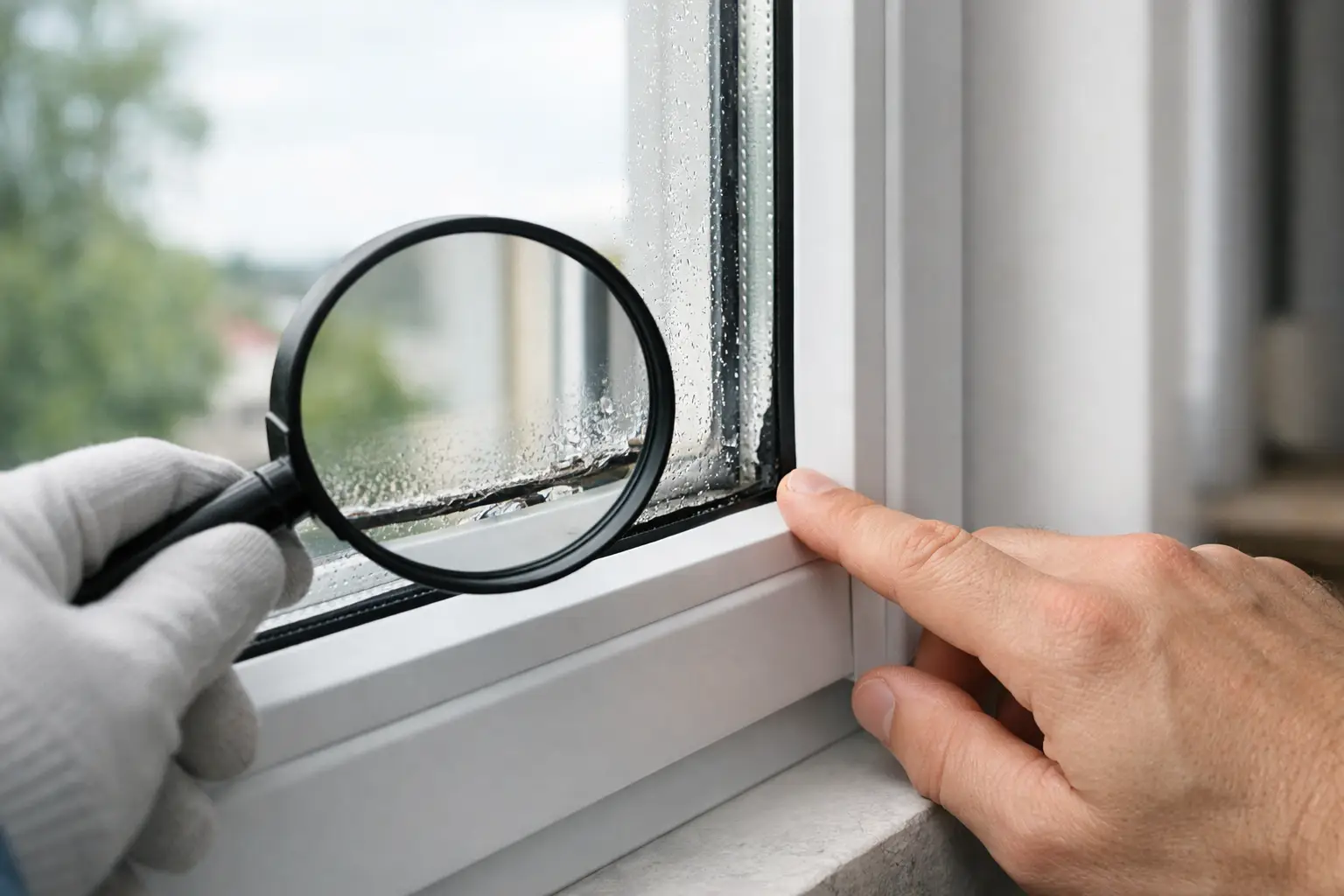
In practice, this often includes checking cracked sealant at expansion joints, tracing water entry paths, removing staining from upper-level facade sections, inspecting loose elements, or carrying out isolated restoration work at height. On occupied office and residential properties, the ability to complete this work with a smaller site footprint can be a significant operational advantage.
Where it may not be the best choice
There are trade-offs. If a project involves extensive replacement across a large continuous facade area, another access method may be more suitable. The same applies when work requires heavy materials, long-duration static positioning, or substantial on-face equipment. The right choice depends on the scope, the building form, the facade system, and the nature of the defect.
A dependable contractor should be clear about that. Rope access is highly effective, but only when it matches the task.
The facade issues it helps address
For many Malaysian properties, facade deterioration is not driven by a single event. It builds gradually through moisture, heat, UV exposure, air pollution, biological growth, and deferred maintenance. These pressures show up in different ways depending on the building age and material system.
On painted or rendered surfaces, discoloration and coating breakdown are common. On glazed and metal facades, runoff marks, gasket wear, and failed sealant can become visible over time. Concrete facades may develop cracks, spalling risk, or localized staining linked to water movement. Heritage and architecturally sensitive buildings often require careful cleaning and repair methods that protect original finishes rather than treating the surface aggressively.
Rope access supports these situations by allowing close, hands-on assessment. Rather than relying only on visual review from the ground, technicians can inspect the actual defect location, document its condition, and carry out targeted corrective work. That helps property stakeholders move from assumption to evidence, which is essential when maintenance planning needs to be justified and prioritized.
Safety is not a claim – it is the system
For decision-makers evaluating rope access Malaysia providers, safety should be understood as a full operating system, not a line in a brochure. Work at height on occupied buildings involves risk control, rescue planning, equipment discipline, supervision, and method statements that match the actual facade conditions.
A professional rope access operation starts well before anyone leaves the roof. Anchor assessment, drop zone control, weather monitoring, task-specific procedures, and communication protocols all affect the quality of execution. So does the experience of the technicians carrying out the work. A clean descent is not the same as competent facade maintenance.
This is particularly important in active commercial and residential environments, where exterior works must be done without creating hazards for occupants, pedestrians, vehicles, or neighboring properties. Buildings in Kuala Lumpur, Selangor, Johor, and Penang often present these constraints because sites are tight, surrounding traffic is active, and operations cannot simply pause for maintenance.
What building managers should look for in a rope access contractor
The first question is not whether the contractor can get onto the facade. It is whether they understand what they are looking at once they are there. Facade work requires material awareness, defect recognition, and the judgment to distinguish between surface-level issues and signs of deeper envelope failure.
It also helps to look for a contractor who can explain the maintenance objective clearly. Are they inspecting for water ingress, restoring appearance, removing deposits that may accelerate deterioration, or verifying the condition of joints and surface finishes? The clearer the objective, the more useful the access method becomes.
Documentation is another practical consideration. Decision-makers often need records for internal planning, consultant review, or future maintenance cycles. A contractor who can connect field access with clear observations, defect mapping, and service recommendations adds far more value than one who only completes the immediate task.
This is the approach specialist facade companies bring to the work. The goal is not simply to reach difficult areas. It is to protect the building exterior in a way that supports longevity, appearance, and safer long-term performance.
Why rope access works well in maintenance planning
One of the most useful aspects of rope access is that it supports a more proactive maintenance model. Instead of waiting until facade issues become visible from street level or serious enough to trigger complaints, owners can inspect and address exposed areas earlier.
That is especially relevant for buildings with recurring leak points, visible staining patterns, aging joints, or facade elements that have been difficult to review closely. Early intervention does not eliminate every major repair need, but it can reduce the chance that neglected localized defects will expand into more disruptive building envelope problems.
For facility teams, this also creates a more realistic path to phased maintenance. Not every building needs full-scale facade intervention at once. In many cases, targeted rope access works can stabilize vulnerable areas, improve appearance in prominent elevations, and provide a stronger technical basis for future planning.
Facade care is often judged by what people can see from the outside, but good maintenance starts with what experienced specialists can access, assess, and resolve before the damage spreads. When the building is tall, occupied, and exposed to year-round environmental stress, the smartest maintenance decision is often the one that makes the facade truly reachable.
Planning checklist for building managers
| Item to confirm | Why it matters |
|---|---|
| Exact elevation and work scope | Determines technician positioning, tools and material handling |
| Anchor and roof-access condition | Confirms whether the proposed system can be safely installed |
| Public and tenant protection | Controls falling-object exposure and occupied entrances |
| Weather limits | Defines when work must stop because of wind, rain or lightning |
| Rescue arrangements | Ensures a practical response for the actual work position |
Frequently asked questions
Can rope access be used while a building remains occupied?
Often yes, provided entrances, public areas, noise, falling-object controls and work timing are coordinated with building management.
Does every rope access job use the same setup?
No. Anchors, deviations, edge protection, rescue arrangements and technician positioning depend on the building and task.
Request an access assessment
Refer to DOSH Malaysia’s work-at-height information, then ask Vertical Pro to assess the facade and work scope.
Leave a Reply