
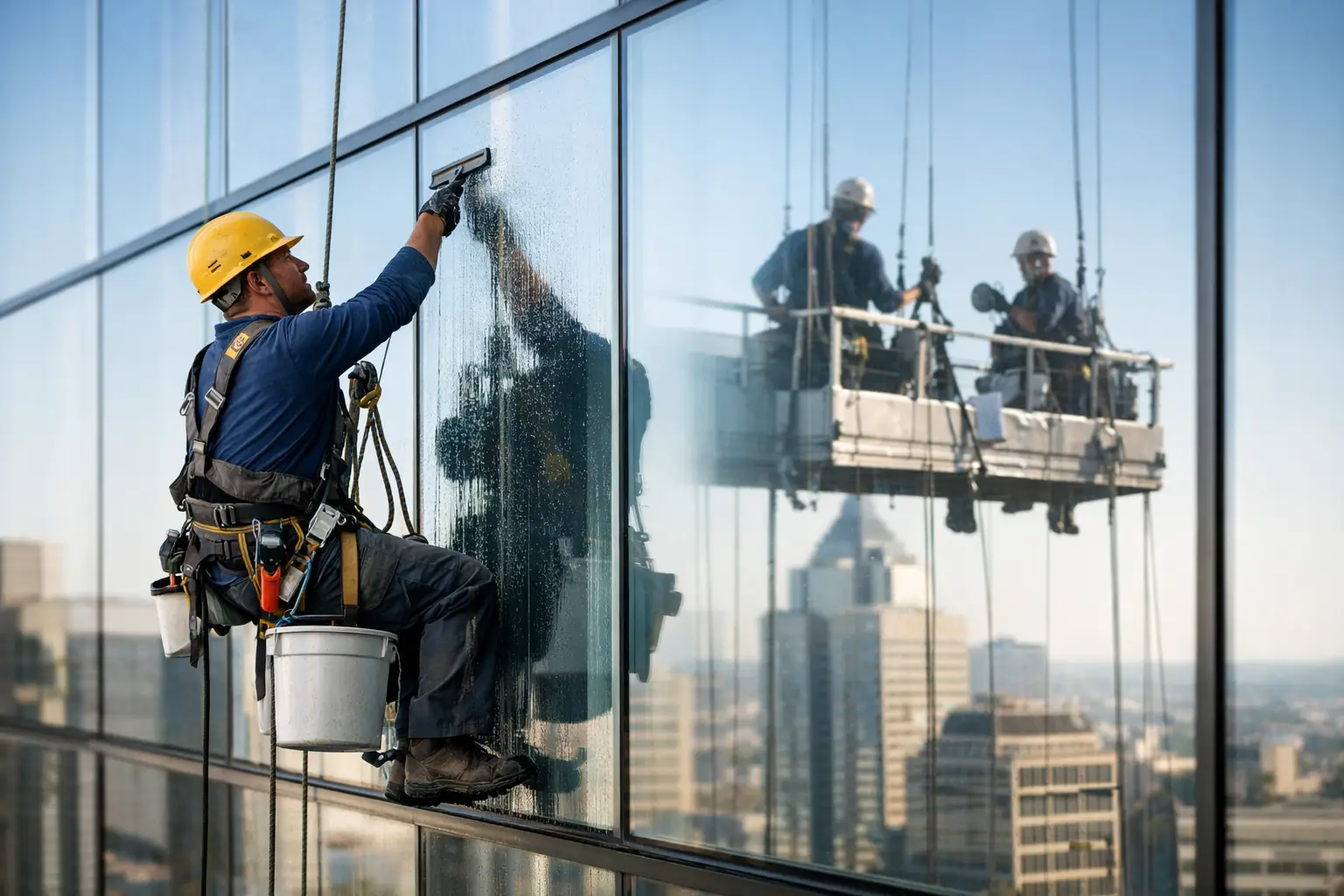
A glass facade can lose its impact long before anyone notices a leak, failed seal, or panel defect. In many buildings, the first visible sign of neglect is simply a dull exterior. Glass curtain wall cleaning is not just about appearance. It is part of preserving facade performance, supporting safe access planning, and reducing the risk that small exterior issues go unseen for too long.
For commercial towers, residential high-rises, and mixed-use developments, that matters. Curtain wall systems are exposed every day to dust, traffic film, rain residue, airborne pollutants, organic staining, and in tropical environments, constant moisture. When buildup is left in place, the facade does not just look tired. Inspection becomes harder, maintenance becomes less precise, and the building starts losing value in ways that are both visual and operational.
Why glass curtain wall cleaning matters
Curtain walls are engineered systems, not simple outer skins. They combine glass, framing, sealants, gaskets, anchors, and movement joints into one continuous envelope. When the exterior is covered with grime or staining, building teams can miss early warning signs such as failed sealant lines, corrosion at metal elements, drainage issues, hairline cracks, or displaced components.
That is why cleaning should be treated as part of facade care, not a cosmetic extra. A clean surface allows more accurate visual review. It helps maintenance teams identify problem areas before they become disruptive. It also supports the image of the property, which matters for tenant confidence, visitor impression, and overall asset positioning.
In cities with heavy traffic, high humidity, and frequent rain, facade soiling can develop faster than many owners expect. Rain does not truly clean a curtain wall. It often redistributes dirt, leaves mineral traces, and creates runoff marks around frames and joints. Over time, the pattern becomes uneven, especially on elevations with different sun and wind exposure.
What builds up on curtain wall glass
Not all facade dirt is the same, and that affects how cleaning should be carried out. Urban dust and vehicle emissions often create a persistent film that reduces clarity and brightness. Hard water spotting can leave mineral deposits that bond more stubbornly to glass. Organic matter from nearby trees or rooftop activity may cause localized staining. Construction residue can also remain on newer buildings if post-completion cleaning was incomplete.
The framing system matters too. Aluminum mullions, pressure plates, cover caps, and sealant lines respond differently to moisture and contamination than the glass itself. A method that works on one material may be too aggressive for another. This is one reason facade cleaning should not be approached as generic window washing on a larger scale.
On high-rise buildings, the challenge is rarely just the dirt. The challenge is cleaning the system thoroughly without damaging coatings, disturbing joints, or creating avoidable safety risks during access.
Glass curtain wall cleaning requires the right method
The best cleaning approach depends on facade design, height, access conditions, contamination level, and the condition of the materials. There is no single method that suits every building. Some properties need routine maintenance cleaning to control normal environmental buildup. Others require more careful restorative work because staining has been left too long or the facade includes sensitive surfaces.
A professional process usually starts with assessment. The team needs to understand the facade type, identify any visible defects, review access options, and determine whether there are areas where cleaning could expose underlying maintenance issues. This step is particularly important on older towers and buildings with mixed facade materials.
Cleaning agents should be selected for compatibility with the glass, metal finishes, and sealants. Overly harsh chemicals can create etching, discoloration, or deterioration at joints. Mechanical methods also need control. Excessive abrasion can mark glass or degrade protective finishes. Even water-fed cleaning has limits if the facade has stubborn mineral deposits or if the building geometry creates inconsistent contact at the surface.
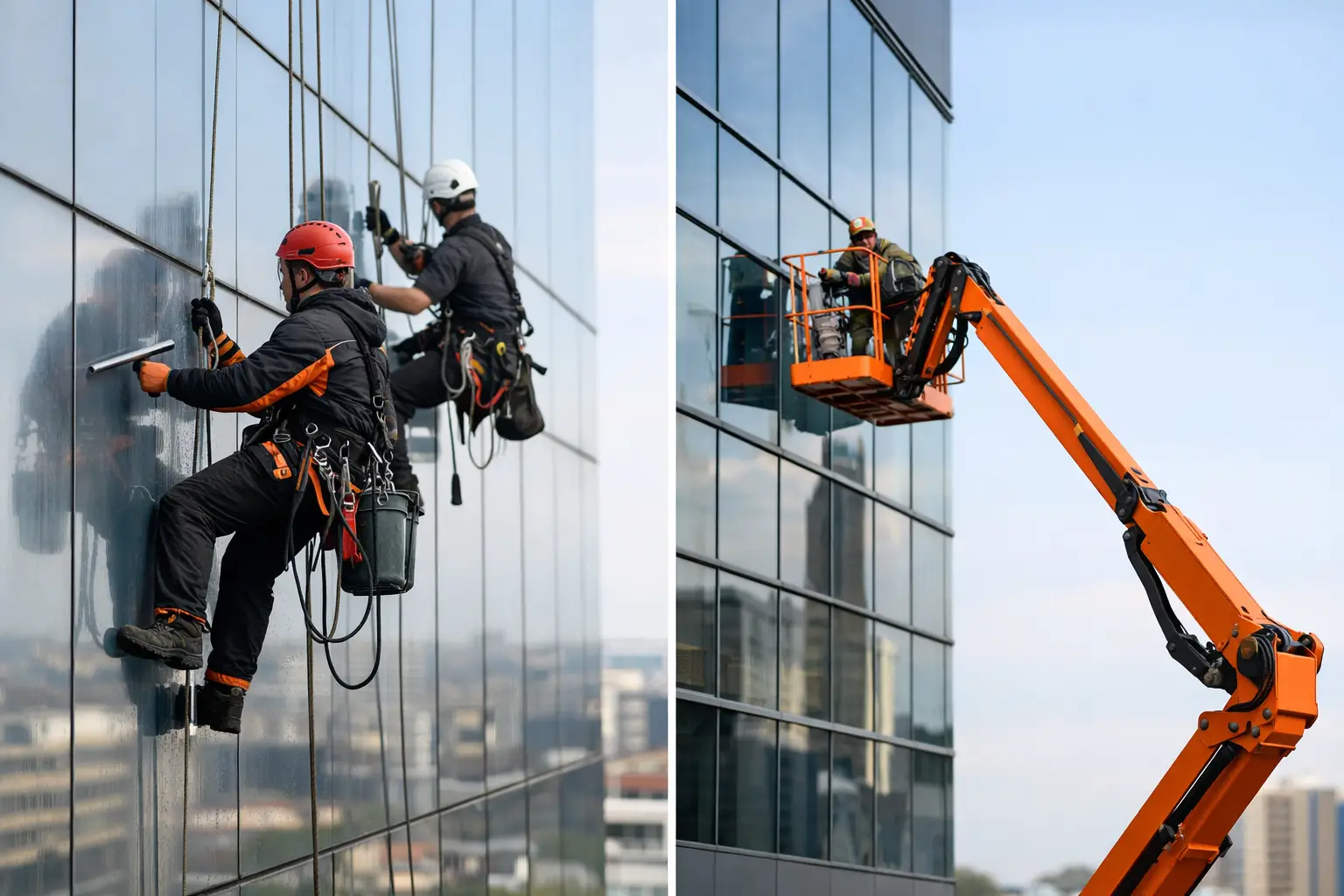
For complex elevations, rope access is often the most practical solution. It allows skilled technicians to reach difficult areas efficiently while maintaining close control over the work. On buildings with setbacks, fins, recesses, or architectural features, this can provide better cleaning coverage than methods that rely only on conventional access equipment. The right access strategy improves both cleaning quality and inspection visibility.
Common mistakes in curtain wall cleaning
One of the most common mistakes is treating all exterior glass as if it behaves the same way. Curtain wall glass may include coatings, laminated assemblies, insulated glazing units, or specialized performance treatments. Cleaning without understanding those specifications can shorten the life of the facade instead of protecting it.
Another mistake is extending cleaning intervals too far. Many owners wait until the building looks obviously dirty, but by then, contamination may be harder to remove and more likely to leave permanent visual effects. Longer intervals can also delay the discovery of failed sealants, drainage staining, or localized deterioration around framing connections.
There is also a planning mistake that appears often in occupied buildings. If facade cleaning is treated as a one-off reactive task, it may be scheduled without regard to tenant activity, weather exposure, or inspection needs. A better approach is to align cleaning with broader facade maintenance planning so the work supports both presentation and technical oversight.
How cleaning supports facade inspections
A clean curtain wall gives building managers a clearer picture of what is actually happening at the envelope. This is especially valuable for high-rise properties where close-range visual access is limited. Once grime and residue are removed, technicians can better identify cracked sealant, failed weather lines, loose trim, impact damage, corrosion staining, and signs of water path issues.
That makes glass curtain wall cleaning a useful companion to regular facade inspection programs. Cleaning creates the visibility needed for early intervention. It is far easier to schedule targeted maintenance when issues are found early than to respond later after water ingress, tenant complaints, or visible facade deterioration has spread.
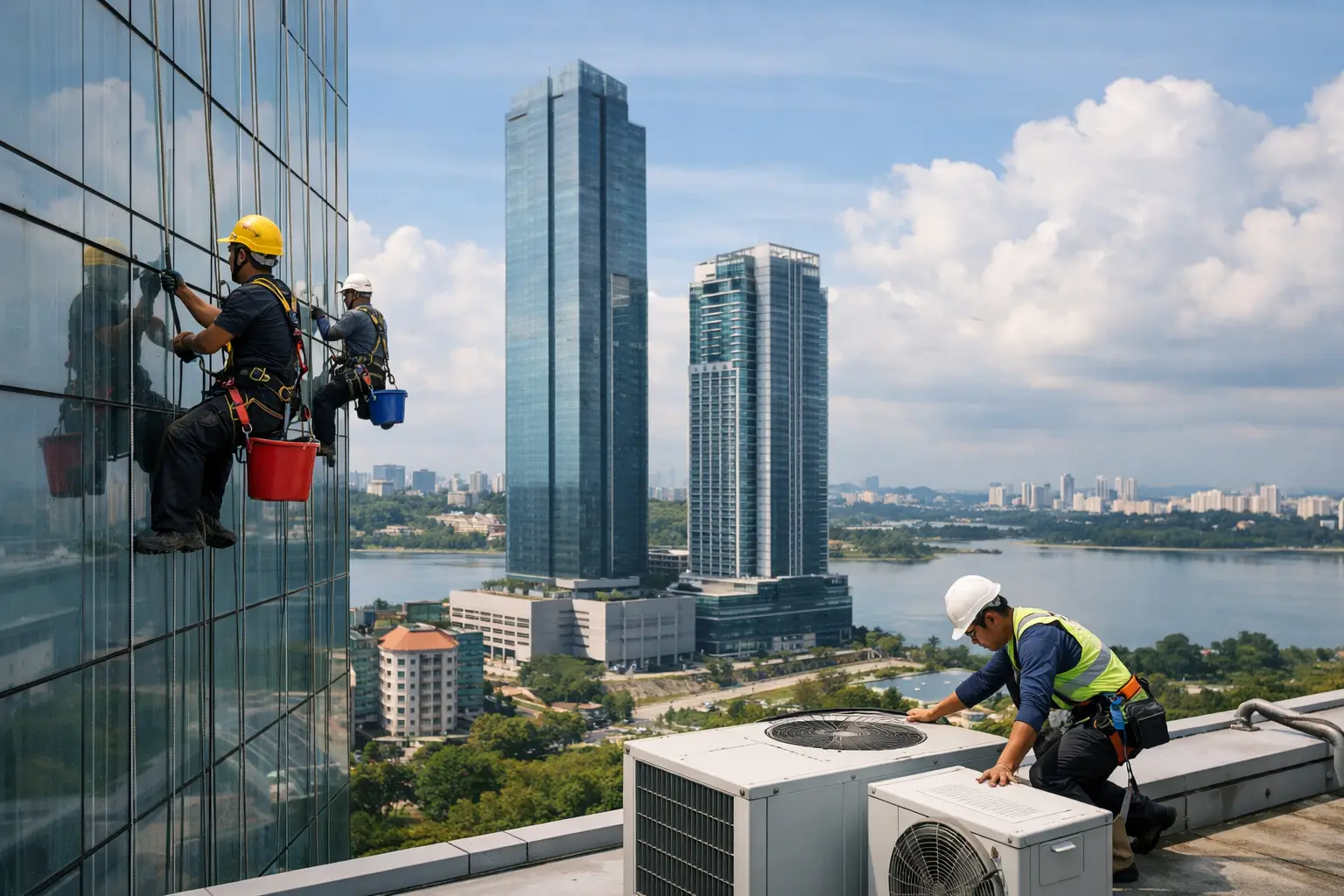
For buildings in Malaysia, this matters even more because heat, heavy rain, humidity, and pollution can accelerate wear patterns on the exterior. Facade systems in tropical urban conditions often need a more disciplined maintenance cycle than owners initially assume. Dirt buildup is not just faster. Biological growth, runoff staining, and moisture-related residue can also become more persistent.
What building managers should expect from a professional scope
A professional cleaning program should be more than a crew arriving with tools and water. The work should begin with a review of facade condition, access planning, risk controls, and material sensitivity. On high-rise properties, safe execution is inseparable from technical quality.
Building managers should also expect attention to detail at transitions and edges. Dirt tends to collect around mullions, corners, joints, recesses, and shaded sections where runoff patterns change. These areas often hold the strongest clues about how the facade is aging. If cleaning focuses only on broad glass surfaces and ignores detail zones, the result may look acceptable from a distance while missing the parts that matter most.
Documentation can add real value as well. When technicians report visible defects observed during cleaning, owners gain actionable information rather than a surface-level service result. That helps support maintenance planning and gives facilities teams a clearer record of facade condition over time.
When to schedule glass curtain wall cleaning
The right frequency depends on location, building height, surrounding traffic, exposure to weather, and the image standard expected for the property. A tower near major roads or active commercial districts will usually accumulate film faster than a sheltered residential building in a less exposed setting. Buildings with prominent frontages or premium tenant profiles may also require tighter intervals to maintain presentation.
Seasonal timing can matter too. In periods of intense rain, facades may develop streaking and mineral residue in specific patterns. After nearby construction activity, dust loading can increase sharply. The best schedule is based on building conditions, not a generic calendar.
This is why many asset teams benefit from a facade-specific maintenance plan rather than arranging cleaning only when complaints arise. Planned cleaning supports consistency, reduces reactive decision-making, and helps preserve the long-term condition of the exterior envelope.
A cleaner facade is a better-managed facade
When a curtain wall is maintained properly, the benefits go beyond shine. The building presents better, inspection quality improves, and exterior deterioration is easier to detect before it develops into larger repair work. That is the practical value of professional facade care.
For property owners and managers, glass curtain wall cleaning should be viewed as part of responsible asset stewardship. The facade is one of the most exposed and visible parts of the building, and it has a direct effect on performance, safety oversight, and reputation. When cleaning is done with the right methods, the right access strategy, and a clear understanding of facade materials, it becomes a protective maintenance measure rather than a cosmetic task.
A well-kept curtain wall sends a simple message about the building behind it: this property is being watched carefully, maintained professionally, and protected for the long term.
Discuss the next step
For advice on glass curtain wall cleaning, request a site assessment or quotation from Vertical Pro.
For work above ground level, the scope should include fall prevention and public protection—not only the technical task. See DOSH Malaysia’s fall-prevention guidance for the relevant safety framework.



Leave a Reply