
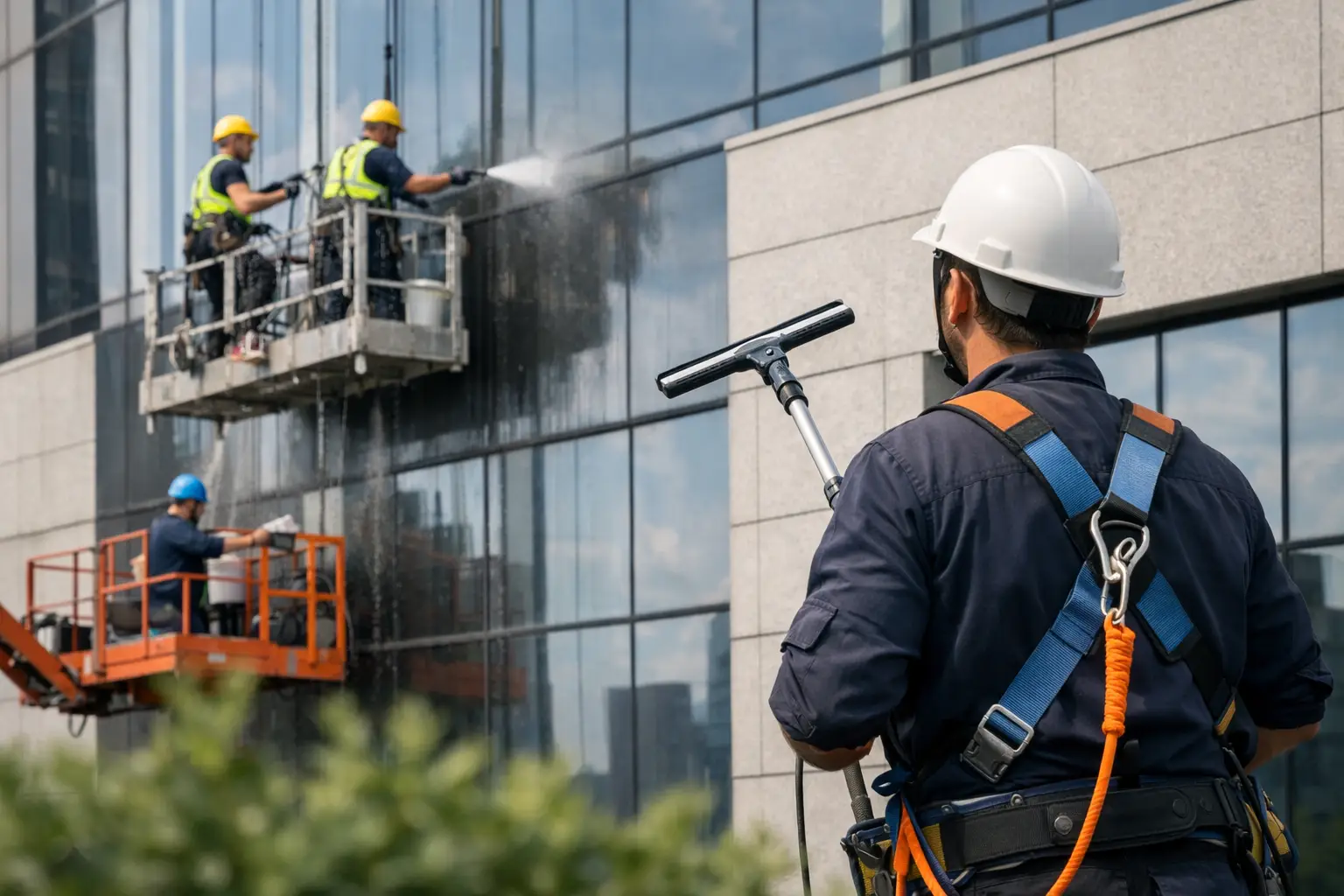
For building facade maintenance, the practical starting point is a condition review that records materials, defects, exposure and access before the scope is fixed.
Facade deterioration usually begins with water staining below a joint, hairline cracks near a slab edge, sealant pulling away at the corners, or panels that no longer sit quite true. For property owners and facility teams asking how to maintain building facade performance over time, the real task is not reacting to visible damage. It is building a disciplined program that catches small exterior issues before they become safety, appearance, or water-ingress problems.
Facade maintenance is part building preservation, part risk management. On a high-rise office tower, it protects the building’s image and reduces disruption to tenants. On a residential complex, it supports resident confidence and helps prevent recurring defects. On older or architecturally significant buildings, it preserves materials that are difficult to replace once deterioration accelerates.
Why building facade maintenance matters
The facade does more than shape first impressions. It acts as the building’s outer barrier against rain, heat, UV exposure, wind, pollutants, and movement caused by temperature change and settlement. In a tropical environment like Malaysia, these stresses are constant. Moisture, biological growth, airborne dirt, and strong sunlight can shorten the service life of coatings, sealants, joints, glazing interfaces, and cladding finishes.
When facade care is delayed, the consequences usually spread beyond the surface. Water can migrate into wall assemblies, corrosion can develop around embedded elements, and loose materials can create hazards at height. What looks cosmetic at first may eventually affect operations, compliance, and long-term repair planning.
This is why effective facade maintenance should be treated as a planned building function, not an occasional cleaning exercise.
How to maintain building facade with a clear plan
If you want to know how to maintain building facade systems properly, start with a maintenance framework rather than a single service. The right plan usually includes routine inspections, condition-based cleaning, timely repairs, documentation, and safe access methods suited to the building’s height and geometry.
Not every building needs the same schedule. A glass-heavy office tower in a dense urban corridor will face different buildup and access challenges than a painted residential block near the coast. The facade material, building age, exposure level, and occupancy profile all influence the maintenance approach.
Start with a baseline condition assessment
Before setting a schedule, establish what condition the facade is in today. This means more than a walk-around from the ground. Elevated sections, setbacks, ledges, joints, corners, sealant lines, anchors, and drainage details all need review. Many facade defects begin in areas that are difficult to see without specialized access.
A proper assessment identifies the materials in use, records active defects, and distinguishes between cosmetic wear and technical deterioration. That distinction matters. Dirt and staining may only require cleaning, while cracks around movement joints or failed perimeter sealants usually need repair to prevent water intrusion.
For older buildings, a baseline survey is especially useful because recurring issues often reveal patterns. Staining below windows, repeated algae growth on shaded elevations, or localized cracking near expansion points can point to underlying maintenance gaps.
Clean on condition, not by guesswork
Facade cleaning plays an important role, but frequency should be based on the building’s environment and material sensitivity. Over-cleaning can be as unhelpful as neglect if the wrong methods damage coatings, sealants, stone, or glazing finishes.
Urban buildings often collect particulate pollution, traffic residue, and organic growth that hold moisture against the surface. If left in place, this buildup can accelerate staining and make inspections less reliable because defects are hidden beneath dirt layers. Regular cleaning keeps the facade presentable, but it also allows maintenance teams to spot cracks, failed joints, and material breakdown earlier.
The cleaning method must match the facade. Glass, aluminum, painted render, natural stone, precast panels, and composite cladding all respond differently to water pressure, detergents, and mechanical abrasion. A controlled, material-specific approach is safer than a one-method-fits-all process.
Inspect joints, sealants, and movement points
Some of the most important facade maintenance work is also the least visible from a distance. Sealants at windows, panel joints, and transitions are often the first line of defense against water penetration. They also tend to degrade earlier than major facade components because they are exposed to sun, rain, movement, and aging.
When sealants lose elasticity, split, shrink, or detach from the substrate, water finds a path inward. The damage may not show on the exterior immediately. Instead, it appears later as interior staining, blistering paint, dampness, or mold complaints.
Movement joints deserve the same attention. Buildings expand and contract, and facades are designed to accommodate that movement. If joints are blocked, damaged, or poorly repaired, stress can transfer into adjacent finishes and create cracks or displacement.
Repair small defects before they multiply
A disciplined facade program treats minor defects as early warnings. Hairline cracks, isolated spalls, loose sealant runs, localized corrosion staining, and detached coating patches are all easier to address when confined to a small area. Once moisture enters and cycles through the assembly, the scope of repair tends to widen.
There is always a judgment call here. Not every crack is structural, and not every stain points to severe failure. But waiting for obvious deterioration is rarely the efficient option. Condition-based repairs are about preventing escalation, protecting adjacent materials, and extending the service life of the facade system.
For building managers, this means documenting defects and tracking whether they are stable, seasonal, or worsening. A recurring issue in the same location usually signals that the root cause has not been resolved.
Common facade problems that should not be ignored
Most facade failures give warning signs. The challenge is recognizing which ones require prompt technical attention.
Water staining is one of the clearest indicators. It often suggests leakage paths, failed joints, blocked drainage, or porous surfaces retaining moisture. Cracking around openings can point to movement stress or aging materials. Rust marks may indicate corrosion of embedded metal or fixings. Bulging, hollow-sounding, or delaminating areas can signal loss of adhesion and should be treated seriously because detached facade elements create safety risks.
Organic growth also deserves attention, especially on shaded or moisture-prone elevations. Algae, moss, and mildew are not just visual issues. They can retain moisture on the surface and gradually affect coatings or finishes if left unmanaged.
Safe access is part of facade maintenance
On mid-rise and high-rise buildings, access is not a side issue. It determines whether inspections and repairs are thorough or superficial. Ground observation and maintenance from easily reached areas only tell part of the story.
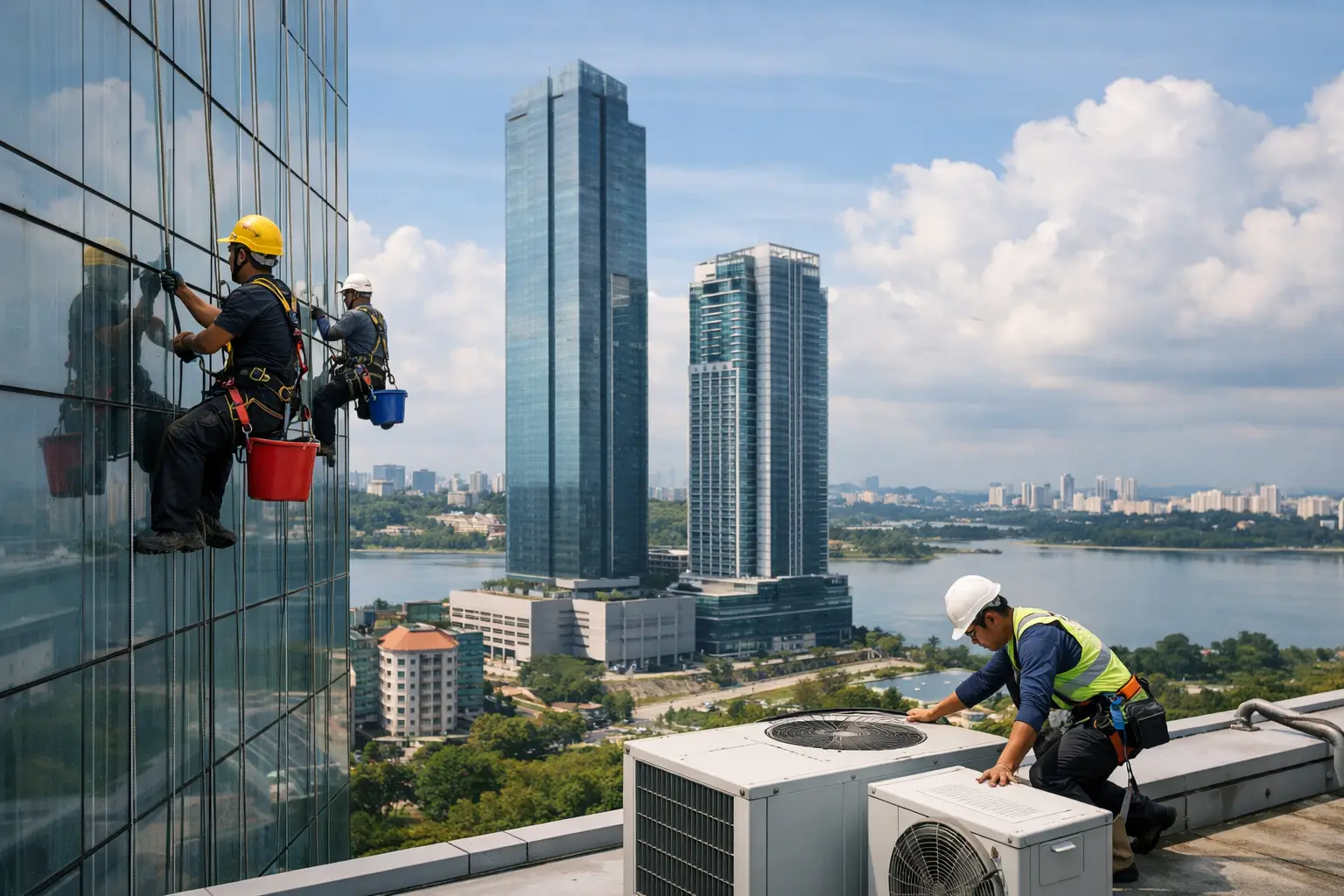
This is where specialized access methods become essential. Rope access, suspended systems, and other height-based solutions allow close inspection of difficult facade zones without the limitations of broad assumptions from below. The right method depends on the building’s form, occupancy, and maintenance objective.
Safety should guide every decision here. Exterior maintenance at height requires trained personnel, method statements, proper equipment, and building-specific planning. For asset owners and management teams, a facade contractor’s access capability is directly tied to maintenance quality.
Documentation makes future maintenance easier
One of the most overlooked parts of facade care is recordkeeping. When inspections, cleaning cycles, defect maps, repair history, and material observations are documented consistently, building teams can make better decisions over time.
This matters because facade deterioration is rarely random. Patterns emerge across elevations, exposure zones, and detail types. With records in place, you can tell whether a repair solved the problem, whether a coating is reaching the end of its service life, or whether certain facade areas need more frequent review.
Documentation is also useful during handovers, capital planning, and consultant reviews. It helps move maintenance decisions away from guesswork and toward evidence.
When a preventive strategy works best
The strongest facade maintenance programs are preventive, not reactive. That does not mean overservicing the building. It means matching inspection intervals, cleaning frequency, and repair timing to actual building conditions.
A newer tower may need close attention to sealant performance and post-construction movement. An aging residential block may require broader restoration planning because several facade elements are degrading at once. Heritage exteriors call for even more care, since aggressive cleaning or unsuitable repairs can damage original materials.
For many building stakeholders, the practical goal is straightforward: preserve appearance, reduce unplanned defects, and maintain a safe exterior envelope without disrupting daily operations. That goal is easier to reach when facade care is treated as a long-term asset strategy.
Facade by Vertical Pro Sdn Bhd works in this space because facade maintenance is not general upkeep. It requires attention to materials, access, weather exposure, and how exterior defects develop over time.
A well-maintained facade sends a clear message about the building behind it. More importantly, it keeps small exterior issues from becoming larger operational ones, which is exactly where good maintenance proves its value.
Discuss the next step
For advice on building facade maintenance, request a site assessment or quotation from Vertical Pro.
A sound rope access plan connects the task, rescue arrangements, supervision and technician competence. These principles are described in IRATA International’s overview of rope access.




Leave a Reply