

A glass facade can look impressive from street level even when early warning signs are already there. Water staining, traffic film, algae growth, sealant residue, and mineral deposits often build gradually, then become much harder to remove without affecting appearance or facade materials. That is why understanding how to clean glass facade systems properly matters for more than appearance alone.
For building owners and facility teams, the real issue is not just getting the glass to look clear again. It is cleaning in a way that protects coatings, surrounding frame systems, sealants, and public safety while keeping disruption under control. On mid-rise and high-rise buildings, the right cleaning method depends on the facade design, the type of contamination, and how the surface can be safely accessed.
Why glass facade cleaning needs a planned approach
Glass is often treated as a simple surface, but most facade systems are not simple in practice. Modern curtain walls and glazed elevations may include tinted glass, laminated panels, low-E coatings, silicone joints, aluminum framing, shadow boxes, vents, fins, and architectural detailing that all react differently to moisture, pressure, chemicals, and abrasion.
A basic wash may remove loose dirt, but it will not always address the underlying issue. In tropical urban environments such as Kuala Lumpur and Selangor, buildings are exposed to heavy rainfall, airborne dust, vehicle emissions, hard water runoff, and biological growth. These factors create layered soiling. If the wrong tools or chemicals are used, the result can be smearing, coating damage, scratched glass, or residue trapped around joints and frame edges.
This is why a proper cleaning plan starts with inspection, not with equipment.
How to clean glass facade surfaces safely
The safest and most effective way to clean a glass facade begins with identifying the condition of the building exterior. Teams should assess the glass type, the height of the structure, the access constraints, the degree of contamination, and any signs of existing facade defects. Cracked panels, failed sealant lines, loose caps, or leaking joints should not be ignored during a cleaning project because water and movement can worsen those problems.
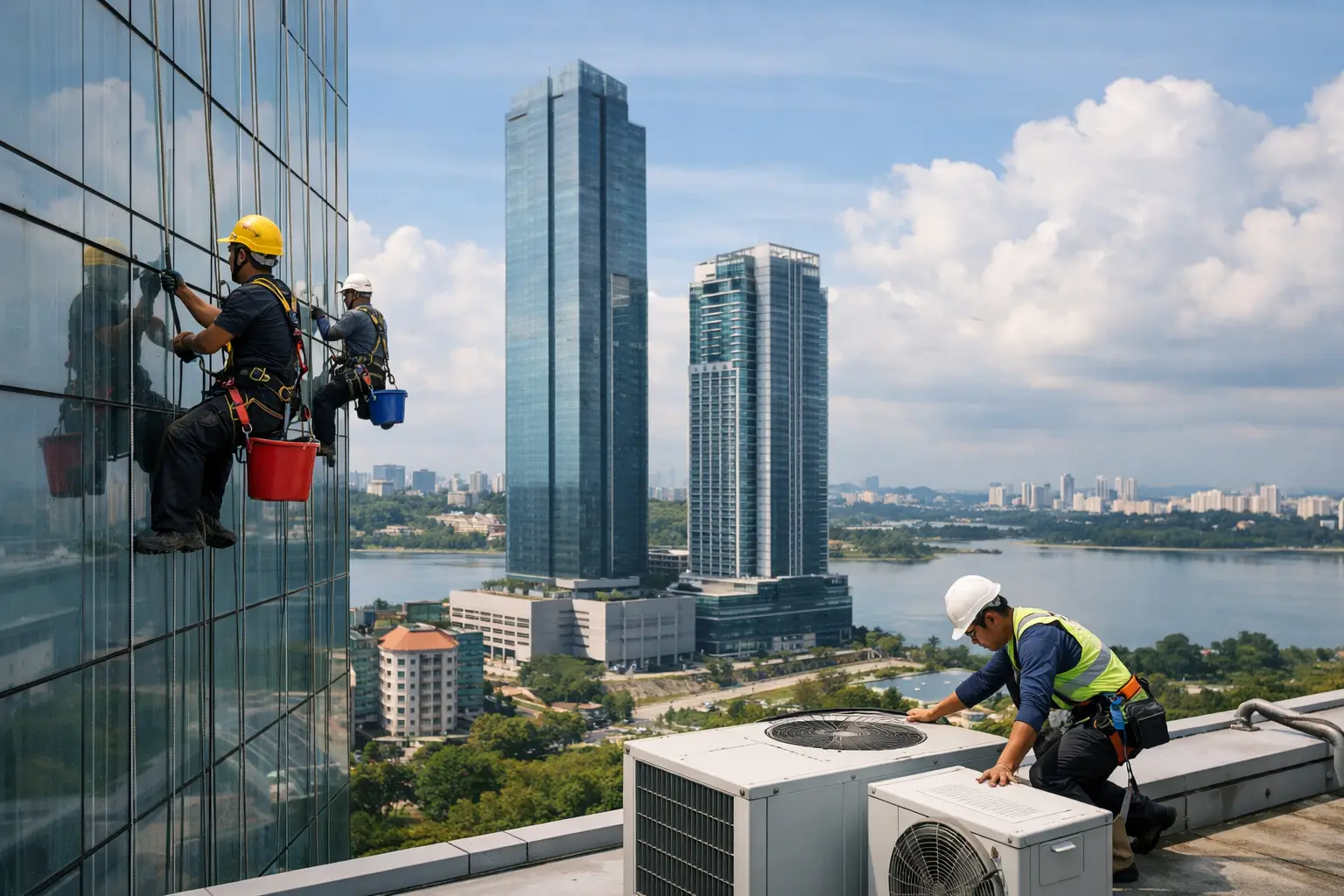
Access is the next major decision. For low-rise areas, boom lifts or suspended platforms may be appropriate. On taller or more complex elevations, rope access is often the most practical method because it allows targeted work on difficult sections with less disruption at ground level. The method should always be selected based on facade geometry, site conditions, and safety controls rather than convenience alone.
Before any full cleaning starts, a small test area should be completed. This helps confirm whether the chosen cleaning agent, agitation method, and rinse process will remove the contamination without marking the surface. It also helps identify whether the staining is superficial or if there is permanent etching that cleaning alone cannot reverse.
Start with dry and low-impact cleaning
The first stage is usually the least aggressive one. Loose dust, sand, and dry debris should be removed before applying water or detergent. If this step is skipped, debris can drag across the glass during washing and create fine scratches. Soft brushes, microfiber tools, and controlled water-fed systems are generally preferred over anything abrasive.
For routine dirt and atmospheric film, purified water and non-abrasive glass-safe detergents are often enough. The goal is to lift contamination, not grind it off. Work should move in a consistent pattern so runoff does not redeposit dirt on already cleaned sections.
It depends, however, on the source of staining. If the facade is exposed to hard water runoff from slabs or fins, the problem may be mineral-based rather than dust-based. In that case, a standard wash may improve the appearance only temporarily.
Treat stains based on the contamination type
Not all facade stains should be handled the same way. Traffic film and general urban grime usually respond well to controlled washing with a suitable detergent. Mineral deposits, cement splashes, oxidation runoff, and silicone smears require much more care.
Hard water stains are a common issue on glass facades. These deposits often need specialized treatment because minerals bond to the surface over time. If crews use aggressive scrapers or harsh acidic products without checking compatibility, they may damage adjacent metal finishes or leave visible marks on the glass.
Biological growth also needs the right approach. In shaded or moisture-prone elevations, algae or mildew can develop around joints and frame edges. Cleaning should remove the growth and address the residue, but teams also need to consider why moisture is lingering in that area. Sometimes the cleaning process reveals drainage or sealant issues that should be corrected as part of broader facade maintenance.
Construction-related staining is another category entirely. Paint, sealant residue, grout haze, and adhesive marks often require specialist removal methods. This is where many cleaning attempts go wrong, especially when hard tools are used on coated or heat-treated glass.
Protect the full facade system, not just the glass
A glass facade does not perform as an isolated panel. The surrounding gasket, sealant, frame finish, anchors, and drainage paths all matter. Cleaning crews should avoid saturating vulnerable joints, forcing water into failed seals, or using chemicals that can discolor metal components.
This is especially important on older buildings and heritage-sensitive properties where previous repairs, replacement panels, or aging sealants may react unpredictably. A technically sound facade cleaning program looks at the whole envelope and adjusts the method to suit the condition of the building.
That is also why inspection during cleaning is valuable. Exterior access gives a rare close-up view of areas that building teams cannot monitor from the ground. Staining patterns, failed weather seals, loose fittings, and facade movement indicators may become visible during the cleaning process. When documented properly, those observations can help prevent larger maintenance issues later.
Weather and site conditions matter more than many teams expect
Cleaning quality is heavily affected by environmental conditions. Direct sun can dry cleaning solution too quickly and leave streaking. Wind can affect rope access work, overspray control, and public safety management. Rain may appear helpful, but it can interfere with chemical dwell time and leave inconsistent rinse results.
In Malaysia, weather planning is part of facade maintenance, not an afterthought. High humidity, sudden rainfall, and urban pollution all influence how often a facade needs attention and which methods are practical. Buildings near major roads or construction activity may require more frequent cleaning because particles accumulate faster and bond more firmly to exterior surfaces.
Site logistics also matter. Pedestrian routes, vehicle circulation, retail frontages, and tenant operations need to be considered before access equipment is installed or descent work begins. A professional team will plan exclusion zones, work sequencing, and communication in advance so cleaning can proceed without creating unnecessary disruption.
When routine cleaning is enough and when specialist support is needed
Some low-rise glass areas can be maintained with a straightforward scheduled wash, provided the team uses compatible tools and follows safe access procedures. But once the facade is high, architecturally complex, heavily stained, or showing signs of deterioration, specialist involvement becomes necessary.
The difference is not just about working at height. It is about understanding facade materials, contamination behavior, and the risks of applying the wrong method to the wrong surface. Rope access technicians and facade specialists are trained to work in difficult positions while maintaining control over tools, water use, and surface treatment. That makes a significant difference on towers, mixed-material facades, and buildings with limited access points.
For asset owners and managers, this becomes a building performance issue. Poor facade cleaning can shorten material life, leave visible defects, and create avoidable maintenance problems. Proper cleaning supports presentation, tenant confidence, and long-term envelope care.
Build cleaning into a maintenance cycle
The best results come when cleaning is not treated as a one-time correction after the building already looks neglected. A planned cycle helps remove contamination before it becomes stubborn, reduces the need for aggressive treatment, and creates regular opportunities to inspect the facade up close.
Frequency depends on building use, exposure, nearby pollution sources, and design features that trap runoff or debris. Glass under overhangs may weather differently from fully exposed elevations. Decorative fins and ledges may create concentrated staining below them. Towers near highways or dense urban corridors often need closer monitoring than sheltered sites.
A maintenance cycle should also record recurring stain patterns and defect locations. If the same area repeatedly shows mineral trails or biological growth, the root cause may be drainage, sealant failure, or water discharge from another facade element. Cleaning restores clarity, but pattern tracking helps solve the underlying problem.
Facade by Vertical Pro Sdn Bhd approaches this as part of broader exterior asset care, where cleaning is not isolated from inspection, access planning, and long-term facade preservation.
A clear facade reflects more than light. It shows that the building is being managed with attention, technical discipline, and respect for the materials that protect it every day. When the cleaning method matches the facade system, the result is not just a better-looking exterior but a building that stays in better condition over time.
Discuss the next step
For advice on glass facade cleaning, request a site assessment or quotation from Vertical Pro.
A technically correct repair can still be poorly planned if safe access is treated as an afterthought. DOSH Malaysia’s fall-prevention guidance provides a structured basis for the work-at-height plan.




Leave a Reply