
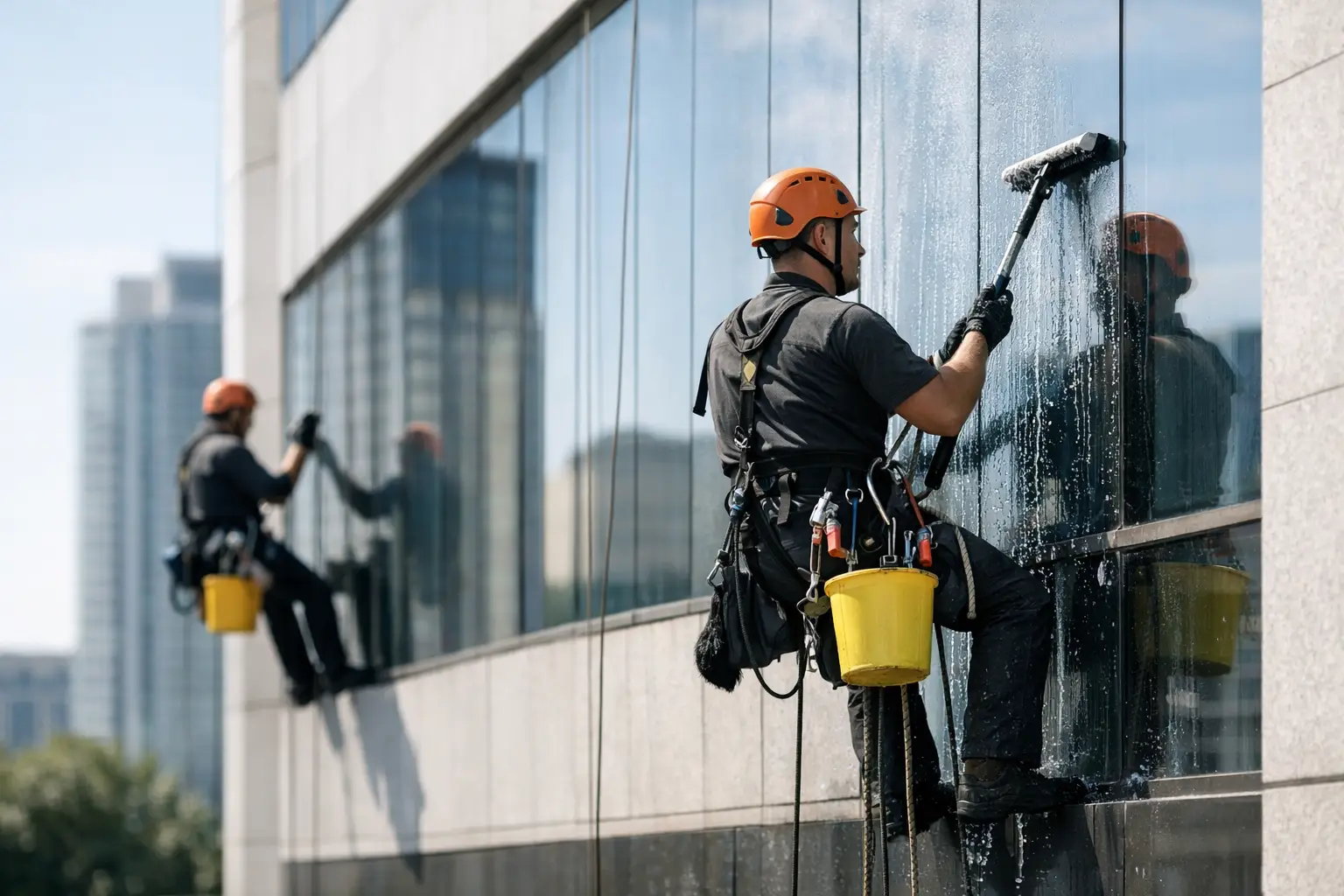
Facade deterioration is usually gradual. It dulls, streaks, stains, traps moisture, and gradually starts sending signals that the building envelope is under stress. That is why building facade cleaning should be treated as part of asset care, not as a cosmetic task handled only when the exterior looks neglected.
For commercial towers, residential developments, and prominent urban properties, facade condition affects more than appearance. It influences tenant perception, maintenance planning, inspection outcomes, and the long-term performance of exterior materials. In a tropical environment with frequent rain, high humidity, airborne pollutants, and biological growth, delay usually makes the next intervention more complex.
Why building facade cleaning matters beyond appearance
A clean facade presents well, but the deeper value is diagnostic and preventive. Dirt buildup can hide early signs of movement, failed sealant, staining from water ingress, corrosion around fixings, or localized deterioration on coating systems. When surfaces are regularly cleaned, those issues become easier to spot before they develop into larger repair work.
There is also a material preservation issue. Pollutants, algae, mineral deposits, and trapped organic matter do not affect every facade the same way, but they rarely improve with time. Glass can become permanently marked. Painted surfaces can lose consistency. Natural stone can stain. Metal panels may show accelerated wear where contaminants sit too long, especially around joints and edges.
For building managers and asset owners, this makes cleaning part of a broader maintenance strategy. It supports visual standards, yes, but it also helps preserve the service life of facade components and creates better conditions for inspections and remedial work.
What causes facades to deteriorate faster
Not every building accumulates dirt in the same pattern. Elevation, orientation, surrounding traffic, nearby construction activity, drainage behavior, and facade design all shape how contamination develops.
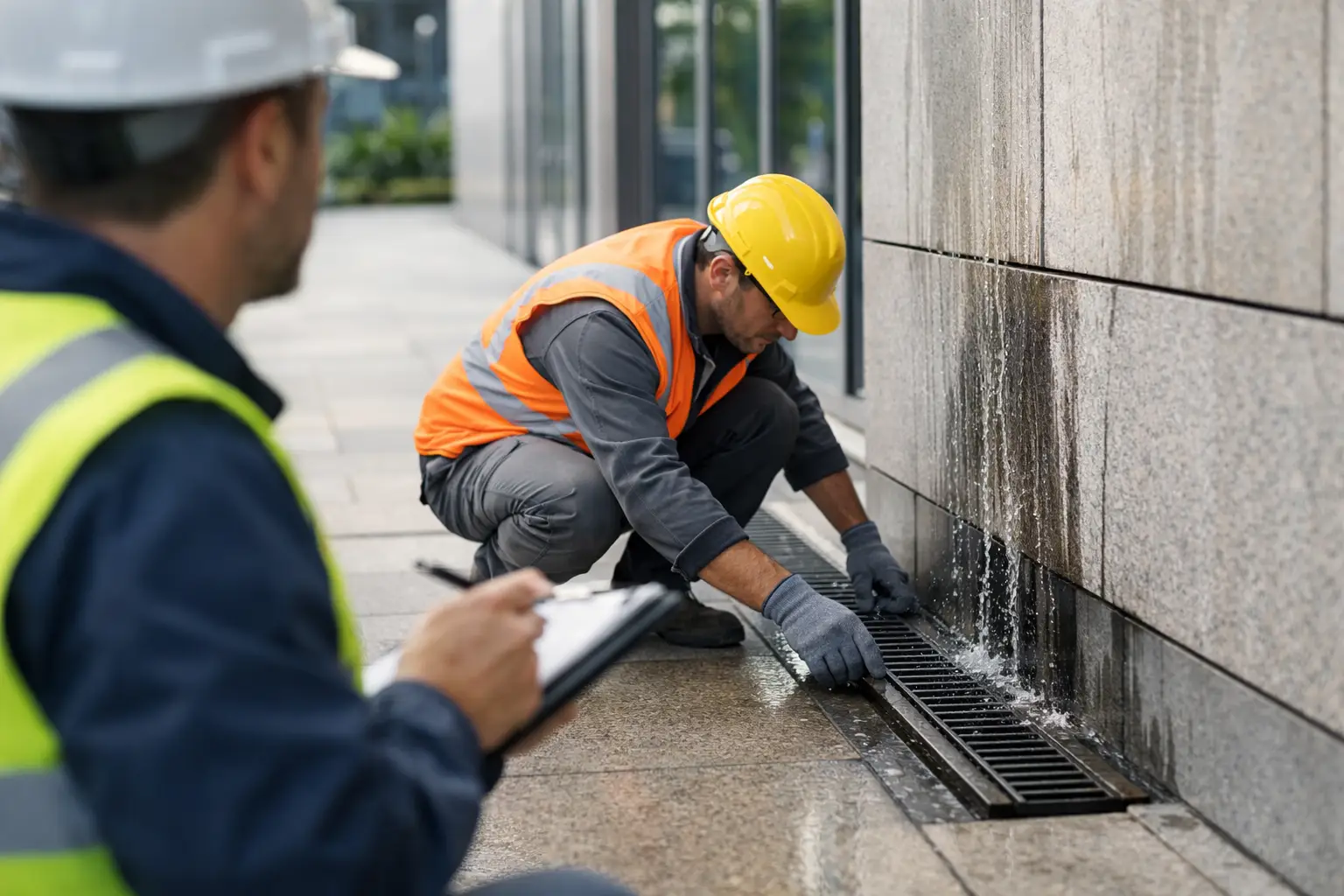
In dense urban areas, airborne pollution often leaves a gray film on glass, aluminum, and coated surfaces. On shaded or moisture-prone elevations, algae and mildew can become more dominant. Buildings with poor runoff control may develop concentrated staining below ledges, around expansion joints, or under failed sealant lines. Even modern curtain wall systems can show uneven dirt retention where water movement is not well managed.
Design details matter too. Deep recesses, horizontal projections, decorative fins, and complex facade geometry often trap more moisture and debris than flat surfaces. Heritage and architecturally sensitive buildings add another layer of complexity because aggressive cleaning can do more harm than the dirt itself.
This is where experience matters. A cleaning plan should respond to the facade system, the environmental exposure, and the condition already present on the building.
Building facade cleaning methods are not one-size-fits-all
The right method depends on the substrate, the contamination type, and the condition of the facade. That sounds straightforward, but in practice it is where many poor outcomes begin. A method that works on one building may damage another.
Water-fed cleaning can be appropriate for lighter soiling on glass and certain cladding types. Low-pressure washing may help remove surface contaminants when the material and detailing can tolerate it. For more persistent staining, targeted chemical treatment may be necessary, but only with proper compatibility checks and controlled application. On sensitive surfaces, hand-cleaning is often the safer choice even if it takes more time.
The trade-off is simple. Faster methods can cover large elevations efficiently, but they are not automatically the best option. Delicate finishes, aged sealants, oxidized coatings, or heritage materials often require a more controlled approach. Using excessive pressure or unsuitable chemicals can etch surfaces, strip protective finishes, worsen staining, or force water into vulnerable areas.
Professional facade cleaning begins with identifying what the surface is, what is on it, and what condition it is already in. Without that assessment, cleaning can become a short-term visual fix that creates long-term maintenance problems.
When a building needs facade cleaning
Most buildings do not need cleaning on a rigid calendar alone. They need it based on exposure, usage, image requirements, and facade behavior over time.
A premium office tower with extensive glazing in a high-visibility district may require more frequent cleaning to maintain presentation standards. A residential block near heavy traffic may experience faster particulate buildup. A property with recurring algae growth on shaded elevations may need planned intervention before staining becomes embedded.
There are also practical triggers that should not be ignored. Uneven runoff marks, visible biological growth, persistent staining below joints, bird-related contamination, and reduced clarity on glass all indicate that cleaning should be assessed. If the exterior has not been cleaned for an extended period, the issue is not just appearance. Hidden defects may also be going unnoticed.
For many asset managers, the better question is not “How often should we clean?” but “What cleaning cycle matches this facade’s exposure and operational needs?” The answer depends on the building.
Access is part of the cleaning strategy
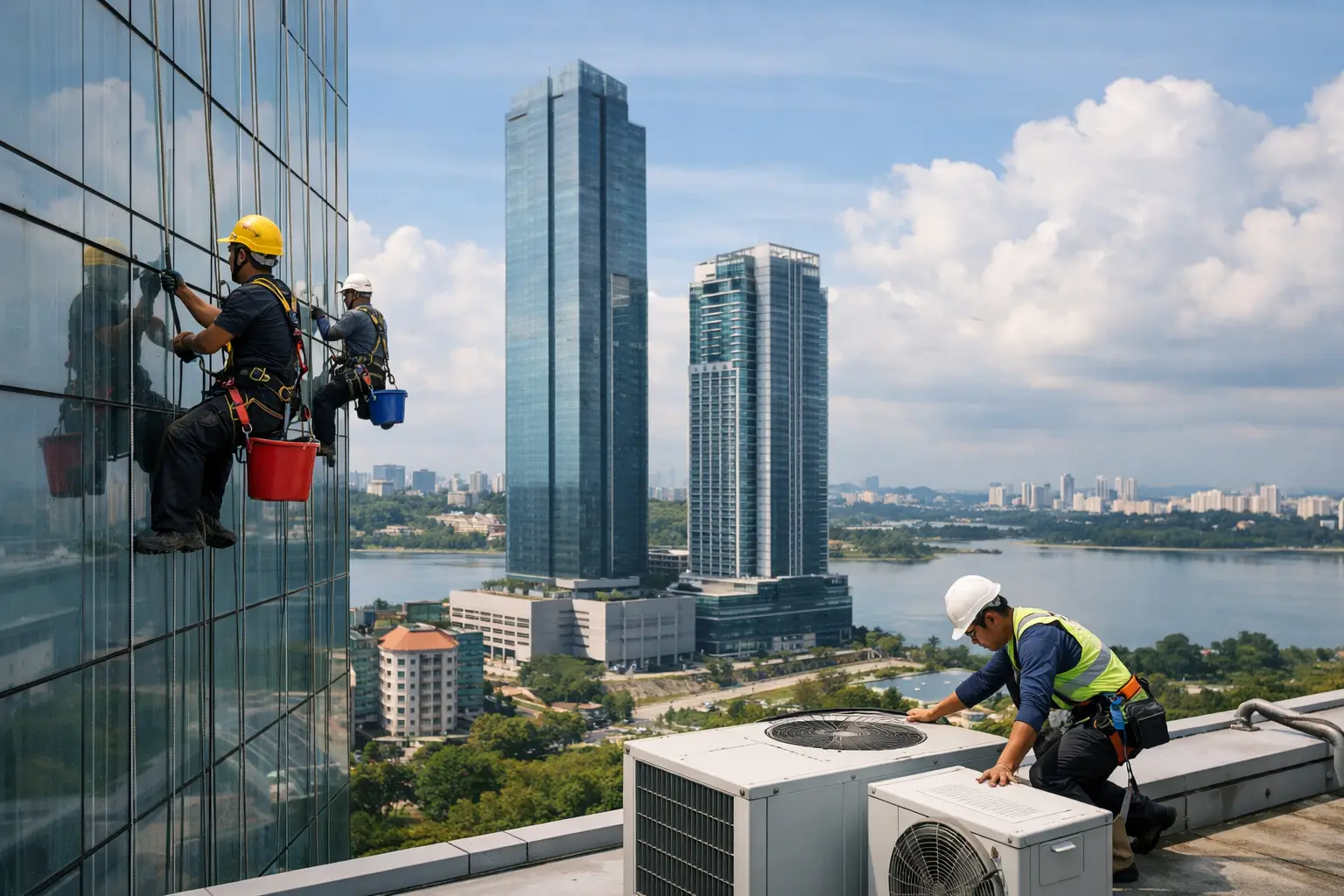
For mid-rise and high-rise properties, the cleaning method cannot be separated from the access method. Access affects safety, speed, disruption, and the ability to reach difficult facade zones properly.
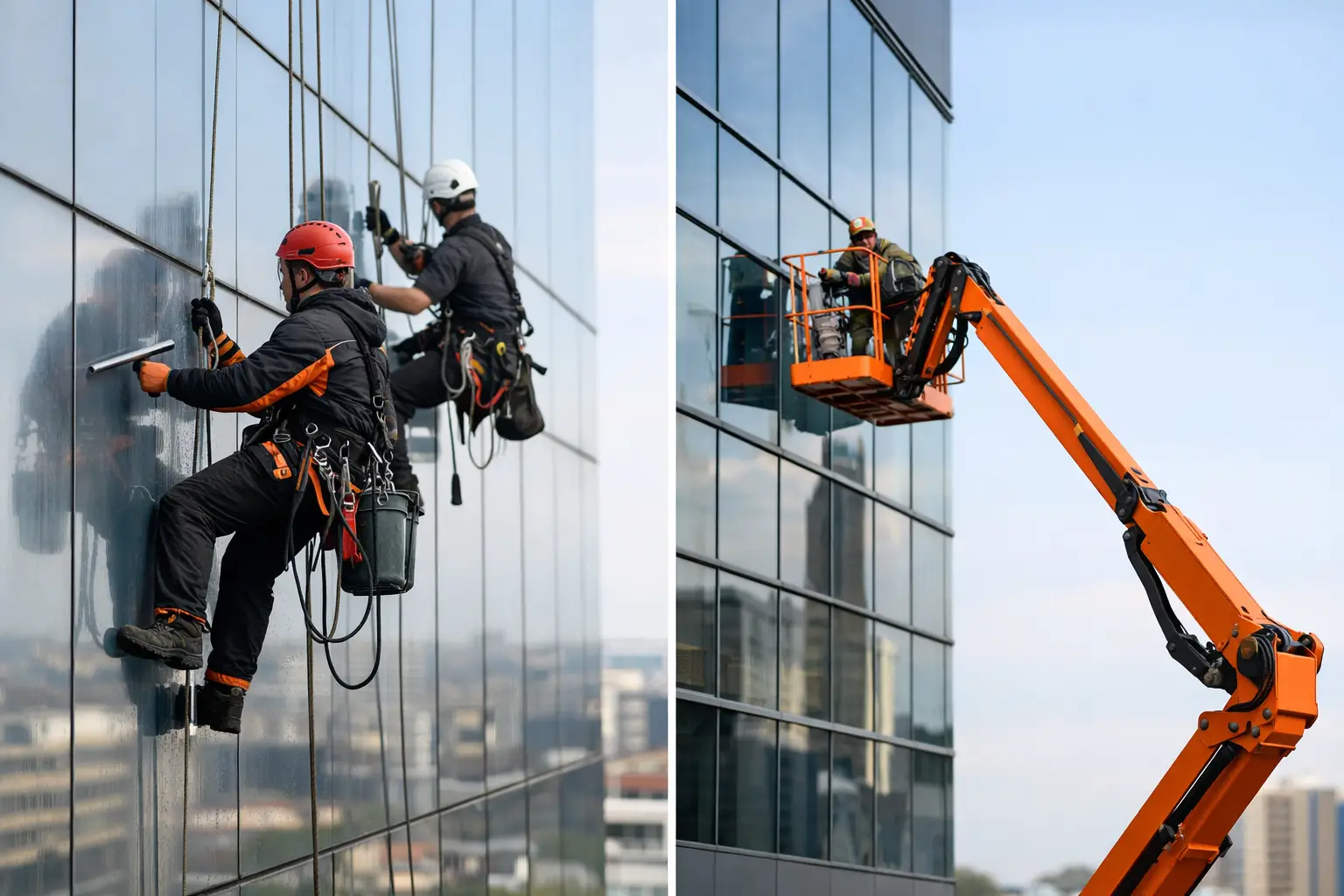
Rope access is often an effective solution for high-rise facade work, especially where the architecture includes setbacks, irregular elevations, or areas that are difficult to reach with conventional systems. It allows targeted access with minimal ground footprint and can be especially useful on buildings where disruption to occupants and daily operations needs to be controlled.
That said, it is not the only option. Some buildings are better suited to gondola systems, boom lifts, or mixed access planning. The right choice depends on the height, facade form, surrounding environment, anchorage conditions, and the nature of the work. A good contractor does not force one access model onto every project. They match the access plan to the building and the risk profile.
For property stakeholders, this matters because facade cleaning is not just about getting workers onto the wall. It is about doing the work safely, thoroughly, and with clear control over site conditions.
What to expect from a professional facade cleaning assessment
Before any work begins, the building should be assessed in context. That usually means reviewing facade materials, existing defects, staining patterns, access constraints, and any operational sensitivities such as tenant movement, podium activity, or public-facing areas.
A proper assessment should distinguish between dirt, biological growth, mineral deposits, coating failure, and stains caused by drainage or sealant issues. Those are not all cleaning problems. Some are maintenance defects that cleaning alone will not solve.
Testing is often useful, especially on mixed-material facades or surfaces with uncertain chemical tolerance. A small controlled trial can confirm whether the selected method will achieve the desired result without damaging the finish. This step is particularly important for older buildings and properties with decorative or specialized cladding systems.
The best outcome is not simply a cleaner facade. It is a cleaning scope that is technically suitable, operationally realistic, and aligned with the building’s maintenance priorities.
Building facade cleaning and long-term maintenance planning
Cleaning works best when it supports a broader facade maintenance program. If the exterior is only addressed when complaints arise or staining becomes obvious from street level, the building is already operating reactively.
Routine cleaning creates visibility. It helps maintenance teams identify failed sealants, cracked panels, loose elements, blocked drainage paths, and coating wear earlier. It can also reduce the buildup that makes future cleaning more difficult and more intrusive.
For owners managing multiple assets, consistency matters. Buildings that follow a planned exterior care cycle usually present fewer surprises than those left untouched for years. This does not mean every property needs the same schedule. It means each asset should have a documented approach based on facade type, environmental exposure, and operational expectations.
In Malaysia, where heat, rainfall, humidity, and urban contamination work together year-round, exterior neglect tends to show faster than many stakeholders expect. Facade by Vertical Pro Sdn Bhd approaches cleaning with that local reality in mind, particularly for high-rise properties that require specialist access and material-sensitive methods.
Choosing the right facade cleaning partner
The right contractor should understand facade systems, not just cleaning equipment. That includes knowing how different materials respond, recognizing when staining points to a deeper defect, and planning access safely for occupied buildings.
Look for technical judgment as much as execution capacity. A dependable specialist should be able to explain why a method is suitable, where caution is required, and what cleaning can and cannot achieve. If a facade has embedded staining, coating breakdown, or failed sealant-related runoff, a credible provider will say so clearly instead of treating every issue as surface dirt.
That clarity is valuable. It helps building owners make better maintenance decisions and prevents the common mistake of expecting cleaning to solve deterioration that actually requires repair or restoration.
A well-maintained exterior reflects disciplined asset management. More than that, it gives you a clearer view of the building’s condition and more control over what happens next. When facade cleaning is approached as part of preservation rather than presentation alone, the building performs better for longer.
Discuss the next step
For advice on building facade cleaning, request a site assessment or quotation from Vertical Pro.
For work above ground level, the scope should include fall prevention and public protection—not only the technical task. See DOSH Malaysia’s fall-prevention guidance for the relevant safety framework.

Leave a Reply